
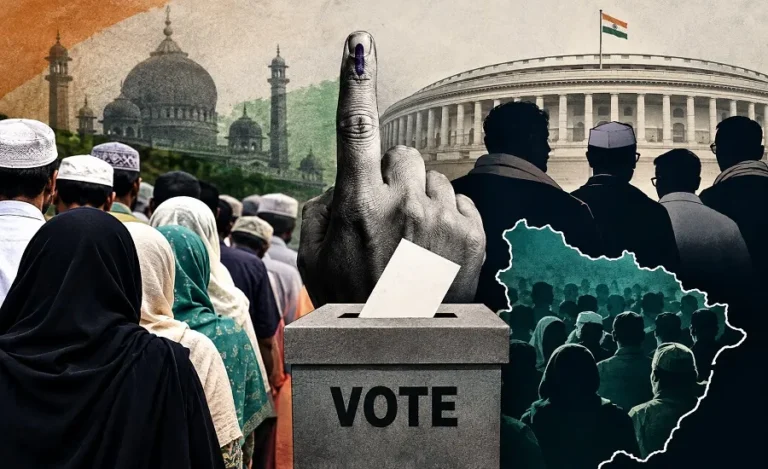
TWO expressions have acquired considerable currency in India’s electoral lexicon: “vote bank” and “vote-katwa”. Though frequently invoked in political commentary, these terms are far from ideologically neutral. Their deployment reflects not merely competing interpretations of electoral behaviour, but also deeper contestations over political representation, communal identity, coalition-building and the distribution of power.
Of particular significance is the disproportionate tendency to characterise Muslim political parties and candidates as “vote-katwa”, while subjecting the electoral conduct of other political formations to comparatively little scrutiny.
The expression “vote bank” entered sociological discourse in the mid-20th century. M N Srinivas employed the term in his work on A Village in Mysore while anthropologist F G Bailey subsequently examined the relationship between political authority, social structures and electoral influence in Politics and Social Change (1959). The concept has since become an established analytical category in the study of electoral mobilisation, denoting the presumed allegiance of a particular social constituency — defined by religion, caste, language, ethnicity or regional affiliation — to a political party.
In India, vote-bank politics has historically constituted an integral dimension in electoral arenas. Parliamentary and state assembly elections alike demonstrate that voting behaviour is frequently mediated by a complex interplay of social, caste, religious identities and regional affiliations. For a considerable period after Independence, Muslims and substantial sections of the Hindu backward classes constituted an important vote bank of the Indian National Congress. In subsequent decades, the consolidation of regional parties and caste-based political formations altered this configuration. Muslim voters continued, in many states, to support parties professing secularism, while Dalits and other backward communities increasingly gravitated towards political organisations claiming to articulate their aspirations. Upper-caste Hindu voters, meanwhile, came to be regarded as a principal vote bank of the Bharatiya Janata Party (BJP).
The larger point is that virtually every political formation in India derives its electoral strength, to varying degrees, from identifiable social constituencies. The phenomenon of vote-bank politics is therefore neither peculiar to Muslims nor confined to religious minorities. It is a pervasive characteristic of Indian electoral mobilisation.
Religious Identity, Caste Hierarchies
Former BJP President L K Advani acknowledged before the Liberhan Commission that “every political party possesses a vote bank of its own. The Ram temple movement was an instrument for consolidating a substantial Hindu constituency around the BJP”. This illustrates how electoral mobilisation in India frequently transcends questions of public policy and governance, becoming entangled with religious identity, caste hierarchies, linguistic affiliations, regional loyalties and inherited social distinctions. National concerns are often refracted through these competing identities rather than considered independently of them.
The expression “vote-katwa” by contrast, has acquired prominence in contemporary political discourse over approximately the past two to three decades. Unlike “vote bank,” which refers to a presumed electoral constituency, “vote-katwa” is a pejorative designation applied to a political party or candidate whose participation is alleged to fragment the vote of a principal contender, thereby diminishing that contender’s prospects and indirectly advantaging a rival. The underlying insinuation is that the candidate in question may have little realistic prospect of victory and is, intentionally or otherwise, facilitating the electoral success of another party.
The most consequential aspect of this terminology, however, is its asymmetrical application. Muslim political parties and independent Muslim candidates are frequently accused of functioning as “vote-katwa “ostensibly because their participation divides the votes of secular parties opposed to the BJP. Yet the historical trajectory of Muslim electoral behaviour does not support this allegation statistically.
Since Independence, Muslim voters have, largely, demonstrated a marked inclination towards parties that identify themselves as secular. Their electoral preferences have never been shaped by an exclusive commitment to Muslim political formations but a perceived imperative of defeating the BJP and upholding a secular political order. Consequently, the argument that the Muslim electoral pattern is inherently responsible for opposition fragmentation requires far more rigorous scrutiny than it ordinarily receives.
Emergency and Muslims
However, it is unexceptional for a particular constituency’s electors to be distributed among several candidates. A division of 10-15% of the vote may occur for a variety of reasons, including local rivalries, candidate selection, dissatisfaction with established parties or the emergence of alternative political platforms. Such division is not unique to any one community. Therefore. we saw that until the Emergency in 1976, Muslim voters were widely considered a dependable electoral bloc for the INC. The emergence of the Janata Party subsequently precipitated a substantial realignment of the Muslim electorate, extending their support to the new political outfit in line with the national mainstream. Later, the fragmentation of the Janata Party and the emergence of the Janata Dal and its various splintered groups further transformed the political landscape. In the ensuing decades, Muslim voters increasingly supported caste- and dynasty-based regional political formations merely hoping against the hope that such parties can effectively resist the BJP’s fascist agenda protecting secular ethos of the country. Hence, in northern India, these include the Samajwadi Party (SP), Bahujan Samaj Party (BSP), Rashtriya Janata Dal (RJD), Trinamool Congress (TMC), Communist alliances and the Congress. Similarly, in southern India, Muslims generally supported the Congress and various regional political parties and coalitions.
The Indian Union Muslim League, established in 1948, has maintained its most enduring electoral influence in Kerala, yet it couldn’t develop a comparable nationwide presence. Although the League and other Muslim political initiatives made attempts to expand their influence in parts of northern India, they did not achieve a sustained national footprint. The All India Majlis-e-Ittehadul Muslimeen (AIMIM) and the All India United Democratic Front (AIUDF) of Assam have likewise failed in extending beyond their principal regional influence to other parts of the country.
Dr Abdul Jaleel Faridi’s Strategy
The political experience of Uttar Pradesh offers another important point of reference. In late 1968, Dr Abdul Jaleel Faridi pursued a strategy of electoral alliance with Chaudhary Charan Singh, seeking to construct a political alignment capable of challenging established political dominance. Faridi’s successful initiatives, in fact, laid the foundation of coalition politics in North India, paving the way for marginalised classes to come under a single umbrella to get political participation and he achieved it in the 1970 Uttar Pradesh assembly elections when Charan Singh could form the government in coalition with Muslim Majlis. But subsequent political manoeuvres, including efforts by the Congress to contain rival formations, helped circumscribe the space available for such a larger political mobilisation. In pursuit of the larger objective of upholding the secular character of the country and preventing the BJP’s advance, Muslims have compromised on their own political representation, participation in government and ability to influence policy. Yet, notwithstanding this sustained support for parties claiming to be saviours of secularism, Muslim political parties and candidates continue to be portrayed as a source of the opposition’s persistent defeats and labelled as “Vote Katwa”.
This contradiction merits serious examination. Parties that repeatedly solicit Muslim support in the name of secularism must also account for their own electoral failures. If Muslim voters have consistently supported such parties, why have they failed to defeat the BJP, election after election and state after state?
The central question, therefore, is whether Muslim political parties and candidates can legitimately be characterised as “vote-katwa”? The label has analytical validity only when supported by demonstrable evidence that their participation has materially altered the outcome of a particular contest and no other party was responsible for BJP victory.
Why Different Yardsticks?
Then the same yardstick must necessarily apply to every political party. Several regional, caste-based, dynastical parties that describe themselves as secular also contest elections beyond their principal areas of influence. Their participation does, under certain circumstances, divide votes among rival parties and result in the BJP winning. Yet the implications of such participation are never labelled with the same intensity as “Vote Katwa”.
For example, the Bahujan Samaj Party’s principal electoral base has historically been concentrated in Uttar Pradesh, but it contests Lok Sabha elections in hundreds of seats across the country, and similarly all seats in state assemblies, to get hardly 2% of national vote share and winning not a single seat for the last two consecutive elections, including its stronghold of Uttar Pradesh; its limited electoral support in many of these regions do contribute to the split of votes among contesting political parties leading to BJP wins at various places.
Political influence of Samajwadi Party is concentrated primarily in Uttar Pradesh, yet it has contested elections elsewhere. Where its participation overlaps with that of other parties opposing the BJP, it complicates electoral coordination. The Aam Aadmi Party (AAP), whose principal electoral strongholds have been Delhi and Punjab, has also entered contests in states where the Congress remains an important political force. Fight between the two parties in Haryana, Uttarakhand, Gujarat and Goa saw poll debacles for the Congress, giving way to the BJP for its government formation. Consequently, in Delhi, the Congress did the same thing to AAP in the 2025 Delhi Assembly elections, adding another Union Territory govt to BJP’s kitty. The Trinamool Congress offers another illustration. Its principal organisational and electoral base lies in West Bengal, but it has also contested elections in states such as Assam, Tripura and Goa. The RJD, Janata Dal (United) and other regional parties have similarly participated in electoral contests outside their principal strongholds. Such participation also affects the distribution of votes, but none of them have ever been termed “Vote Katwa” outside their strongholds
Maharashtra provides another such glaring example. The Vanchit Bahujan Aghadi, led by Prakash Ambedkar, contested constituencies in which its presence affected the arithmetic among rival political parties in at least 40 seats to successfully enable BJP-led Mahayuti to form the government. Conversely, in several southern Indian states, the BJP itself contests elections against entrenched regional parties and established alliances, sometimes influencing the distribution of votes among competing formations. The terminology of “vote-katwa”, however, is not applied uniformly across these circumstances. This disparity is symptomatic of a selective political vocabulary in which the electoral participation of Muslims is subjected to discouragement and disproportionate suspicion.
Misconceptions About Muslims
A systematic state-by-state and constituency-level in-depth study of these patterns could constitute substantial facts to negate such allegations against Muslim parties aiming to discourage their required political participation in national governance.
Muslim organisations must undertake such an important political responsibility. They must challenge the sweeping assertion that Muslims, by virtue of their electoral participation, routinely divide the secular vote, or that Muslim political parties are inherently “vote-katwa”. But unfortunately, political and electoral studies and ground work in this important field is not on their agenda and they traditionally reiterate that they are an “apolitical organisation”. The validity of these allegations must be established through evidence, not through the repetition of politically convenient rhetoric. But this is a highly ignorant subject to be placed on the active agenda of any concerned group.
Underlying this debate is a more fundamental question: whether Muslims can exercise the same democratic rights to their political parties that are available to other political parties. The persistent rhetoric of vote-splitting discourages the development of autonomous Muslim political platforms, thereby reinforcing dependence on larger claimants secular, national, regional, and dynastic parties – while a more independent political leadership could articulate Muslim concerns directly, strengthen representation in legislative institutions and participate more effectively in debates over citizen rights, civil liberties, educational, economic inclusiveness, protection of religious and historical heritage, and the protection of places of worship.
The prospect of an autonomous Muslim political power has long been viewed with apprehension by the Rashtriya Swayamsevak Sangh (RSS), while established secular parties also apprehend and resist the emergence of a political formation capable of negotiating with them from a position of greater autonomy. Nevertheless, the underlying question of whether established parties adequately accommodate the political aspirations of minority communities remains central to the debate.
Ironically, Muslim representatives within these secular parties either underestimate the implications of a Muslim political party or perpetuate the argument that a Muslim political party is inevitably destined to fail. This obscures the historical experience of political coalition-building in northern India initiated by Dr Faridi.
Dr Faridi was an important early advocate of coalition-building across social and political constituencies. He never felt shy of naming his party as the All India Muslim Majlis. The contemporary Muslim politicians in various parties often neglect Dr Faridi’s experience; maybe most of them don’t even know his name, his contributions in Indian politics and his stature as a community leader and the lessons that might be drawn from his efforts to construct alliances beyond the confines of a single community.
Prominent figures from E V Ramasamy Periyar of Tamil Nadu to Charan Singh of Uttar Pradesh, regarded Dr Faridi with considerable respect for his political acumen and grassroots connectivity with various marginalised communities, while Kanshi Ram used to take him as his political teacher. The precise nature of these relationships and the extent of Dr Faridi’s influence on subsequent political formations deserve serious consideration. Renewed engagement with Dr Faridi’s political legacy and the exploration of alliances involving religious minorities, Adivasis, Dalits and other backward communities. Such an endeavour could lay the foundations for a third political axis capable of challenging the dominance of established political arrangements. Its viability would depend not simply on shared social disadvantage, but on the construction of a coherent political programme, durable organisational structures, credible leadership and a mutually negotiated framework of representation.
Failing such an initiative, Indian politics may move towards an increasingly bipolar contest between an overtly assertive form of Hindutva and a more accommodating or ostensibly moderate variant of the same Hindutva which many secular parties are already pursuing. Under these circumstances, the chances of independent political agency of minorities and marginalised communities could be further constrained, while their identity, culture, language, traditions, customs, religious beliefs, historical contributions and electoral participation would remain largely mediated by parties whose priorities will be Hindutva either way.
Semantics of Electoral Politics
The controversy surrounding “vote banks” and “vote-katwa” therefore extends well beyond the semantics of electoral politics. It concerns the terms on which political legitimacy is conferred, the conditions under which minority communities may organise themselves independently, and the extent to which established parties are willing to accommodate alternative centres of political power. Above all, it demands consistency in the evaluation of electoral conduct.
If independent political participation is a democratic right, it cannot be delegitimised selectively when exercised by Muslims. Equally, if a party is accused of splitting the secular vote, the allegation must be substantiated through transparent electoral evidence and applied according to consistent criteria. The essential task is to move beyond political labels and interrogate the structures of representation, alliance and power that shape India’s electoral democracy.
_____________________-
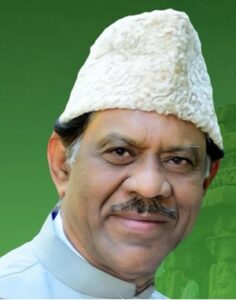

Dr Tasleem Ahmad Rahmani is president of the Muslim Political Council of India and a prominent political analyst. The views expressed here are the author’s own and Clarion India does not necessarily subscribe to them. He can be contacted at arrifah@gmail.com