

State government issues notification reconstituting the board under the amended Waqf Act
BHOPAL — The Madhya Pradesh government has reconstituted the State Waqf Board under the provisions of the amended Waqf Act, appointing two non-Muslim members for the first time in the board’s history.
With the move, Madhya Pradesh has become the first state in the country to include non-Muslim members in a state Waqf Board.
The state government recently issued an official notification constituting the new board under the provisions of the Waqf Act, 1995, as amended in 2025.
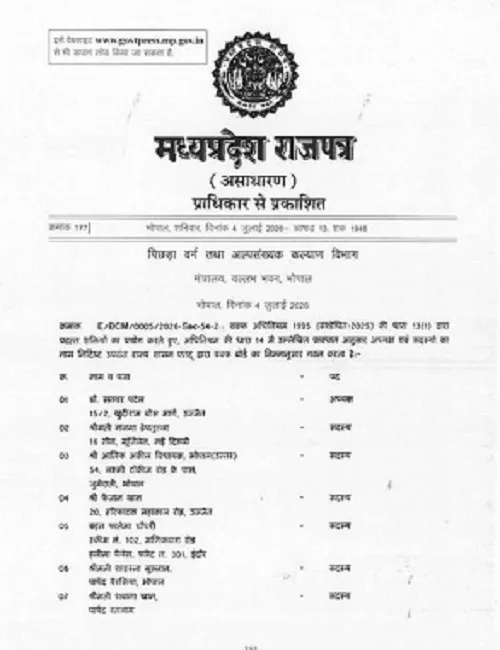
The development marks a significant change in the composition of Waqf institutions, which traditionally consisted exclusively of Muslim members apart from government-appointed officials where applicable.
Under the new notification, Dr Sanwar Patel has been retained as chairman of the Madhya Pradesh Waqf Board.
Dr Patel, who is from Ujjain, continues in the position and holds the status of a Cabinet Minister granted by the state government.
Officials said the reconstituted board has been formed in accordance with the provisions introduced through the Waqf (Amendment) Act, 2025.
The most notable feature of the new board is the inclusion of two non-Muslim members.
The state government has nominated Manoj Malpani of Indore and Animesh Bhargava of Raghogarh in Guna district as members of the board.
Their appointment represents a departure from the earlier structure under which membership of State Waqf Boards was generally limited to Muslims.
Supporters of the amendment argue that the inclusion of members from different backgrounds could contribute to greater administrative oversight and broader participation in institutional governance.
However, some Muslim organisations and community representatives have previously expressed concerns regarding the inclusion of non-Muslims in bodies traditionally associated with the management of Islamic endowments.
Apart from Chairman Dr Sanwar Patel, the newly constituted board includes several Muslim community representatives and elected public figures.
Those named in the notification include: Najma Heptulla, Atif Aqeel, Faizan Khan of Ujjain, Bahen Fatema Chaudhary of Indore, Shaista Sultan, councillor from Bhopal, Shabana Khan, councillor from Ratlam, Manoj Malpani of Indore and Animesh Bhargava of Raghogarh, Guna
Najma Heptulla’s membership continues from the previous tenure, and her term is expected to remain valid until April 2028.
Before the amendment, the Waqf Act, 1995 largely envisaged State Waqf Boards consisting of Muslim members, reflecting the role of the institutions in managing Waqf properties and charitable endowments created under Islamic law.
The Waqf (Amendment) Act, 2025 introduced several changes aimed at restructuring the administration of Waqf institutions.
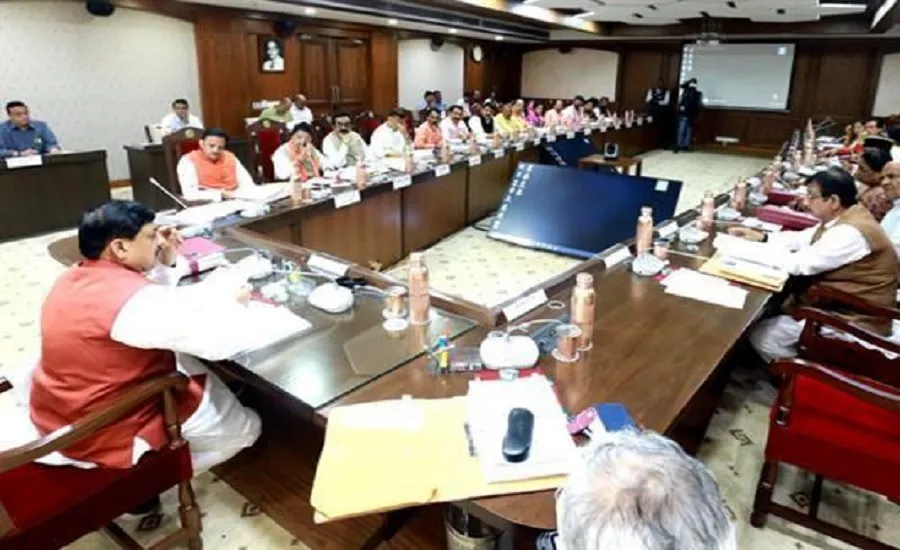
Among the most discussed provisions is the inclusion of non-Muslim members in both the Central Waqf Council and State Waqf Boards.
The government has said the changes are intended to improve transparency, strengthen accountability and modernise the administration of Waqf properties.
Another key feature of the amended law is the requirement for greater representation of women.
The legislation provides that at least two women members must be included in Waqf Boards.
Supporters of the provision say it will help ensure broader participation in decision-making related to Waqf properties and charitable activities.
The newly constituted Madhya Pradesh board includes women representatives among its members in line with the amended provisions.
The amended legislation has also introduced provisions for the inclusion of elected representatives from local bodies such as municipalities and panchayats.
Officials say the objective is to improve coordination between Waqf institutions and local administration, particularly in matters relating to land records, property management and development projects.
The government argues that such representation can help address disputes more effectively and improve communication between various levels of administration.
Legal and political discussions surrounding the implementation of the amended law are expected to continue as more states move to reconstitute their Waqf Boards under the new framework.
