

Faiqa al-Aridhy waited four years before giving birth to her first child, Nour. However, her joy was replaced by shock when she discovered that her daughter had been born without arms
THE Israelis have dropped all kinds of banned munitions on the pre-genocide population of 2.3 million Palestinians in the Gaza Strip over the past three years of their genocidal assault. Their use of white phosphorus shells in populated areas of Gaza has been widely documented. They have also used thermal and thermobaric bombs that, according to the Gaza Civil Defence teams, evaporated 2,842 Palestinians without a trace, leaving only ash, blood spray, or microscopic biological remains.
In addition to these devastating weapons, the prolonged deprivation the Israelis have inflicted on Palestinians, including starvation and the denial of access to clean water, medical supplies, and other basic necessities, has further compounded their suffering. The exposure of pregnant women to gunpowder, debris, and dust has posed an elevated danger to the health of their unborn children. These catastrophic conditions engineered by Israel in the besieged enclave are having a devastating effect on newborns.
As of November 6, 2026, the Gaza Ministry of Health had documented 260 cases of congenital deformities during the first nine months of the year, compared with 184 cases recorded throughout 2022, according to an Ultra Palestine report published on Tuesday. Meanwhile, 322 cases were recorded in 2025, an increase of 75 percent compared with 2022.
The cases identified by the ministry included cleft lip and palate, shortening of the upper limbs, umbilical hernia, and differences in the development of the external genitalia, with the possibility of more than one defect in a single child.
Yasmin Ahmad, head of the high-risk pregnancy department at Al-Shifa Hospital, said that the hospital had witnessed various deformities during the war, among which cases affecting the nervous system and bones were prominent, in addition to cleft lip and incomplete development of the nervous system.
Reem Mohammed Islim, the hospital’s registered midwife, pointed to deformities affecting the nervous, digestive and skeletal systems, including incomplete development of the skull bones and missing limbs or fingers. She explained that the difficulties pregnant women face in reaching healthcare facilities, interruptions to follow-up and limited resources have restricted the early detection and monitoring of these cases.
While congenital birth defect cases have escalated, the Israeli devastation of Gaza’s healthcare infrastructure has made it increasingly difficult to detect and monitor such disorders at birth due to the unavailability of tests. Furthermore, the recorded figures alone do not establish the true extent of the change in the prevalence of deformities or their causes.
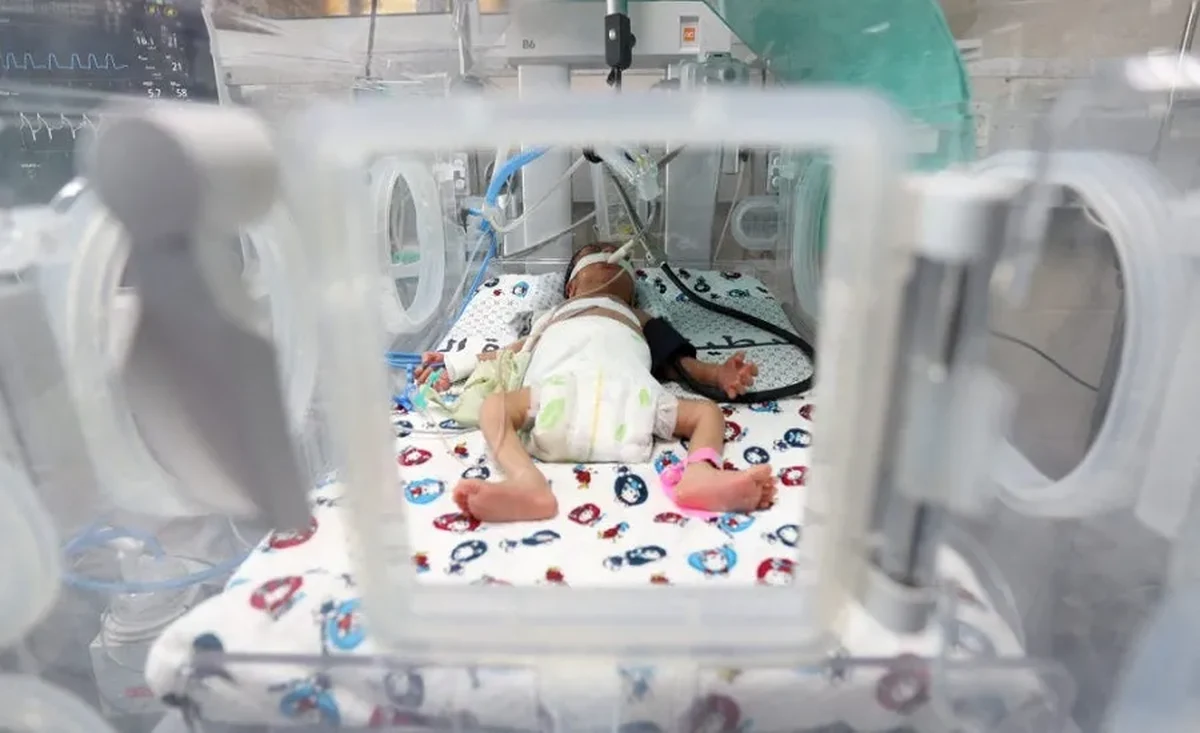
Devastating consequences
Newborn Hikma Nawfal is fed through a tube. Her mother told Ultra Palestine that the child was born with facial deformities and a third-degree cleft lip, and that her condition did not allow her to breastfeed. Due to the destruction of hospitals in Gaza, the surgical interventions Hikma needs are unavailable in the enclave.
Hikma’s mother doesn’t know when treatment will be available for her child. In the absence of specialised care, the family has no alternative but to continue feeding and caring for Hikma with the means available until she can reach the operating theatre.
In Al-Bureij refugee camp in the central Gaza Strip, Faiqa al-Aridhy waited four years before giving birth to her first child, Nour. However, her joy was replaced by shock when she discovered that her daughter had been born without arms.
Faiqa is clueless about the reason that caused her daughter to be born without arms. Nour will need medical follow-up and an assessment of her rehabilitation and functional needs, while access to specialised services remains dependent on what is available inside the devastated Gaza Strip, where thousands of patients continue to await medical evacuation, which the Israelis continue to obstruct.
Najia Za’roub struggled for adequate food and clean water throughout her pregnancy with Osama, as she endured extremely harsh living conditions in her tent. Osama was born prematurely, and doctors subsequently discovered a hole in his heart and enlarged brain ventricles. Najia stayed by his side in hospital, monitoring his condition and waiting to learn what treatment was available, as essential newborn care services continued to deteriorate.
Osama was Najia’s first child, and the family had no history birth defects. Doctors had told her that they had found no genetic indicators in his case. However, the absence of a family history did not, in itself, rule out a genetic cause, just as the harsh conditions Najia experienced during pregnancy did not establish the cause of her child’s congenital conditions.
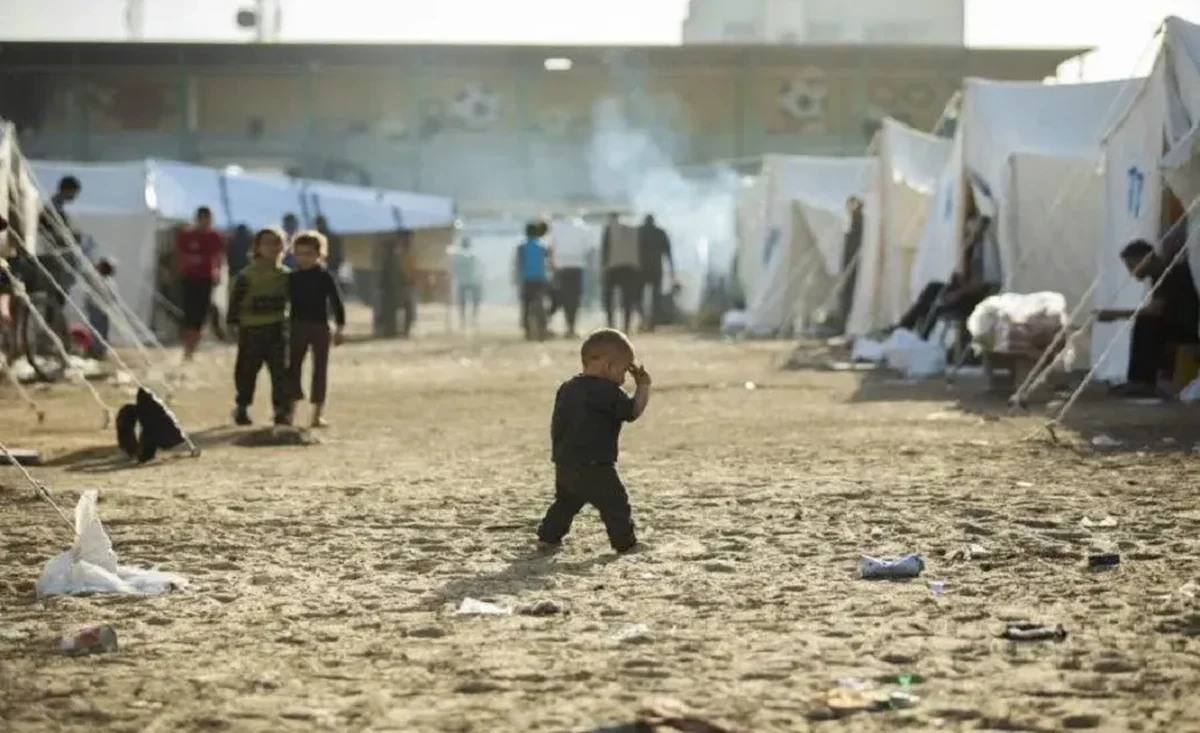
No regular follow ups
Obstetrician and gynaecologist Yasser Shaaban told Ultra Palestine that shortages of food and vitamins among pregnant women, as well as potential health risks resulting from exposure to dust, remnants of bombardment and materials produced by explosions require research to determine their effects.
According to the WHO, congenital disorders develop during pregnancy and can have genetic, nutritional or environmental causes, although many cases have no known cause.
Médecins du Monde interviewed 211 pregnant or breastfeeding women at its clinics in the Gaza Strip in August 2026. The results showed that 83 percent of them had not met the minimum dietary diversity requirement during the previous 24 hours. Further, “93 percent of pregnant and breastfeeding women interviewed reported anemia-related symptoms, which carry risks of pregnancy-related complications.”
A staggering 60 percent of the households reported skipping meals and reducing meal sizes.
Fatal results
In its June 2026 report titled The essence of childhood has been destroyed: Israel’s deliberate targeting of Palestinian children in the Occupied Palestinian Territory since 7 October 2023, the UN Commission of Enquiry highlighted congenital birth defects as a result of Israel’s barbaric assault and the subsequent tightening of the blockade of the Gaza Strip.
“Medical practitioners told the Commission that they had witnessed an increase in babies born with congenital deformities, particularly three types of birth defects: congenital heart defects, gastrointestinal defects and neural tube defects (NTDs),” the report said.
“Among the congenital heart defects, a pediatrician witnessed a large number of babies affected by the transposition of the great arteries (TGA) and by other heart defects, such as tricuspid atresia and pulmonary atresia.”
However, the treatment these children need remains unavailable in the devastated Gaza Strip. “These babies require treatment with a medication called prostaglandin, which is in short supply in Gaza, and medical evacuation to West Bank or Israeli hospitals, which is rarely approved,” the commission said.
Its consequences are devastating:
A pediatrician told the Commission of a two-day-old baby boy who was born with ‘double deformity’, one in the heart and the other in the gastrointestinal tract… The team of doctors prioritized gastrointestinal surgery in the hope that the baby would be evacuated for heart surgery as it was not possible to operate in Gaza. While the gastrointestinal surgery was successful, the baby died from his heart condition within five days, as he was not evacuated on time.
Driven by an obsession with demographic dominance in Palestine, the Israelis have launched a direct assault on the birth rate in Gaza. By creating catastrophic conditions across the besieged enclave, they are killing Palestinian children in more ways than one. — Palestine Will Be Free
