

Rajasthan government assures court that no demolition will take place until decisions are taken on show-cause notices
NEW DELHI — Rajasthan High Court’s Jodhpur Bench has said authorities must follow due process of law and provide affected parties a full and fair opportunity to be heard before taking demolition action against mosques and other structures. The state government assured the court that no demolition would be undertaken until decisions were taken on the proceedings initiated through show-cause notices, a press release issued by Jamiat Ulama-i-Hind (Mahmood Madani faction) said here on Saturday.
The order was passed on November 6 by a division bench comprising Justice Vineet Kumar Mathur and Justice Chandrashekhar Sharma while dealing with five appeals relating to mosques and other structures in Rajasthan’s border districts.
In the principal matter, Ghafoor vs State of Rajasthan and Others, a team of lawyers represented the affected parties on the directions of Jamiat chief Maulana Mahmood Asad Madani. The legal team included advocates Harish Kumar Purohit and Iqbal Khan, while advocate Tahir Hakeem and Prof Nisar Ahmad Ansari, convenor of the Jamiat’s Legal Cell, provided them assistance.
During the hearing, counsel for the appellants told the court that state authorities were carrying out bulldozer action without first receiving and considering replies to show-cause notices. It was also submitted that the affected parties were not being given an adequate opportunity to present their case.
The court granted the appellants two weeks to submit detailed replies. It directed that, upon receipt of the replies, the competent authority must provide the affected parties an appropriate opportunity of hearing, consider all relevant documents and pass a reasoned written order in accordance with the law.
On the same day, the division bench also disposed of four other appeals, observing that the issues raised in them were covered by its order in the Ghafoor case. These included an appeal concerning Masjid Adarsh Nagri, Bhojariya, Barmer, filed by its mutawalli Suleman Khan; Manohar Masjid, village Manohar, Barmer, filed by its mutawalli Abdul Razzaq, Hassan Hussain of Bhariwala, Pokhran, Jaisalmer; and Mustafa Khan of Malana village, Barmer.
The Dispute’s Origin
The controversy over action against mosques and dargahs in Rajasthan’s border districts began on June 18, 2026. According to Jamiat Ulama-i-Rajasthan, a total of 14 mosques and mazars were demolished during the drive. The organisation alleged that the affected parties were not given an adequate opportunity to present their case before the action was carried out.
Following reports of the demolitions, Maulana Abdul Wahid Khatri, general secretary of the Jamiat’s Rajasthan chapter, announced legal assistance for those affected. More than 40 petitions were subsequently filed before the Rajasthan High Court, but these were dismissed on July 13, 2026.
The Jamiat then approached the Supreme Court, where senior advocate Kapil Sibal represented the affected parties. The apex court granted an interim stay for 15 days. Subsequently, in accordance with the Supreme Court’s directions, appeals were filed before a division bench of the Rajasthan High Court.
Jamiat Delegations Visit Demolished Mosques
During the demolition drive, a high-level delegation of Jamiat Ulama-i-Hind, led by Mufti Mohammad Affan Mansoorpuri, president of Jamiat Ulama Uttar Pradesh, visited Rajasthan. However, the delegation was prevented from entering the affected areas.
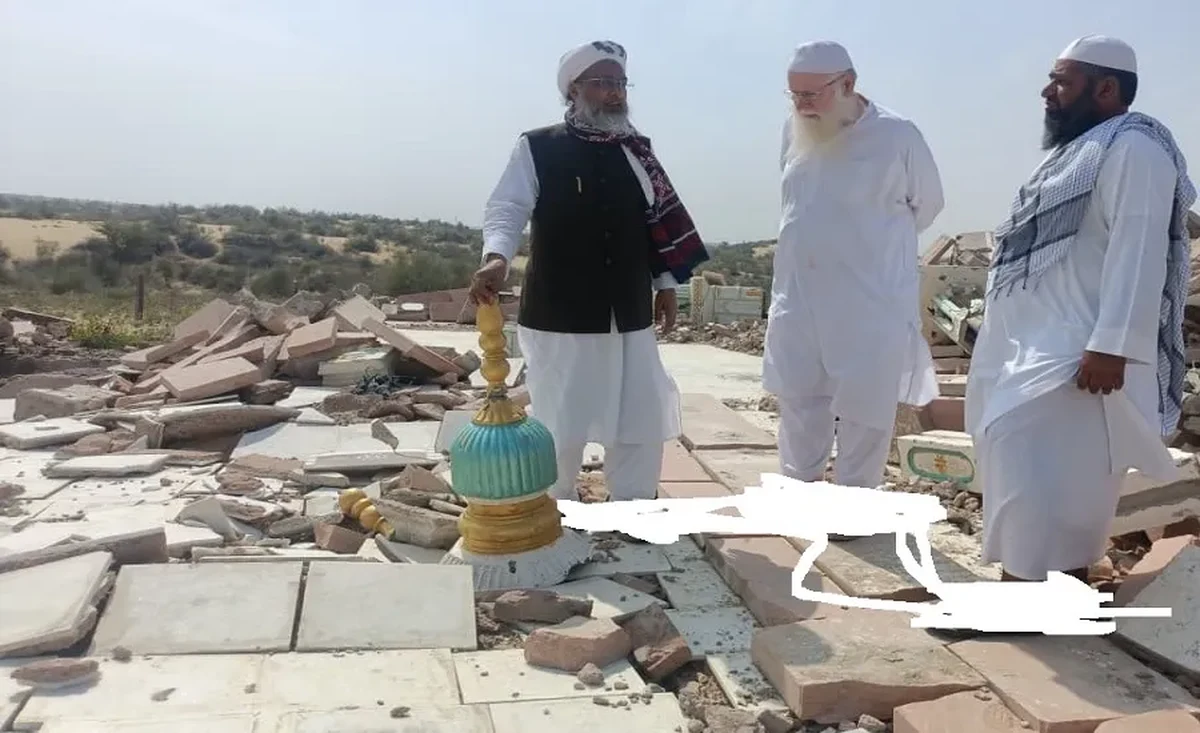
On October 16, another delegation led by Jamiat Ulama-i-Hind general secretary Maulana Mohammad Hakimuddin Qasmi visited the affected locations.
The delegation inspected the sites of demolished mosques in Malasar, Mirpura and other villages. Members said the mosques were situated in small settlements in remote hilly areas, where local residents had built them on sandy terrain despite considerable financial and physical difficulties.
They said that while many of the residents’ houses were temporary structures, the villagers had made great efforts to construct proper and well-built mosques. The delegation members were deeply moved by the sight of the demolished religious structures and said they could see no apparent social or political justification for targeting these mosques.
Welcoming the latest High Court order, Jamiat leaders expressed hope that the affected people would receive justice and that the state administration would act in accordance with the law and would respect religious sentiments of people.
They also expressed hope that Hindu-Muslim unity and communal harmony would be maintained in the region and appealed to the government to refrain from actions that could undermine social harmony.
