

Mosques serve as nodes of social capital, facilitating interaction, trust-building, and information exchange. When women are excluded, these networks become incomplete, weakening the community's social fabric
A RECENT and much-needed clarification presented to the Supreme Court has addressed a longstanding debate concerning women’s access to mosques. “Senior Advocate Mohmmad Shamshad, representing All India Muslim Personal Law Board (AIMPLB), confirmed that there are no restrictions on women entering mosques to offer prayers. This affirmation is founded in Islamic doctrine and reflects a long-established practice within Islam, rather than a reinterpretation or modern reformist viewpoint.
Despite this judicial clarification, women’s access to mosques across much of the subcontinent remains largely uneven. The submissions before the Supreme Court not only clarified access rights but also brought to light significant institutional challenges. While Islam is a codified religion with established principles, courts have frequently misapplied the doctrine of Essential Religious Practices (ERP), leading to fragmented interpretations that sometimes call into question the fundamental role of mosques.
The AIMPLB further clarified that, although women are not prohibited from attending mosques, they cannot insist on specific entry points or demand the removal of barriers that typically separate men and women during prayer. This assertion arose during a hearing by a nine-judge Constitution Bench addressing the Sabarimala reference. Advocate Shamshad emphasised that Islamic religious practices are well-defined and that there is consensus among Islamic denominations on women’s right to enter mosques for prayer. However, he noted that adherence to certain disciplinary expectations is necessary, as mosques lack a sanctum sanctorum and individuals cannot claim a right to a specific place within them or to lead prayers.
Congregational Prayers
During the proceedings, Chief Justice of India Justice Surya Kant raised important questions about women’s right to enter mosques. Advocate Shamshad confirmed that there is a consensus among various Islamic schools of thought that women are allowed to pray in mosques. However, he noted that while congregational prayers are obligatory for men, it is not so for women. Instead, the latter are encouraged to pray at home, where they can still earn equal religious rewards. Although women may choose to enter mosques, their participation in congregational prayers is often considered less preferable. Justice Ahsanuddin Amanullah pointed out that the historical reasoning behind this perspective includes practical concerns, such as the need for someone to take care of children at home when the entire family goes to the mosque.
This recent clarification emphasises the doctrinal assurances regarding women’s access to mosques and underscores the need for greater alignment between religious practices and institutional behaviour.
The claim that Islam restricts women from mosques collapses when confronted with its own foundational sources and history—the Qur’anic principle of spiritual and moral equality. Indeed, the Muslim men and Muslim women… Allah has prepared for them forgiveness and a great reward” (Qur’an 33:35)—establishes no hierarchy in access to religious life. This was reflected in the lived practice of the Prophet Muhammad (peace be upon him), who explicitly instructed: “Do not prevent the female servants of Allah from going to the mosques.” In Madinah, women prayed in congregation at the Prophet’s Mosque, attended sermons, raised questions, and helped shape community norms.
Hadrat Fatima Epitomises Women’s Crucial Role
The life of Fatima bint Muhammad, daughter of the Prophet, spouse of Ali ibn Talib, and mother to Hasan and Hussain ibn Ali, epitomises the crucial role women played in the foundation of early Islamic social and moral structures. Despite not occupying an official role within the mosque, her household maintained a profound connection to the Prophet’s Mosque, an essential nexus for learning, worship, and communal life. The environment in which her sons were raised—imbued with principles of justice, accountability, and faith was shaped by both the mosque’s teachings and familial influence. Hadrat Hussain’s eventual stand against tyranny serves as a testament to Hadrat Fatima’s impactful upbringing. This narrative underscores that women were integral to the mosque-centric community rather than peripheral figures. Their contemporary exclusion represents not a continuation of tradition, but a significant deviation from it.
Aisha bint Abu Bakr, the wife of Prophet Muhammad (pbuh), played a pivotal role in the early Islamic community, demonstrating that women could be influential agents of knowledge and authority. Her contributions were remarkable; she not only taught both men and women but also issued legal opinions (fatwas) and transmitted a vast array of ahadith (sayings of the Prophet), which continue to shape Islamic jurisprudence today. Hadrat Aisha’s involvement exemplifies women’s active participation in early Islamic society, challenging the stereotype of passive female engagement.
Articulation of Women’s Rights
Similarly, Hadrat Umm Salama, another prominent wife of the Prophet, was deeply engaged in the community’s social and political affairs. She provided valuable counsel on governance matters and advocated for women’s rights, often articulating their concerns in a patriarchal society. Her participation illustrates the significant impact women had on the ethical and social discussions of their time, thereby enhancing understanding of Islamic teachings and practices. This historical context underscores the vital role of women’s voices in shaping the early Islamic narrative and challenges prevailing perceptions of their positions in religious and scholarly realms.
From the earliest period of Islam to its advent in the Indian subcontinent, historical evidence consistently shows women as active shapers of mosque-based life. Scholars such as Umm al-Darda taught Hadith and jurisprudence in a Damascus mosque to both men and political leaders, reflecting women’s authority within religious spaces. This tradition of institution-building is further exemplified by Fatima al-Fihri in Morocco, who founded a mosque that evolved into one of the world’s oldest universities—demonstrating that women were not just participants, but architects of knowledge systems.
Even within the Indian subcontinent, women have historically played a significant role in shaping religious spaces. Notable figures such as Razia Sultan and Maham Anga were instrumental in the construction and patronage of mosques. As scholars like Ziya Us Salam have observed, the trend toward exclusion began later, coinciding with the decline of empires and the emergence of conservative social norms. This shift was not rooted in theology; rather, it was a cultural development.
The Begums of Bhopal
In India, Shah Jahan Begum and Sultan Jahan Begum of Bhopal played pivotal roles in the architectural and educational landscape of their time, particularly in the realm of Islamic institutions. They were instrumental in the construction and patronage of significant mosques, while also advocating for women’s religious education and encouraging their involvement in the public sphere.
The Taj-ul-Masajid in Bhopal, conceived by Shah Jahan Begum between 1868 and 1901, symbolises this ambitious effort to establish the largest mosque in India. Although initiated in the late 19th century, the construction progressed under the stewardship of her daughter, Sultan Jahan Begum.
The historical contributions of these women illustrate a pattern of active female engagement in community development, focusing on mosque-centric initiatives. The contemporary exclusion of women from similar avenues of participation marks a significant deviation from this heritage, challenging the narrative of tradition and continuity in Islamic community practices.
What ensued was not a theological reform but rather a social contraction. Over time, patriarchal interpretations solidified into informal guidelines, eventually evolving into accepted “religious truths.” This historical transformation is significant as it reframes the entire discussion. The issue at hand is not merely one of granting women access; it is about restoring a form of participation that previously existed.
Women’s Mosque Attendance
Global empirical data clearly support this argument. A cross-national analysis utilising the World Values Survey, which includes responses from over 11,000 Muslim women across 59 countries, reveals that while men generally attend mosques more frequently than women, the extent of this gap varies by country and social context. In certain regions, such as Kenya and Zimbabwe, women’s mosque attendance matches or even surpasses men’s. Significantly, the data illustrate that women’s participation in mosques is closely linked to broader social engagement. Women who are involved in organisations, education, or employment, or those who face fewer restrictions in public roles, demonstrate a markedly higher likelihood of attending mosques.
At the structural level, metrics such as female labour force participation, the Gender Development Index (GDI), and the Gender Inequality Index (GII) show a consistent relationship: greater gender equality correlates with higher levels of women’s attendance at mosques. This observation challenges prevailing secularisation theories, which argue that women’s enhanced roles in public spheres are linked to declining religiosity. In Muslim communities, however, the evidence suggests that greater social freedom is associated with heightened religious engagement.
The disparity between Muslim-majority and Muslim-minority contexts further elucidates this trend. In countries such as the United States, Canada, and certain regions of Europe, women’s mosque attendance is notably higher. This can be attributed to the presence of purpose-built mosques with designated spaces for women, as well as to their role as community hubs providing educational and social services. In contrast, many Muslim-majority societies exhibit a more pronounced gender gap in mosque attendance, which is not necessarily due to more stringent religious observance, but rather because of broader restrictions on women’s social participation.
The Subcontinent’s Cultural Norms
The subcontinent presents a stark case. In India, Pakistan, and Bangladesh, women’s access to mosques is often limited by entrenched cultural norms rather than doctrine. Many mosques lack basic facilities for women, and available spaces are often inadequate—confined to basements or poorly maintained sections, reinforcing a sense of exclusion. Women are largely absent from mosque governance structures despite their social and economic contributions. This exclusion has consequences that extend beyond religious practice. Mosques serve as nodes of social capital, facilitating interaction, trust-building, and information exchange. When women are excluded, these networks become incomplete, weakening the community’s social fabric.
One of the most critical implications is in the area of child protection and family welfare. Women are often the first to detect signs of distress, abuse, or vulnerability in children. Their absence from community institutions limits the capacity for early intervention and awareness. Similarly, mosques have the potential to serve as platforms for health education, legal literacy, and social support, but these functions remain underdeveloped when half the community is excluded.
Youth development is another area where the impact is visible. The absence of inclusive community spaces contributes to alienation, making young people more vulnerable to negative influences such as substance abuse or criminal activity. Inclusive mosques, where women participate actively, can provide mentorship, guidance, and structured engagement, strengthening social accountability at the grassroots level.
Global examples illustrate that change is not only achievable but actively occurring. In China’s Hui Muslim communities, women-led mosques have been a longstanding tradition. In Turkey, state-supported female preachers have enhanced women’s engagement in religious life. In Morocco, trained female scholars known as mūrshidahs play a pivotal role in religious education. Across North America and Europe, mosques are increasingly evolving into inclusive institutions, integrating women into leadership, educational roles, and community service.
The pattern across these contexts is unmistakable: inclusion does not occur spontaneously; it is designed. It requires infrastructure, governance reform, and a shift in institutional thinking.
The relationship between gender equality and religious participation in Muslim societies has been fundamentally misunderstood. Increased freedom, education, and social participation do not lead Muslim women away from religion. They bring them closer to it, on their own terms, within institutional spaces that recognise their presence and contribution.
This brings the discussion back to India. The Supreme Court’s clarification has removed any ambiguity regarding the permissibility of women’s entry into mosques. History supports inclusion. Global data confirms its benefits. The remaining barriers are neither theological nor legal—they are institutional and cultural.
The question, therefore, is no longer whether women can enter mosques. That has already been taken care of. The real question is whether communities are willing to transform their institutions to reflect that reality.
Because a mosque that includes women becomes more than a place of prayer, it becomes a centre of education, a platform for awareness, and a foundation for social development. A mosque that excludes women, on the other hand, remains limited—serving only part of the community, and failing to realise its full potential.
The choice before India is not between tradition and reform. It is between maintaining a partial institution and building a complete one.
Institutional Cohesion
The Dawoodi Bohra community is often cited for its high levels of internal coordination, in which mosques and jamaat structures serve as hubs for education, welfare, dispute resolution, and economic networking. This institutional cohesion has contributed to relatively higher levels of social stability, entrepreneurship, and community welfare. The lesson is straightforward: when religious spaces are structured as inclusive, organised community centres, they generate not just spiritual engagement but also tangible social and economic development—something that broader communities struggle to achieve when participation remains limited.
Recently, this month, a significant gathering of scholars and community members was held at the Islam Gymkhana in Mumbai, bringing together distinguished Islamic scholars from both local and international contexts to discuss critical social reforms. The session focused on important topics, particularly the inclusion of Muslim women in congregational spaces. This dialogue among scholars is a crucial step toward promoting inclusivity and understanding women’s roles in religious practices, helping to address contemporary challenges and ensuring all community voices are heard.
The pathway to meaningful community transformation already exists; what is missing is its activation at the grassroots. By linking Integrated Child Development Services for ages 0–6 with the Right of Children to Free and Compulsory Education Act for ages 6–14 through mosque-centred community engagement, India can build a seamless model of early childhood care, education, and social development rooted in trust. When women are actively included, these institutions become more effective—supporting child nutrition, educational readiness, legal awareness under laws such as the Protection of Children from Sexual Offences Act, and youth guidance. Global examples from Indonesia, Malaysia, and Thailand show that when mosques function as inclusive community hubs with women’s participation, they foster stronger social cohesion, institutional trust, and positive engagement with wider society. The lesson is clear: the challenge in India is not the absence of schemes or religious permission, but the lack of structured community integration. If mosques evolve into inclusive platforms connecting families to education, welfare, and governance, they can transform from isolated religious spaces into engines of empowerment—breaking cycles of marginalisation and enabling communities to participate confidently, responsibly, and harmoniously in the nation’s development.
____________________
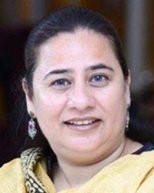
Dr Shabistan Gaffar is Chairperson of All India Confederation for Women’s Empowerment and ex-chairperson of the women’s cell of National Commission for Minority Educational Institutions (NCMEI). She can be reached at shabistangaffar@gmail.com
