

NEW DELHI — Calling for an immediate end to the demolition drive against mosques, madrasas, Eidgahs and mazars and other Muslim institutions, Jamiat Ulama-i-Hind (Mahmood Madani faction) said the Centre and other state governments should ensure protection of minority rights as guaranteed under the Constitution.
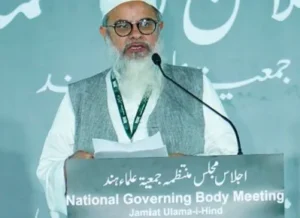
These demands are part of the three important resolutions adopted by the annual meeting on the of the Governing Council of Jamiat Ulama-i-Hind, which commenced its meeting on Friday at DLF Springfield, Sahsola Patti, Pipaka, District Nuh (Mewat), Haryana. Approximately 2,000 members of the Governing Council, prominent personalities and renowned Ulama from across the country are participating in the meeting presided over by Jamiat President, Maulana Mahmood Asad Madani.
The other resolutions passed by the Governing Council of Jamiat Ulama-i-Hind, one of the premier socio-religious organisations of Muslims in India, expressed concern over the implementation of the Uniform Civil Code (UCC) in several states.
The resolutions expressed serious concern over the targeting of madrasas in the name of recognition, baseless propaganda against them, and attempts to create controversy around minority educational institutions. The Government of India and the relevant legal authorities were urged to immediately stop such practices and guarantee the rights and protections available to madrasas under the Constitution.
The meeting also called upon the managements of madrasas to ensure that land documents, approved building plans, identity records of students residing in hostels, and audited financial accounts of their institutions are properly maintained and preserved with complete transparency.
The second resolution, concerning the protection of mosques and other Islamic religious places, expressed deep concern over the growing trend of targeting mosques, Eidgahs, mazars and other religious sites across the country. The resolution clarified that mosques are not merely buildings; they represent the faith and collective identity of Muslims and are practical manifestations of the religious freedom guaranteed under Articles 25 and 26 of the Constitution of India.
Emphasising the importance of the Places of Worship (Special Provisions) Act, 1991, the resolution stated that the fundamental objective of this legislation is to preserve the religious character of places of worship and prevent the reopening of historical disputes. The Supreme Court, in its Ayodhya judgment, also recognised this law as an important component of the basic secular structure of the Constitution.
Concern was expressed over orders issued by subordinate courts directing surveys of places of worship while overlooking the spirit of this legislation. In this regard, the resolution referred to the case of the historic Shahi Jama Masjid in Sambhal and stated that the situation arising after the unilateral survey order had seriously affected peace and law and order.
The Governing Council urged the Centre and the higher judiciary to ensure full compliance with the Supreme Court’s interim order dated December 12, 2024, and to dismiss at the preliminary stage any fresh claims contrary to the Places of Worship Act, 1991.
It further demanded that demolition actions against mosques by municipal, revenue and development authorities be stopped unless due legal procedures are followed and the affected parties are given a fair opportunity to present their case. Action should also be taken against officials who violate the law.
One of the important decisions of the meeting is that all provincial, district and tehsil units of Jamiat Ulama-i-Hind will submit memorandums to their respective authorities on a single date and at a uniform time to be determined later.
In addition, all units of Jamiat have been instructed to assist mosque management committees in examining and completing the legal documentation relating to mosque lands, Khasra and Khatauni revenue records, municipal taxes and other relevant documents. This exercise is to be completed within the next six months.
The resolution concerning the Uniform Civil Code (UCC) rejected the law in its entirety and described the legislation as inherently discriminatory in its very nature.
