

If the state has an answer, why does it need batons, and if it has no answer, how can a baton become an answer?
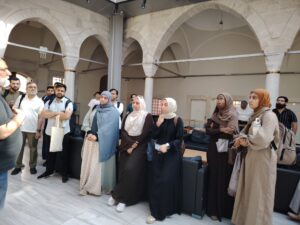
I AM currently in Türkiye. As I walk through the schools, universities, ancient centres of learning and centuries-old buildings of Istanbul, and speak with the students and teachers here, I repeatedly find myself recalling the situation in India. Perhaps this is because cities steeped in history do not merely compel a person to think about the past; they also force one to reflect upon the present. When you stand among Istanbul’s ancient academic buildings and centuries-old educational centres, the realisation becomes even deeper that a society does not regard knowledge merely as something related to examinations, employment or government certificates, but considers it the foundation of its collective life. In such moments, one inevitably thinks of those young minds in India who are today facing police batons as they demand transparency in their examinations.
It is a strange and painful historical contradiction. I am standing in a city where not so long ago, students struggled for the survival of democracy and intellectual freedom, and history ultimately recognised the legitimacy of their voice. On the other hand, in India, millions of young people are on the streets seeking an answer to a fundamental question about their future: if an examination on which several years of their lives, their families’ savings and their hopes for the future depend is not transparent, then where should they go? On the surface, this is a question about the 2024 NEET-UG examination, in which more than 2.4 million candidates participated and serious allegations of irregularities emerged in the results. In reality, however, it is a much larger question. It is a question of trust between the state and its citizens and of the fundamental “social contract” upon which the modern democratic state stands. Citizens invest their labour, time, taxes, obedience to the law and a significant part of their lives in state institutions, trusting them to function fairly. In return, they expect the state, at the very least, to ensure a level playing field. If a young person, despite all his hard work, no longer has the confidence that an examination is genuinely an examination, that competition is genuinely a competition and that success is genuinely the result of merit, then the state ceases to be merely an administrative institution. It begins to become a force in relation to which the citizen’s moral trust starts to collapse. And when that trust breaks down, protest is born.
In India, it is easy to dismiss the current student protests simply as a political movement, an opposition conspiracy or an expression of youthful impatience. But, history tells us that major political movements often began with a very small and seemingly limited issue. In December 1973, Gujarat’s Navnirman Movement began at L D Engineering College over a 20 per cent increase in hostel food charges and the problem of inflation. It soon developed into a broader popular movement against corruption and political governance, ultimately forcing the state government to resign in March 1974. Similarly, in Bihar in 1974, the student movement led by Jayaprakash Narayan gave rise to one of the greatest movements in Indian democracy, which ultimately became part of the political background to the Emergency of 1975. The Anna Hazare movement of 2011 was not merely one man’s hunger strike; it transformed public anger against corruption into political power. The protests that followed the gang rape of a young woman in Delhi in 2012 changed the national debate on law and state accountability, while the farmers’ movement of 2020–21 compelled the government to withdraw its three agricultural laws, considered draconian. If one studies history, it becomes clear that a crowd taking to the streets is not always a sign of disorder. Sometimes, it comes to remind Parliament, the courts and the administration that the ultimate legitimacy of power comes from the people.
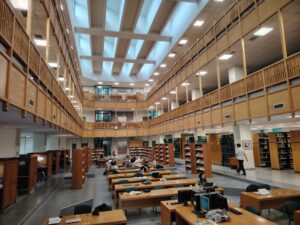
This is why the fundamental question is: If students raise questions about the transparency of an examination system, why does the state begin to fear them instead of listening to them? Teachers and students in Türkiye follow developments in India closely and express astonishment at the police action against students in Delhi. In the evening, when I return to my room, several books on the history of this city lie open before me. I do not want to encroach upon your valuable time by mentioning them, but I consider it important to point out that history here, too, witnessed resistance to attempts to make knowledge merely subject to state coercion. The historical centres of learning here were not merely buildings. They were comprehensive institutions in which knowledge, teachers, students, curricula, financial administration and institutional patronage formed part of a broad intellectual system.
The Süleymaniye Complex, built by the great Ottoman architect Mimar Sinan between 1550 and 1557, was associated with libraries, a hospital and four principal madrasas or colleges. Embedded in this entire conception was the idea that the strength of a state is not built solely upon armies, treasuries and palaces; the intellectual atmosphere of a society and its institutions of learning are also fundamental components of its real strength. It is here that India’s current crisis confronts us with a very fundamental question: Do we genuinely value education, or treat it as merely a filtering mechanism through which millions of young people are placed in competition with one another for a few thousand seats?

The crisis surrounding NEET-UG 2024 is an extremely severe expression of this wider problem. More than 2.4 million students took the examination in India. When the results were announced, 67 students achieved a perfect score of 720 out of 720, six of them from the same examination centre. This generated deep concern and suspicion throughout the country. When a young person dreams of becoming a doctor, that dream is not merely a matter of personal ambition. Behind it lie decades of sacrifice by their family. For students from small towns and villages, this examination represents an important route to social mobility. In an era of privatisation and the rapidly increasing commercialisation of education, when quality education is becoming increasingly expensive and opportunities in government employment and public institutions are steadily shrinking, poor or middle-class students who neither possess political power, family influence nor financial resources, regard hard work as their greatest asset. They have neither a minister’s telephone number, nor direct access to an official, nor the backing of a powerful institution. They have only their books, several years of hard work and a belief that if they work harder than everyone else, they might be able to move forward. This belief lies at the heart of modern meritocracy. But if an examination paper is leaked, if questions reach a select group before the examination, if some people have access to inside information, and if repeated crises emerge within the examination system whose consequences are imposed upon students who have done nothing wrong, then “merit” ceases to be an ethical concept and it becomes merely a government slogan.
This crisis in the educational system is not limited merely to administrative incompetence or examination malpractice. It is also connected to the broader political environment in which the autonomy of educational institutions, the neutrality of curricula, historical research, and scientific and critical thought are increasingly becoming arenas of political conflict. When governments begin to use education not to expand the intellectual freedom and critical capacities of citizens, but as a means of extending their own political and ideological narratives, the fundamental spirit of educational institutions is affected. History, science and the social sciences should not be subordinated to the ideological priorities of any political party or government. Their fundamental purpose is to ask questions, examine evidence, understand disagreement and attempt to reach the truth. When state institutions begin to prioritise ideological loyalty over impartial academic competence and merit, the professional capacity and transparency of those institutions are inevitably affected. The crisis surrounding national examinations such as NEET and NET points towards this larger question: is India strengthening its educational institutions so that future generations become strong, autonomous and impartial, or is it increasingly turning the youth into arenas of political conflict? This is why the students’ protest is not merely a demand for examination reform. They are, in effect, saying: “We can accept defeat, but we cannot accept deception!” This alone is sufficient to understand the entire psychology of India’s young people today.
The government may say that investigations are underway, suspects are being arrested, and that the CBI and the Supreme Court are doing their work. All of this is necessary. But the responsibility of a democratic state is not limited to catching the guilty; it must also restore the trust of those who have been affected. When 2.4 million young people are affected, it is not enough simply to say, “The guilty will be punished.” The question is also: What will happen to the students whose years have been lost, whose families have spent hundreds of thousands of rupees, whose mental well-being has been affected, and who have spent a crucial period of their lives in deep uncertainty? State administrations often make the fundamental mistake of treating citizens’ anger as the problem, when anger is frequently not the problem itself but a symptom of a deeper problem. If police batons could silence young people, no student movement in history would ever have succeeded. The protests of more than 1.1 million students and workers in Paris in May 1968, the student protests in Beijing’s Tiananmen Square in 1989, South Korea’s pro-democracy student movement in June 1987, the demonstrations by British students in 2010 against the tripling of university tuition fees, the young people of the Arab World in 2011, and numerous student movements in India all demonstrate that young people can be temporarily dispersed, but their questions cannot be eliminated. Sometimes a baton does not end a protest; it gives it a new moral force.
Here, we Indians should also learn another lesson from the modern history of Türkiye, although the comparison must be made with caution. Türkiye itself has experienced political conflicts, military interventions, state repression, crises of freedom of expression and complex experiences with student politics. It would therefore be historically inaccurate to present it as a perfect democratic model. Nevertheless, in the modern history of Türkiye, students and universities have repeatedly generated major debates about political and social change. After 1968, student movements at Istanbul University and the Middle East Technical University (METU) became part of the global wave of youth unrest. During the 1970s, student politics reflected the country’s ideological divisions. In the 2013 Gezi Park protests, too, large numbers of young people raised questions about civil liberties, state power and public space. And in January 2021, student protests at Boğaziçi University against the government’s appointment of a rector once again raised the question of where the boundary between university autonomy and state authority should lie.
The historical experience of students in Türkiye does not lead to the conclusion that every protest is right or that every action by the state is wrong. The more important lesson is that transforming universities and students into institutions and individuals completely subordinate to the state weakens the intellectual future of society. A university is not merely a place where examinations are taken. A student is not merely a roll number. And a young person is not merely a voter, taxpayer or future employee. They are human beings within whom questions arise, disagreement develops and, sometimes, questions emerge that make the state uncomfortable. Yet this very discomfort is the true life of knowledge. The fundamental principles of intellectual tradition are questioning, debate, disagreement and research. Whether it is the Bayt al-Hikmah of Baghdad in the 8th and 9th centuries, the modern universities of Europe or today’s research universities, knowledge flourishes where people are permitted to ask questions. The fundamental purpose of a university is not to produce citizens who can merely harp on the government’s narrative, but human beings capable of examining evidence, questioning power and, when necessary, possessing the moral courage to disagree with the majority. The protests of India’s students today are a clear expression of precisely this crisis of intellectual, moral and democratic rights.
When an entire generation faces relentless competition in the name of education, unemployment, uncertainty, ideological pressure and repeated examination crises, can the frustration of that generation be understood merely as a law-and-order problem? When young people’s frustration and cynicism reach a certain point, they ultimately give rise to brain drain and intense social unrest. India is today one of the countries with the world’s largest young populations, with more than 65 per cent of its population under the age of 35. This population can become a tremendous source of strength, or it can become the cause of a severe political explosion. The difference will depend entirely on what the state offers its young people: hope or humiliation; opportunities or uncertainty; transparent competition or ideological and administrative corruption; dialogue or batons.
Against this background, the events that unfolded on the streets of Delhi were particularly disturbing. Police action against students and young people demanding accountability and reform in the examination system has once again raised the question of whether a democratic state views protest as a civil right or merely as a law-and-order problem. The real question here is not whether every protester is right or whether every slogan is correct. No popular movement is entirely pure, uniform or flawless. Political parties become involved in every major protest, different interests enter the movement, and at times, there is provocation. But the fundamental principle governing the use of state power is that it must be proportionate. If a government responds to the questions of its citizens, particularly young students, with batons, it raises a moral question: if the state has an answer, why does it need batons, and if it has no answer, how can a baton become an answer?
The true monuments of a civilisation are not its buildings; its true pillars are the minds it allows to think freely. The students of India today are demanding precisely this right. They are not saying that they should be given success without hard work. They are saying that their hard work should be judged by a fair system. They are not saying that they should be placed above the law. They are saying that the law should be equal for everyone.
This is the minimum requirement of any democracy. A state that listens to its young people allows itself to correct its mistakes. By contrast, a state that silences its young people may clear the streets for a day, but it cannot eliminate the questions that have arisen in their minds. Throughout history, governments have repeatedly managed to suppress protests, but they have not truly succeeded until they addressed the fundamental causes of those protests.
The Indian government still has a choice. It can treat this crisis merely as a law-and-order problem, portray the protesters as political opponents, defend police action and assume that the problem has been resolved after making a few arrests. Or it can view the crisis as a historical warning—a moment in which an entire generation is saying that it has lost faith in its future and in the state system. The second possibility is far more dangerous, because when the young people of a country lose faith in its system and its justice, the problem is no longer merely an examination crisis. The moral foundations of the entire state begin to weaken. We claim to be heirs to great civilisations. We take pride in our universities, centres of learning, philosophers, scientists and historical traditions. But the greatness of a nation is not determined solely by what it has produced in the past. It is also determined by how it treats its weakest, most powerless and most hopeful citizens today.
Speaking with students and teachers in Istanbul, I repeatedly felt that the true strength of a society does not lie in its buildings, its past or its claims. Its real strength lies in the trust it creates within its young people. India’s students are on the streets today to protect precisely that trust. They are not merely demanding transparency in one examination. They are demanding the assurance that their hard work is not meaningless, that the state will not deceive them and that justice remains a living possibility. Perhaps this is the point at which history makes us most uncomfortable. We take pride in the great intellectual traditions of the past, but do we also possess the courage to listen to the questions of our living young people and protect their future? If not, then the question is not merely what is wrong with our educational system. The question is also: what, after all, have we learned from our history?
Mohammad Alamullah is a UK-based academic, author, and journalist, holding two Master’s degrees from Swansea University, UK, and Jamia Millia Islamia. He has authored three books: A Brief History of Muslim Majlis Mushawarat, Few Days in Iran, and Media: Paper to Screen — Scenarios, Problems and Possibilities. The views expressed are solely his own.
