

Each generation inherits a world that is not of its making. It inherits institutions, languages, traditions, memories, knowledge, inequalities, technologies and unanswered questions
THE first word of the first revelation of the Noble Qur’an to Prophet Muhammad was “Iqra’” (to read or recite). The first five verses of Surah Al-‘Alaq connect it to knowledge and the Creator, the pen, and teaching what human beings did not know. Through this revelation, Allah places the pursuit of knowledge at the forefront of what it means to be human.
That beginning says something important about any serious conversation about education. If the first invitation was to read, then reading cannot mean only literacy. It can also be learning to watch, to understand, to interrogate, to contemplate; more importantly, it raises a question that remains with us after knowledge has been acquired: What does knowledge make possible in a human being?
This is because each generation has to look past its education, its examination performance, and the professions they are in, to pose a more profound question, that of asking themselves: “What kind of humans are we producing?”
Each generation inherits a world that is not of its making. It inherits institutions, languages, traditions, memories, knowledge, inequalities, technologies and unanswered questions. It also inherits the consequences of the decisions made by its predecessors. Eventually, every generation hands that world over to another.
We usually think about this inheritance materially. We ask whether we are leaving children better schools, better roads, better technology, better jobs, greater economic opportunity and stronger institutions. But there is another inheritance, less visible and perhaps more consequential: the human beings we raise to inhabit that world.
The real issue, then, is not merely about whether the young are gaining knowledge. The real issue is about whether knowledge is becoming wisdom, wisdom is becoming judgement, judgement is becoming action, and repeated actions are becoming habits and character. This is the greater realm of human formation.
It is also why raising human beings cannot be reduced to parenting or schooling. Parents’ role is critical, but children grow up in an ecology of relationships and institutions including the family, teachers, schools, peers, neighbourhoods and communities, language, culture, faith, media, digital networks, economic conditions and public institutions.
Before the first examination, school uniform or report card, a child is already learning how relationships work. The child is learning if adults listened or just ordered; if mistakes could be corrected or had to be concealed; if boys and girls had the same responsibilities; if powerful people were held accountable; if less powerful people were treated with dignity; if questions were welcomed; if care was given; and if knowledge led to changes in conduct. Childhood is therefore already an education long before formal education begins.
The Child Before the School
The earliest years deserve particular attention because development does not begin at the school gate. Research on early childhood increasingly focuses on responsive relationships, interactions, and the developmental environment. The Harvard Centre on the Developing Child, for example, describes “serve and return” interactions between children and caring adults as foundational to healthy development. Prof Darcia Narvaez’s work on moral development similarly situates early relationships, caregiving and developmental experience within the formation of moral functioning and human flourishing.
National Education Policy 2020 and the National Curriculum Framework for the Foundational Stage acknowledge this broader perspective of childhood. Early childhood care and education is not treated simply as preparation for later examinations; the framework encompasses physical, cognitive, socio-emotional and ethical development, language, communication, play, cooperation and problem-solving.
The Anganwadi System
India’s Anganwadi system has been an integral part of this early-childhood ecosystem. The Integrated Child Development Services programme was launched in 1975 by the government, combining nutrition, health, growth monitoring, care and early learning into community-based Anganwadi Centres. However, its decades-long existence also provides a policy lesson — the mere existence of a scheme is no guarantee of developmental outcomes; quality, coverage and consistency of implementation are critical. Its current iteration is embedded within Mission Saksham Anganwadi and POSHAN 2.0, with an increased focus on early childhood care, stimulation and learning.
My own engagement with early childhood and community-based education has made me particularly conscious of questions that statistics alone cannot answer. What language does the child hear? Who speaks to the child? Who listens? Are stories valued? Is there play? Is curiosity encouraged? Does the child experience safety and dignity? Does the child learn to participate, communicate and relate to others?
The issue, therefore, is not whether an Anganwadi should resemble a formal school. It serves a broader early-childhood purpose. The important question is whether children receive the nutrition, care, responsive interaction, early learning and developmental support they need, and whether these elements are understood as connected rather than treated as separate services.
This matters because the earliest years are not simply a preparation period for “real education”. They are already part of the formation of the human being.
A child who is nourished, spoken to, listened to, encouraged to explore and given opportunities to interact is developing capacities that will later support learning, relationships and participation. Early childhood policy is therefore not only about school readiness. It is about creating the conditions in which a human being can begin to develop with dignity and possibility.
Unequal Childhood
India has many kinds of childhood. A child going to a metro city school and a child studying in a village Anganwadi are both citizens of the same country but not of the same childhood. One grows up with books, conversations, technology and engagements; the other has equally caring parents but faces financial constraints, time challenges, fewer opportunities, and a lack of institutional support.
They matter because the randomness of birth should not dictate the range of human possibilities for a child.
These differences matter not because one childhood should imitate another, but because the accident of circumstance should not determine the limits of a child’s human possibility.
Language is part of this question. A child’s first language is not merely a vehicle for instruction. It is connected to familiarity, identity, belonging and meaning. Education should enlarge a child’s world, not erase the world from which the child came.
From Protection to Preparation
Children need protection. Poverty, violence, neglect, hunger, humiliation and perpetual insecurity do not create better human beings. Adversity should never be sentimentalised as a warm-up for resilience.
Dr Bruce D Perry is a child psychiatrist and neuroscientist whose pioneering work on developmental trauma has helped reshape how professionals understand children’s behaviour, relationships and responses to adversity. Instead of asking only, “What is wrong with this child?”, his approach encourages adults to consider what may have happened in the child’s developmental environment. Behaviour has a history, and development takes place within relationships.
Yet the need to protect people from harm is not the same as the need to protect people from challenges.
A child who is never allowed to fail may struggle to learn how to recover. A child whose disagreements are always resolved by adults may have fewer opportunities to negotiate. A child whose belongings are always organised by someone else may have fewer opportunities to develop responsibility. A child whose frustration is immediately removed may have less opportunity to develop tolerance.
The goal is neither hardship nor overprotection. It is preparation for life. That preparation requires participation.
Human beings do not learn responsibility simply by receiving explanations about responsibility. They learn it through experience. A child who puts away belongings, helps with age-appropriate household work, cares for shared spaces, participates in family routines, makes small decisions, rectifies mistakes and contributes to community life is learning something deeper than a lesson on values.
The child is learning: I am capable of contributing.
This is particularly relevant in the context of India, where family and community were historically sites of belonging and responsibility. Instead of trying to substitute interdependence for an imported idea of radical individual autonomy, perhaps the more interesting question is whether interdependence can evolve into reciprocal responsibility.
Can a child belong to a family and still have a voice? Can a child respect elders and still ask questions? Can a young person exercise autonomy without abandoning belonging?
These are not questions about rejecting authority. They are questions about developing agency within relationships.
From Obedience to Moral Agency
A child can follow the rules blindly without asking what is right and what is wrong. In fact, moral development presupposes the ability not only to follow rules but also to understand the context, consider the consequences, appreciate the other point of view, exercise judgment, and behave appropriately even when no one is watching. Prof Darcia Narvaez’s essay emphasises the complexity of moral functioning by referring to a cluster of abilities that include sensitivity, judgment, motivation, and action. Thus, the author’s point is that good moral education does not result in well-behaved children but in mature adults who can make sound judgments and take appropriate decisions on their own.
Dr Richard Weissbourd brings another essential dimension to this discussion: Caring.
Through his work at Harvard Graduate School of Education and the Making Caring Common project, Dr Weissbourd has examined moral development, caring, meaning, purpose and the relationships through which young people become constructive members of society. His Children We Mean to Raise research identified a gap between the values adults say they want children to imbibe and the values young people may perceive adults actually prioritising.
Many young people perceived achievement and happiness as receiving greater emphasis than caring for others.
This is not necessarily because parents and teachers do not believe in caring; the problem arises when there is a dissonance between what adults say and what children perceive. They observe if powerful people adhere to rules. Again, the issue is not excellence, but when achievement ceases to be a substitute for human worth.
They observe how adults speak to people who cannot answer back. They observe whether adults apologise. They observe how domestic workers are treated. They observe whether powerful people follow rules. They observe whether disagreement is handled with dignity or humiliation. Institutions teach through culture as much as through curriculum.
The lived environment is often the most powerful curriculum a child receives.
Achievement, Capability and Flourishing
India has enormous educational aspirations. That aspiration should never be dismissed. But aspiration can become anxiety.
When childhood becomes a sequence of tuition, examinations, rankings, competitions, coaching and performance comparisons, the question “How are you?” can gradually become “How did you perform?”
The problem is not excellence. The problem begins when achievement becomes a substitute for human worth.
I have come across highly educated people who have not been able to make the best out of their qualifications. A young man graduated with a master’s degree in Mathematics from a government university almost 20 years ago. He had an inner urge to teach and share his knowledge. But even now, he continues to work in a remote area of one of the states, teaching at a private school and earning a paltry salary. The young man is sincere and kind-hearted and has dedicated his life to teaching. Unfortunately, this has not brought prosperity to him. His qualifications and experience do not reflect in his current position due to several underlying reasons.
His story does not undermine the value of education, only complicates the equation. Education can certify that a person has studied, but cannot certify that society has prepared the way for that learning to serve a dignified and lasting career. Young people may arrive at prestigious educational institutions and discover that the emotional toll can be severe.
A degree can certify what a person has studied. It cannot, by itself, guarantee that society has created pathways through which his knowledge could become productive, dignified and sustainable work.
There is another dimension to this discussion. Young people can reach prestigious educational institutions and still experience serious emotional distress. Such experiences cannot responsibly be attributed to a single cause. The main point is that academic success does not ensure wellbeing, belonging, healthy relationships or purpose. This is where the concept of flourishing comes into play.
Human flourishing is a multifaceted concept which includes, but is not limited to, relationships, emotional regulation, judgement, purpose, responsibility and the capacity to engage meaningfully in life. These capabilities are not a substitute for academic knowledge.
Daniel Goleman’s work on emotional intelligence brought sustained attention to capacities such as self-awareness, emotional regulation, empathy and social understanding. These capacities do not replace academic knowledge. They complement it by addressing what happens when a knowledgeable person has to navigate frustration, conflict, uncertainty, cooperation and responsibility.
Dr Anita Phillips, a trauma therapist and mental-health expert, draws in her book The Garden Within (2023) on an experience from her childhood, when she witnessed her older sister struggle in ways the family did not fully understand at the time. Her work explores how experiences in early life can shape the emotional and inner world a person carries into adulthood, sometimes in ways that become visible only much later.
Two individuals I knew during childhood have left a lasting impression on my understanding of human development. One was a boy from a disadvantaged family, where his father was a carpenter. He was the first in the family to graduate and performed exceptionally well in mathematics and physics. His achievements earned him a position on a competitive exam, and he became a government engineer. The other person was my childhood friend, who had lived with her mother, as her parents were divorced. She was one of the brightest students in her school till her professional college. She pursued medicine in one of the government colleges and became a doctor after passing the Public Service Commission exam. Both of them were sincere, humble, and well-mannered individuals. Yet their lives also made me reflect on something that academic achievement alone cannot guarantee: the emotional resources needed to navigate hardship, relationships and uncertainty. Their stories, therefore, prompt a deeper question about what education is expected to give us beyond intellectual development. Apart from intellectual development, does it teach us to value the challenges we have to overcome to be happy?
I think about what else we need to teach our children apart from knowledge. I believe we need to form them not to break under pressure and have enough strength in the soul to go through difficult times. Imagine two children growing up in the same household. The daughter is expected to serve food, clear the table, care for younger children and notice what her mother needs. The son is told to concentrate on his studies because “he has to build his future.”
Both may be loved equally. Both may receive the same school fees. Both may be told that boys and girls are equal. Yet they are receiving two different moral educations.
The daughter is learning that care is part of her responsibility. The son is learning that care will be organised around him.
Naila Kabeer’s influential framework on women’s empowerment is valuable because it distinguishes between resources, agency and achievements. A girl may enter school and obtain qualifications and still have limited influence over decisions affecting her life. Access is necessary, but access alone is not the same as agency.
This is why women’s empowerment cannot begin only when women enter employment, leadership or politics. It begins in childhood.
When Knowledge Does Not Become Conduct
We live in a time of extraordinary access to information. We have textbooks, universities, smartphones, digital courses, policy documents and an unprecedented abundance of information. Yet knowledge does not automatically become character.
A child may know that bullying is wrong and still bully. A child may understand equality intellectually and still believe household work belongs to women. A child may study environmental sustainability and still behave carelessly. A child may memorise religious teachings and still be cruel. This is the gap between knowing and becoming.
Knowledge has to pass through understanding, judgement and practice before it can influence conduct. The question is not merely whether children are learning.
What is their learning making them capable of becoming?
Schools are increasingly responding to children’s emotional and psychological needs through counsellors, psychologists, wellbeing programmes and social-emotional learning. These are important developments. But their presence raises a deeper institutional question: are we treating wellbeing as a service provided to students, or are we allowing what we have learned about human development to change the culture in which students actually grow?
A counsellor can help a student understand anxiety. A psychologist can help a young person overcome distress. A teacher can propose strategies for emotional regulation. But if the student returns to an environment where achievement is constantly measured, comparison is normalised, failure is humiliating, relationships are weak and young people have little opportunity to contribute, the intervention remains partly external to institutional life.
The challenge is therefore not simply to add more services. It is to allow developmental knowledge to influence everyday educational culture.
The world is also a classroom.
The world outside school is also a teacher.
A village can be a classroom. A market can be a classroom. A river can be a classroom. A workshop can be a classroom. An elderly neighbour can be a living archive. A farmer can teach ecological knowledge. A craftsperson can teach patience and skill. A community celebration can teach culture. A local environmental problem can teach responsibility. A child does not need a passport to encounter the world. The real question is how deeply the child learns to see. When human development is understood as a shared social responsibility, education cannot remain confined to the classroom. What we learn about human beings must eventually shape how we work, serve, build institutions and respond to the world around us.
When Education Becomes Vocation
India’s educational history offers examples of people who understood education as something larger than the transmission of knowledge.
Long before these ideas became an integral part of modern-day educational philosophy, progressive pedagogues from various parts of the world had already pioneered alternative approaches in India’s social terrain. Gerda Philipsborn arrived in India in 1932 and joined Jamia Millia Islamia in 1933, where she laid the groundwork for pre-school education, going on to be affectionately remembered as Aapa Jaan. Sister Cyril Mooney came in 1956 and set up the farsighted Rainbow project at Loreto Sealdah, Kolkata, to bridge the social gap between children of all communities. Iris Cynthia Auer founded All Saints’ School in Bhopal in 1980, with just seven children. Cecil Earle Tyndale-Biscoe reached Kashmir as early as 1891, while Muriel Mallinson came in 1922, playing a leading role in the development of girls’ education.
These people, long before their time and in very different environments, saw what others failed to comprehend even at the dawn of the third millennium – education is more than just passing knowledge. The legacy of these visionaries challenges us all to this day, asking not only what we can teach our children but what kind of human beings they can become.
When education becomes vocation, knowledge becomes service and service can become institution-building.
Young people therefore need to ask not only, “What can I acquire?” but also, “What can I contribute?”
The greatest legacy of a generation may therefore not be the world it leaves behind, but the human capacity it leaves behind to care for, question, repair and improve that world.
Before the child develops into a student, a professional, or a citizen, the child learns what it means to be human—how to interact, how to evaluate, how to feel compassion, how to be responsible, and how to live among other people.
In other words, it is not just what our children will become but what we teach them by making the environments and living in which they learn how to be human beings.
Each generation, sooner or later, passes the world on to the next one. What really counts is not only what we leave to the coming generation, but who the human beings are that receive the legacy and what they will do with it.
_________________
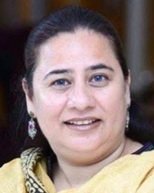
Dr Shabistan Gaffar is Chairperson of All India Confederation for Women’s Empowerment and ex-chairperson of the women’s cell of the National Commission for Minority Educational Institutions (NCMEI). She can be reached at [email protected]
