

Anas Faizi
SOME journeys are about reaching a destination; others become beautiful stories in themselves. Our road trip from Delhi to Hyderabad certainly belonged to the latter category.
Deciding to travel all the way from Delhi to Hyderabad (approximately 1,560 km) by road wasn’t easy. But once we hit the road, we turned the journey into a memorable and delightful one with entertainment all along. We stopped along the way, explored different cities, savoured their local delicacies, sipped countless cups of tea, shared conversations, laughed, and collected little memories at every halt. In two days, we reached Hyderabad, carrying the joy of the journey with us with all its delectable memories.
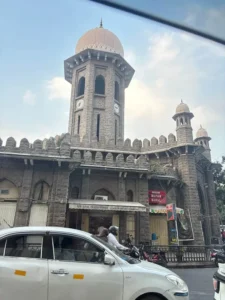
And what a journey it was! Every city had something of its own to offer, not just in its landscape and culture, but also on its plate.
Journey became a celebration of India’s extraordinary culinary diversity
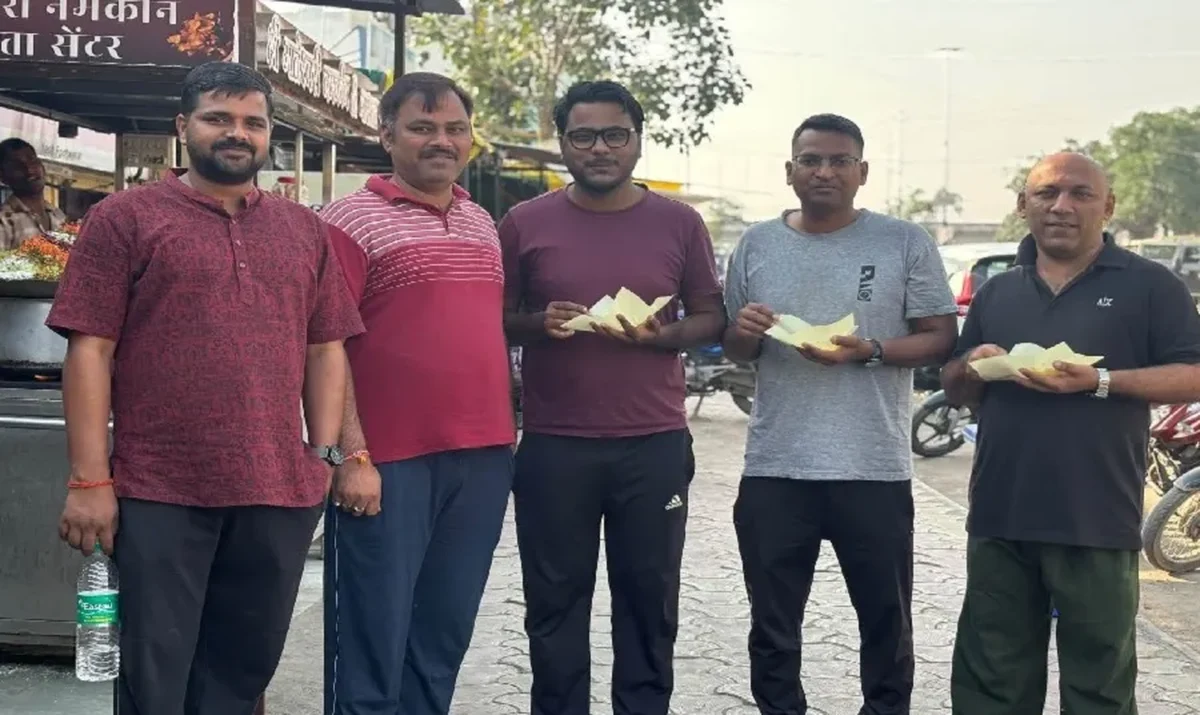
One of the most delightful surprises was Indore’s poha. I have eaten poha countless times in my life, but the poha I tasted in Indore was something altogether different. What an incredible flavour! There was something wonderfully distinctive about its taste, its texture, and the way it was prepared. It was simple food elevated to an unforgettable culinary experience. Sometimes, the most extraordinary pleasures are found in humble dishes. Indore’s poha was a perfect example.
Hyderabad, of course, had its own magic waiting for us.
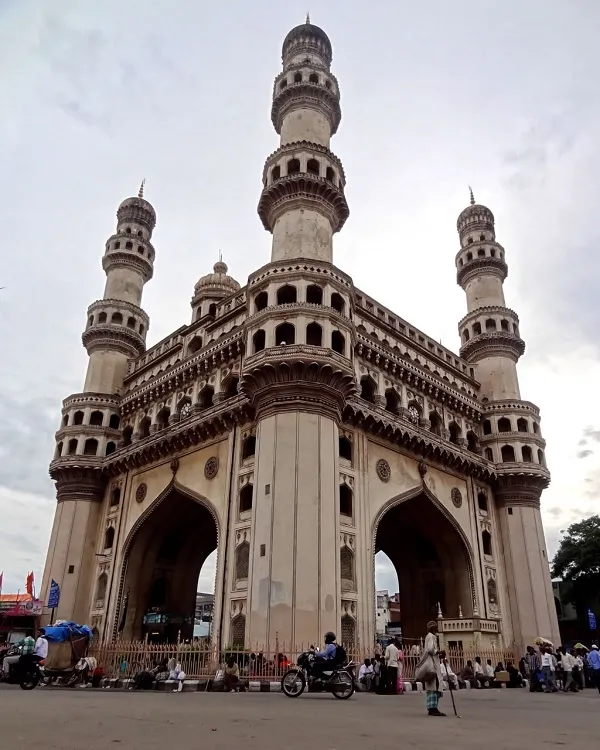
The city has always had a special pull on me. Its tehzeeb (culture), its language, its food, and the warmth of its people have a charm of their own. I had visited the city before, but this time I finally made it to Charminar for the very first time. Walking through the bustling lanes of the old city, exploring its markets, and striking up conversations with local people was an experience I had long looked forward to.
And then, of course, there was the food!
I had a particular craving for Hyderabad’s famous biryani and kebabs. In search of beef kebabs, we eventually found a little place to eat. The biryani was, naturally, Hyderabadi—not Moradabadi! The boti kebabs were delicious, and the seekh kebabs were equally tasty. But the moment I put the first bite in my mouth, I discovered a whole new level of spice. Honestly, I don’t think I ever ate anything quite so fiery in my life!
From the unforgettable poha of Indore to the fiery kebabs and aromatic biryani of Hyderabad, the journey became a celebration of India’s extraordinary culinary diversity.
Jashn-e-Adab: Where Literature Meets Music, Art, and Cultural Heritage
With our culinary adventures behind us, we returned to Maulana Azad National Urdu University, where we were attending the two-day Jashn-e-Adab programme. Under the guidance of Kunwar Ranjit Chauhan, our literary caravan had made its way to Hyderabad.
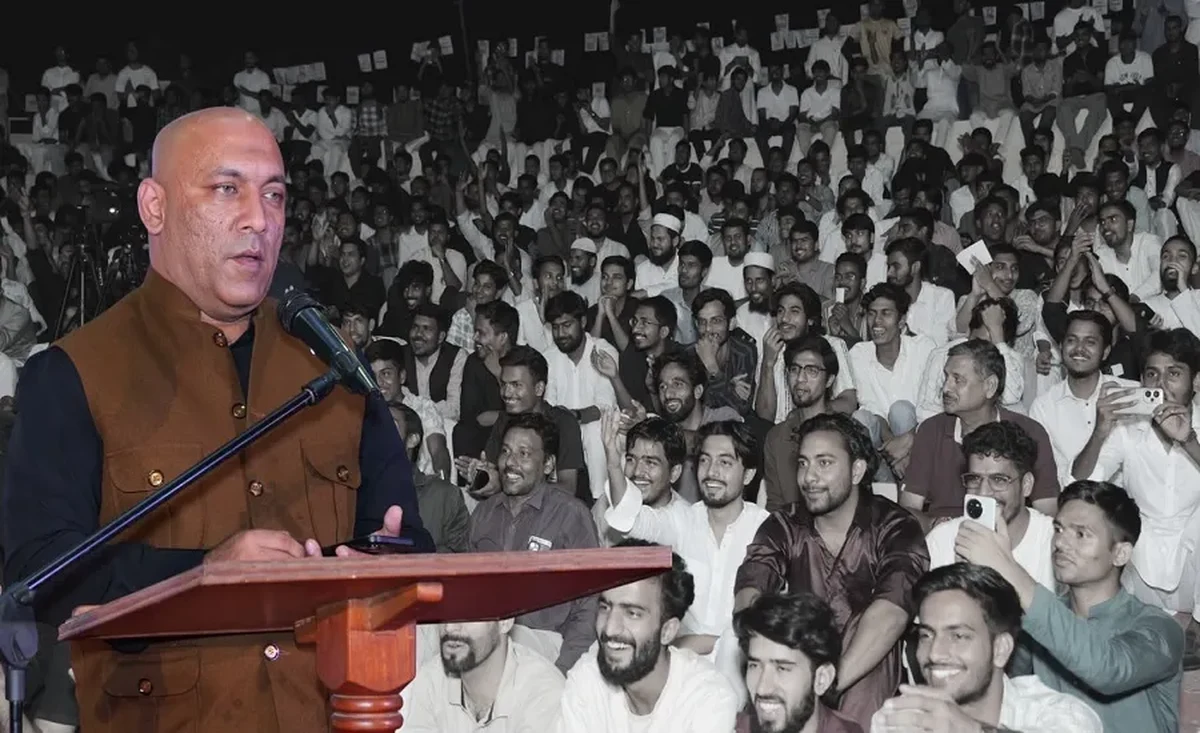
The programme was a tremendous success, and the mushaira (poetic evening) was particularly memorable. The love, warmth, and appreciation with which the audience welcomed us made the entire experience even more special. As a poet, there is something deeply moving about sharing your words with an audience that receives them with such affection.
But for me, Jashn-e-Adab represents something much larger than a successful literary gathering or a memorable mushaira.
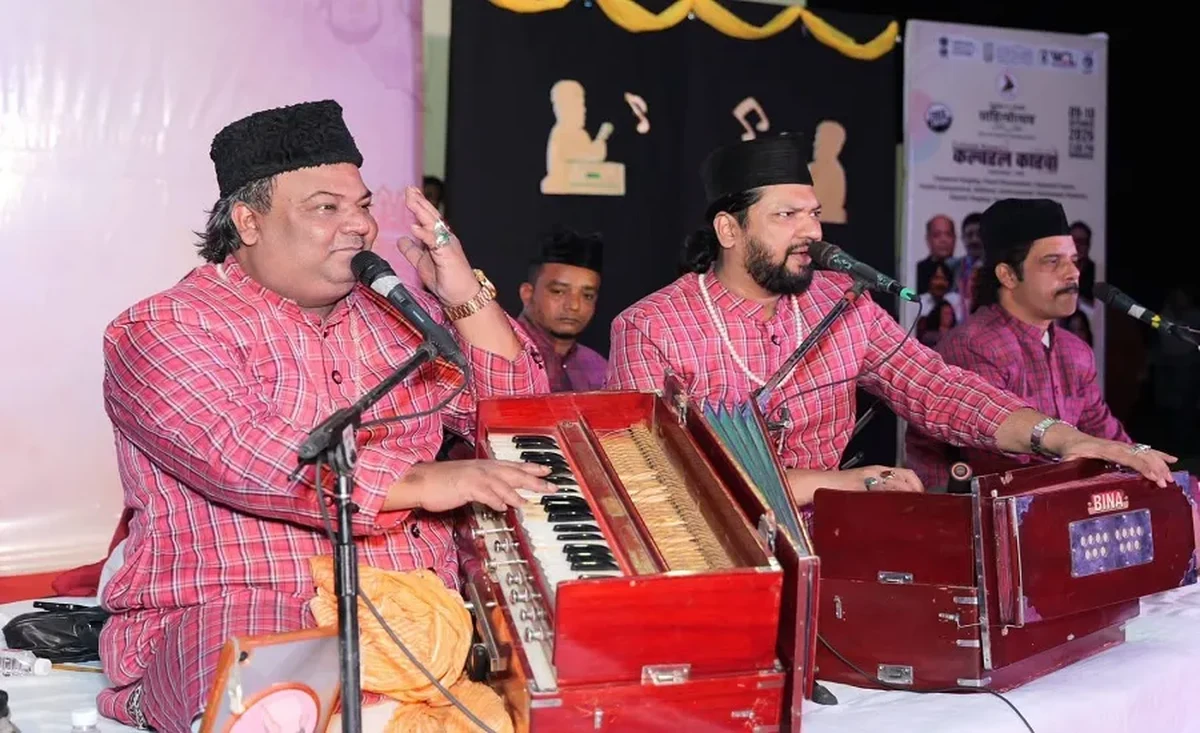
It is an important cultural initiative that brings together the many dimensions of our artistic and intellectual heritage. It celebrates poetry and shayeri, Urdu adab and literature, music and mousiqui, Indian classical music, dance, and the rich diversity of our traditional performing arts.
What makes this endeavour particularly meaningful is its ability to bring these art forms together on a common platform, allowing them to reach audiences across generations, languages, and cultural backgrounds.
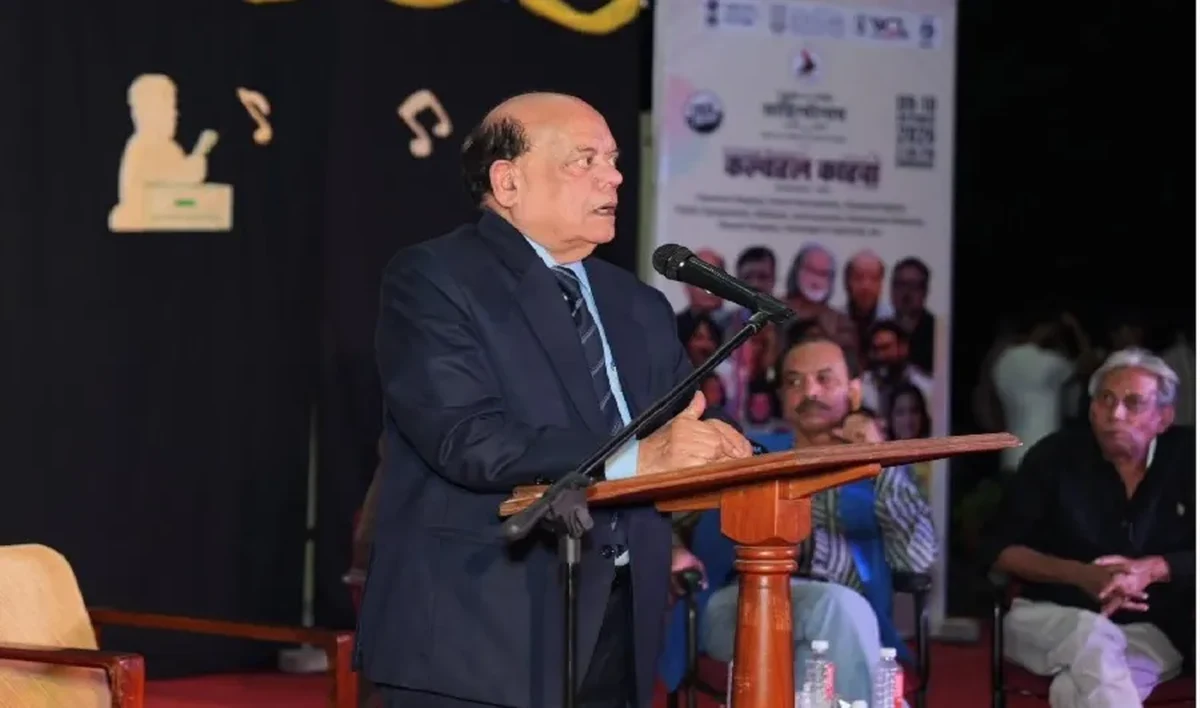
Through its programmes and artistic collaborations, Jashn-e-Adab helps take the richness of India’s literary and cultural traditions beyond familiar circles and into new spaces. It creates opportunities for audiences to encounter the beauty of Urdu poetry, appreciate the depth of classical music, experience the grace of Indian dance, and discover the many artistic expressions that form an essential part of our shared heritage.
Its significance lies not merely in preserving these traditions, but also in presenting them to contemporary audiences in ways that inspire curiosity, appreciation, and dialogue. By bringing literature, music, and performance together, such initiatives help Indian art and culture find new admirers—not only across India but also among audiences around the world.
In an age when cultural conversations can easily become fragmented, platforms like Jashn-e-Adab remind us that art has the power to connect people beyond linguistic, regional, and social boundaries.
Our poetry may be written in one language, our music may follow a particular classical tradition, and our dances may emerge from distinct cultural histories— the emotions they express belong to all humanity.
That, to me, is one of the most beautiful aspects of Jashn-e-Adab: it celebrates India’s artistic diversity while recognising the universal language of creativity.
An Unexpected Lesson from the Young Audience
One experience on the second day of the event left an especially lasting impression on me.
I must admit that I had my reservations about whether the day’s performances would connect with the students. Most of the audience comprised young people studying at the Urdu University, and I wondered whether Indian classical arts would appeal to their sensibilities.
How wrong I was!
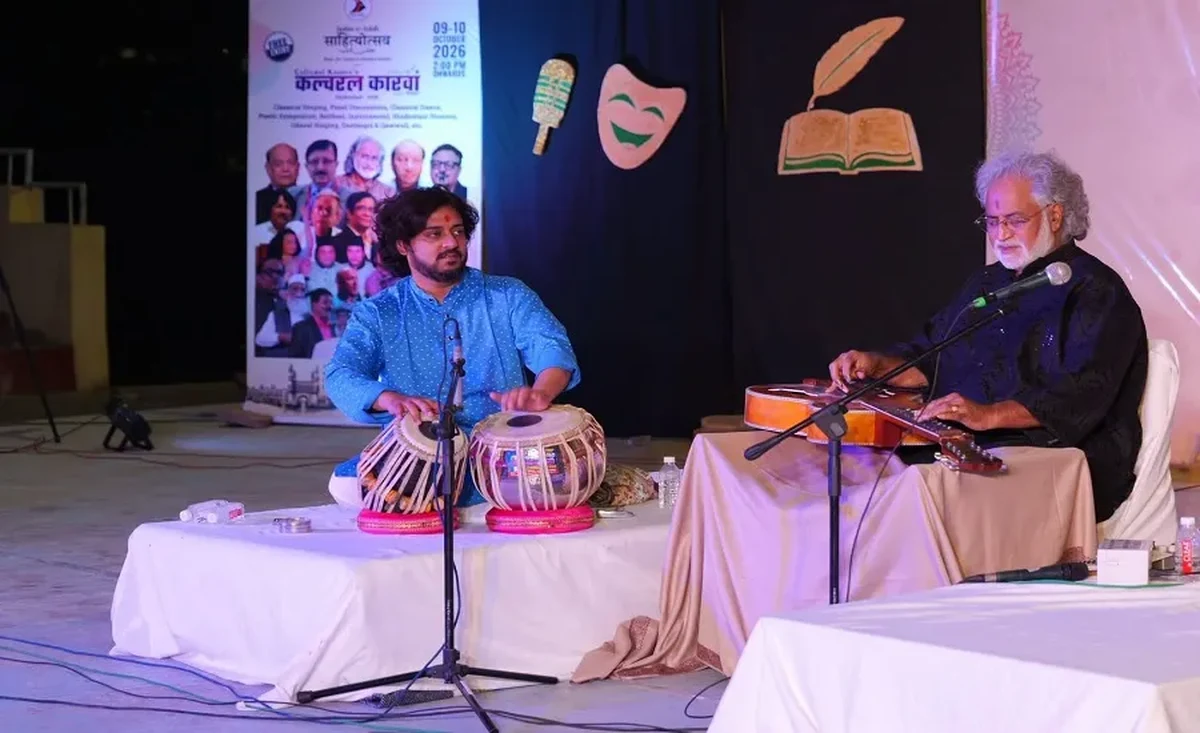
First came the mesmerising Kathak performance by Vishal Krishna, which held the audience’s attention with its grace, rhythm, and expressive storytelling. Then came a musical experience that made the occasion even more memorable: a performance on the Mohan Veena by the legendary Pandit Vishwa Mohan Bhatt.
For those unfamiliar with this extraordinary maestro, Pandit Vishwa Mohan Bhatt is an internationally acclaimed Indian classical musician and the creator of the Mohan Veena, a modified slide guitar that he developed into a distinctive instrument capable of expressing the intricate techniques and melodic depth of Indian classical music.
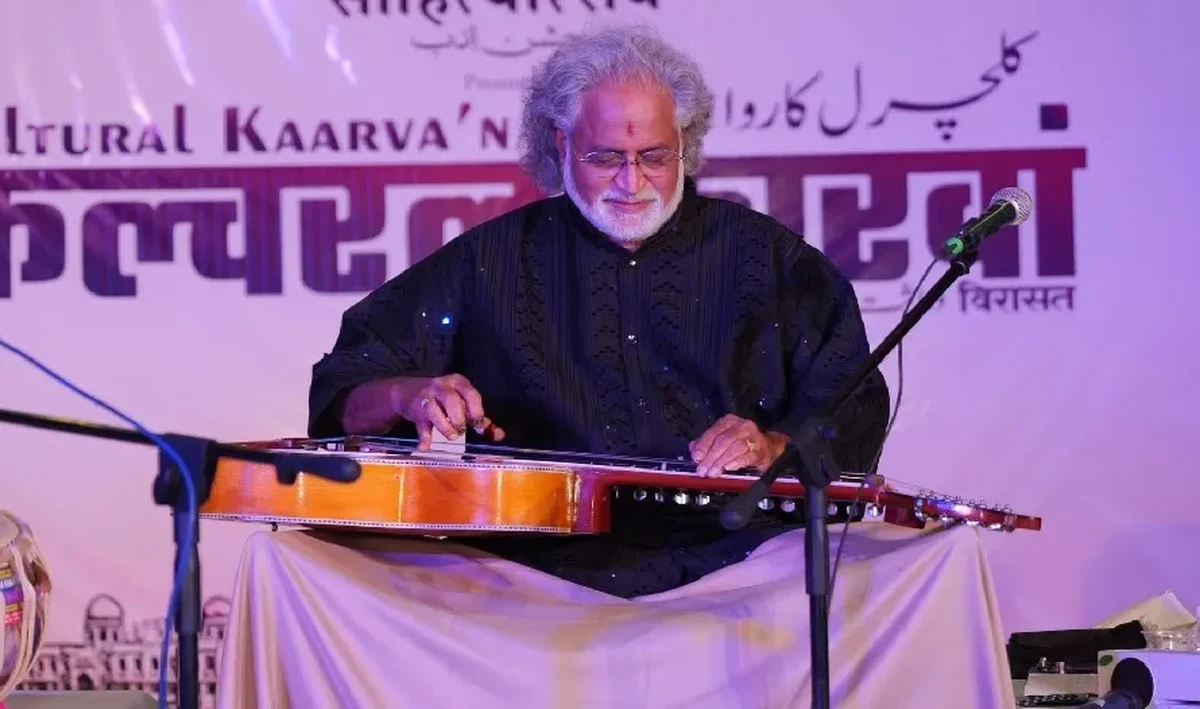
His musical journey reached an international milestone in 1994, when his collaborative album A Meeting by the River, recorded with American musician Ry Cooder, won a Grammy Award. This achievement brought international recognition to his artistry and demonstrated how Indian classical traditions can engage with musical cultures across the world.
Yet, beyond the awards and accolades, what stayed with me was the sheer beauty of the musical experience itself.
The sound of the Mohan Veena seemed to move between worlds—at once deeply rooted in Indian classical tradition and wonderfully universal in its emotional appeal. Its strings seemed to speak a language that needed no translation. There was melody, meditation, longing, and a quiet intensity that invited the listener to pause and simply feel.
Watching Pandit Vishwa Mohan Bhatt perform was a reminder of what happens when extraordinary artistry meets imagination, dedication, and a profound understanding of tradition. It was not just a musical performance; it was an encounter with a living tradition, carried forward by a musician whose creativity has expanded its possibilities.
And what made this experience even more special was the audience.
The students listened with remarkable attention, profound seriousness, and complete silence. They embraced these classical art forms with a sincerity that genuinely surprised me.
I had wondered whether these performances would connect with them. Instead, I found myself watching a young audience respond to Kathak and the Mohan Veena with an openness that filled me with hope.
For me, it was an entirely new and deeply moving experience. It reminded me that art transcends language, age, and expectation. Sometimes, all it needs is an open mind and a receptive heart.
I offered my heartfelt blessings to the students and told them how pleasantly surprised I was. More than that, I told them that they had given us a new reason to hope.
Seeing young people pursuing their education in Urdu while appreciating the richness of Indian classical music and dance was truly heartening. It challenged my assumptions and reminded me never to underestimate the curiosity, sensitivity, or cultural openness of the younger generation.
Perhaps this is precisely why platforms such as Jashn-e-Adab matter so much. When a young student of Urdu listens attentively to Kathak or the Mohan Veena, a bridge is being built between literature and music, language and movement, tradition and the future.
And when these experiences reach audiences beyond our borders, they become ambassadors of India’s cultural richness to the wider world.
A Journey to Cherish
All in all, Hyderabad gave me far more than I had expected.
This was not merely a road trip or a journey to attend a literary festival. It was a journey of flavours and friendships, poetry and music, history and heritage, and above all, human warmth.
From the distinctive taste of Indore’s poha to the fiery kebabs of Hyderabad, from the historic charm of Charminar to the warmth of a successful mushaira, and from Vishal Krishna’s Kathak to the spellbinding notes of Pandit Vishwa Mohan Bhatt’s Mohan Veena, every part of this journey left its own imprint on my memory.
Most importantly, it renewed my belief in the power of art to bring people together. It reminded me that our cultural traditions remain alive not merely because we remember them, but because we continue to share them, celebrate them, and introduce them to new generations.
I am sharing a few photographs from this memorable trip with all of you. Pictures may capture the places we visited and the moments we lived, but they can never fully capture the warmth of a conversation, the magic of a performance, the joy of a shared meal, or the affection that stays with you long after a journey ends.
Indore gave me a flavour I won’t forget. Hyderabad gave me memories I will cherish. Jashn-e-Adab gave me moments that strengthened my faith in the enduring power of poetry, music, and the arts.
And the journey gave me something more precious than all of these: a renewed appreciation for the many ways in which our culture continues to connect hearts.
Hyderabad, you have given me beautiful memories, a few fiery encounters with chillies, the gift of extraordinary music, and a heart full of gratitude.
_________
Anas Faizi is a Delhi-based journalist, Urdu poet and former RJ All India Radio. He is known for his satirical and humorous poetry. He has attended Mushairas and Kavi Sammelans across India and several Middle East nations. He can be contacted at: [email protected]
