

Israel has repeatedly killed, injured, forcibly displaced, unlawfully detained, deliberately denied women and girls access to essential healthcare, including reproductive healthcare, and starved them.
GAZA — During their ongoing genocide of the Palestinians in the Gaza Strip, the Israelis have imposed measures that have “prevented births and had a severe impact on the reproductive capacity of Palestinians in Gaza,” according to a new report by Amnesty International.
The report, titled No conditions for life: Women, girls and the gendered dimensions of Israel’s genocide against Palestinians in Gaza, was released on Wednesday, November 25, which is marked as the International Day for the Elimination of Violence against Women.
Across its 135 pages, the report lays out in harrowing detail “how the Israeli military, between 7 October 2023 and 1 October 2026, has repeatedly killed, injured, forcibly displaced, unlawfully detained, deliberately denied women and girls access to essential healthcare, including reproductive healthcare, and starved them.”
It adds that “these measures have forced women into a daily struggle for survival defined by grief and trauma and stripped away the conditions necessary for women to exercise autonomy over decisions relating to pregnancy, childbirth and reproductive health.”
The report brings these findings to life through harrowing first-hand testimonies from pregnant women, new mothers, doctors, paramedics and fathers, revealing the devastating human toll of genocidal Israeli actions in Gaza.
Woman in labour witnesses murder
A 27-year-old woman identified in the report by the pseudonym Sara was in active labour when she and her mother-in-law set out for Al-Awda Hospital in northern Gaza on December 6, 2023. Her contractions had begun at midnight and had become unbearable by 6 am. “We carried a white flag in case the Israeli forces saw us,” she told Amnesty.
However, just as they arrived near the hospital entrance, Sara encountered absolute horror:
Suddenly, I heard gunfire, and my mother-in-law fell to the ground. I looked at her and saw that a bullet had entered the back of her head and exited through her forehead. She died instantly. I froze for a moment, then I started running, all while having strong contractions. I kept running with the two men who were with us and my brother-in-law until we reached the hospital entrance. The medical staff received me while I was still in shock. I told them I was having contractions and that my water had broken. They immediately took me to the maternity ward. The baby was already about to be born. I was in a complete state of shock. I did not feel the baby as he was delivered. I did not feel anything at all. I kept telling them that my mother-in-law was outside and asked if anyone could help her. I was still hoping she might be alive. They told me that no one could leave the hospital. The staff asked everyone to go inside, and they closed all the doors. They said the Israeli forces were getting closer and had taken positions in the houses surrounding the hospital.
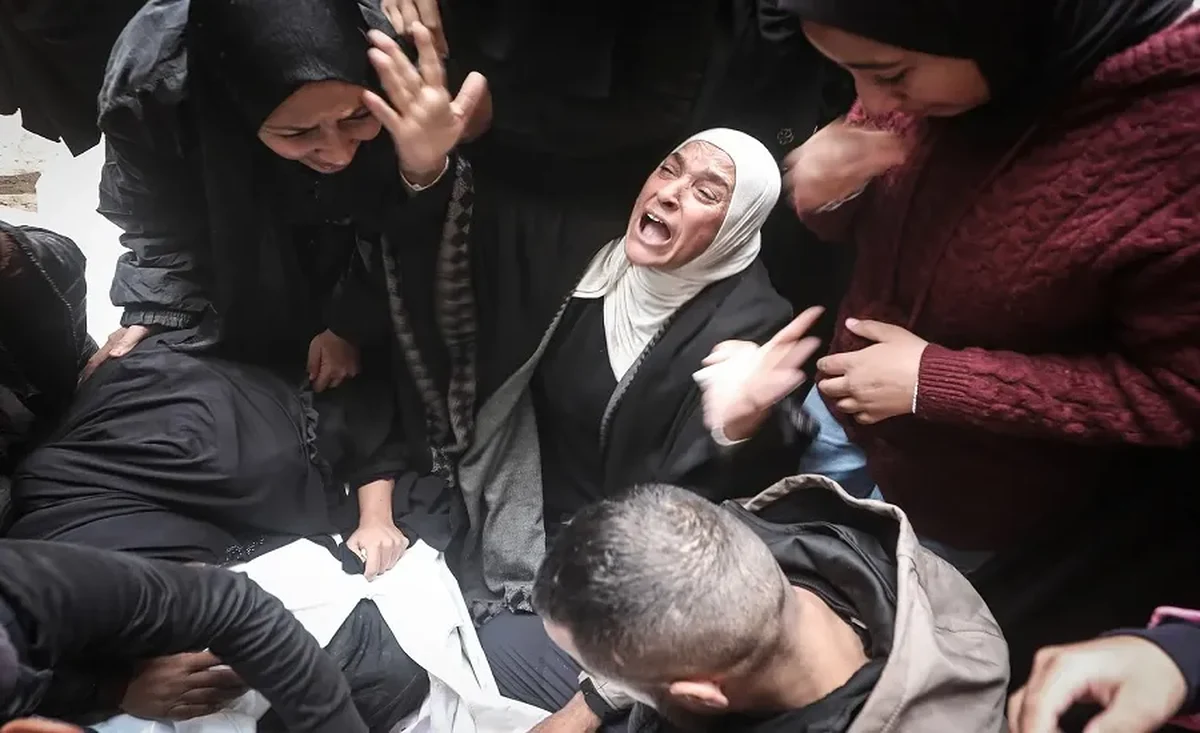
Sara and her child narrowly escaped indiscriminate firing from the genocidal Israelis. She recounted:
Right after I gave birth, they placed me in a room to rest. About an hour later, snipers fired directly at the room. I remember five bullets hitting the room. It was a miracle that neither my baby nor I was hit. They [hospital staff] had to close that room, so they moved me to the hallway.
Surgery without adequate anaesthesia
On December 12, 2023, a pregnant woman arrived at Kamal Adwan Hospital while it was on the verge of being raided. She required an emergency caesarean. A doctor who examined her said: “We found the baby’s hand was out, so she needed an urgent caesarean section, and she started to have contractions.”
As the hospital had no electricity or anaesthetist, doctors advised her to seek treatment at the nearby Al-Awda Hospital. Five minutes later, she returned with her mother, both covered in dust, after coming under fire from tanks and snipers. Upon reaching Kamal Adwan Hospital, she said: “The tank and snipers shot at us… you have to help.”
The operation was carried out without proper sterilisation and with inadequate anaesthesia. The doctor recalled: “We got the baby out, and we were about to close the cut, but her abdominal muscles got tight, and she was waking up.”
The mother was so traumatised by the experience that she “refused to allow us to put the baby in the incubator… saying she was too scared and wanted just to die with her baby.”
When the doctor later met the mother at a displacement camp, the latter said that the experience of giving birth had traumatised her so much that she decided never to have another child.
8 women forced to flee hours after caesarean sections
In one of the grimmest accounts in the report, a doctor at Al-Kheir maternity hospital in Khan Yunis described attacks, a raid, and forced evacuations by the Israelis in mid-January 2024.
The doctor said that among those ordered to leave the hospital on foot and walk for more than two hours towards Rafah were eight women who had undergone caesarean sections that morning, most of whom were suffering from malnutrition or anaemia and needed further monitoring, as well as support to be able to feed their babies. She said:
The women who had just delivered, especially with a caesarean section, had to flee while still heavily bleeding and their catheter still connected, carrying their newborn babies, completely in the dark, tanks directed us with a light what way we should take… The caesarean section women were walking and bleeding at the same time.
The doctor at Al-Kheir also said that at least four other women were in the hospital waiting to deliver and were among those ordered to leave by the Israelis. She did not know what happened to them after.
A father’s wait for his newborn
Munir’s wife gave birth at Al-Awda Hospital in northern Gaza. The following day, she was killed when the ambulance carrying her exploded after she had been evacuated from Al-Awda Hospital as it came under siege. A paramedic took their one-day-old son to Kamal Adwan Hospital.
Munir, however, couldn’t reach Kamal Adwan Hospital due to “evacuation” orders imposed by the Israelis.
He told Amnesty International that a week later:
The Israeli forces invaded the area of Kamal Adwan hospital and ordered people staying in the area to evacuate to Gaza City. They had checkpoints set up on Salah Al-Din Road [one of the two main roads running between the north and south of Gaza] to search the displaced people. When I heard the news, I was terrified that the Israeli forces would raid the hospital … [and] my son would die in the incubator. I talked to a few people and begged them to take my son with them when they left. I knew I was asking them for too much responsibility. One of the men agreed at first. But when I called him the next day, he told me that he’d already left with his wife and children and they had already walked 500 meters from the hospital. He said it would be extremely difficult for him to go back and take my son, and they were carrying so much stuff they wouldn’t be able to carry a baby as well.
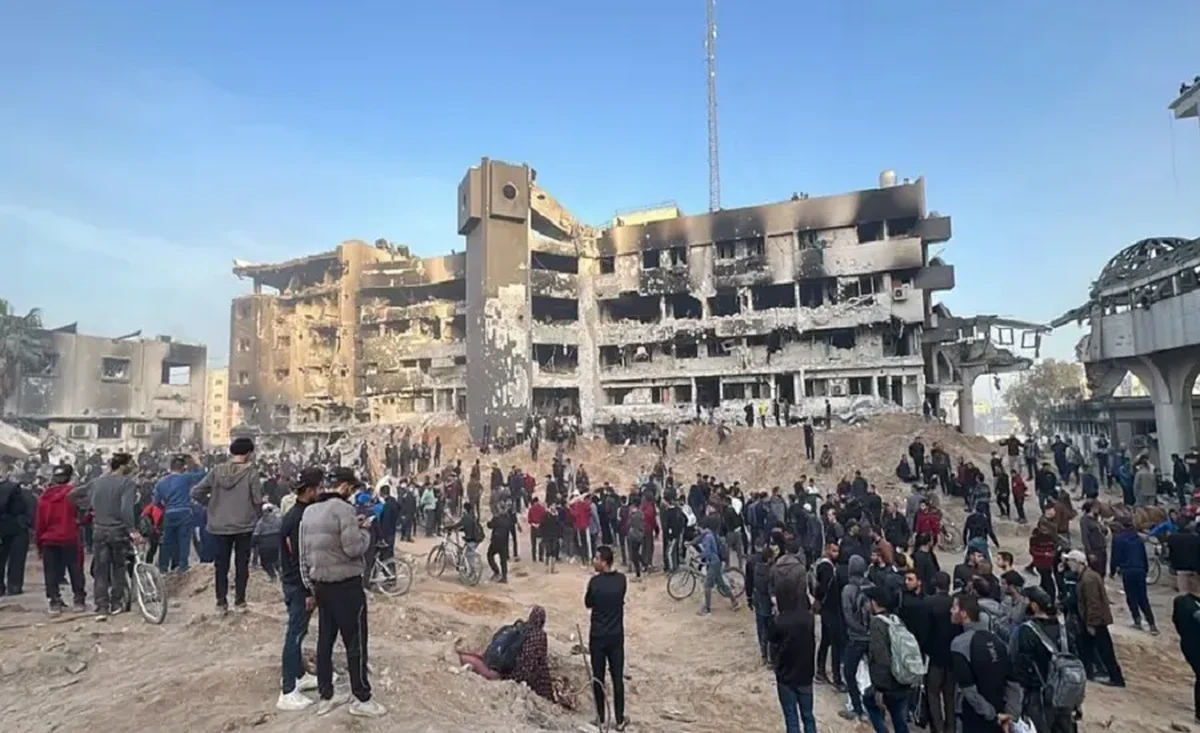
“At that moment, I lost all hope of being reunited with my son and even having him stay alive. One minute later, the man called me back and said that he could not leave the baby alone and he actually went back to the hospital and took him. He told me that they would walk toward the south and I should meet them near the checkpoint on Salah Al-Din Road.”
Munir described how his seemingly endless wait ‘felt like a scene from a horror movie’:
“Time felt unbearably slow while I was waiting to see my child for the first time. Six or seven hours later, a big group of people started to arrive… It felt like a scene from a horror movie; people looked exhausted from walking and passing through the checkpoint. They were full of dust and carrying so much stuff. There was a lot of smoke and heavy shooting, and people were running in all directions, carrying their children and belongings on their backs. They looked as if they had come out of hell… I met the family and took my son. When I held him, my heart broke when I saw him wrapped in a dirty, worn-out blanket with no clothes at all, with an injury on his face. He was only one week old. He hadn’t had any milk since they left the hospital. I remembered my wife and how she was eager to have the baby. I cried.”
Sharing an incubator with an infected infant
Hanaa told Amnesty International how her newborn son contracted a blood infection after sharing an incubator with another baby:
On the first day [after his birth], he was put in the incubator with another baby. Someone who worked in the NICU and knew my husband told him that the other baby had a blood infection and should not be with other babies. My husband complained and put pressure to remove my son or the other baby, and they did; 4-5 days later, doctors told us that our son caught a blood infection.
Her son had been on a waiting list for heart surgery, but that day would never come:
He died after 20 days. They said it was congenital deformations. He also had a heart problem and needed urgent heart surgery, and he also caught a blood infection. They said… they could not keep him on the oxygen machine enough time because of the shortages in oxygen.
Hanaa told Amnesty her firstborn son had the same heart condition but had survived after receiving surgery in Jerusalem four years earlier for a similar condition.
A mother loses her newborn and 11-year-old son
Walaa, 36, was forcibly displaced from her home in Jabalia while pregnant. She was repeatedly displaced under extremely difficult conditions and struggled to find adequate food and shelter.
In January 2024, she underwent an emergency caesarean section at Nasser Hospital while the hospital was under attack. Her twin daughter died shortly after birth.
Walaa and her husband, who was a nurse, attributed the baby’s death to interrupted oxygen supplies and the lack of medical specialists. The hospital was struggling with shortages of fuel and staff.
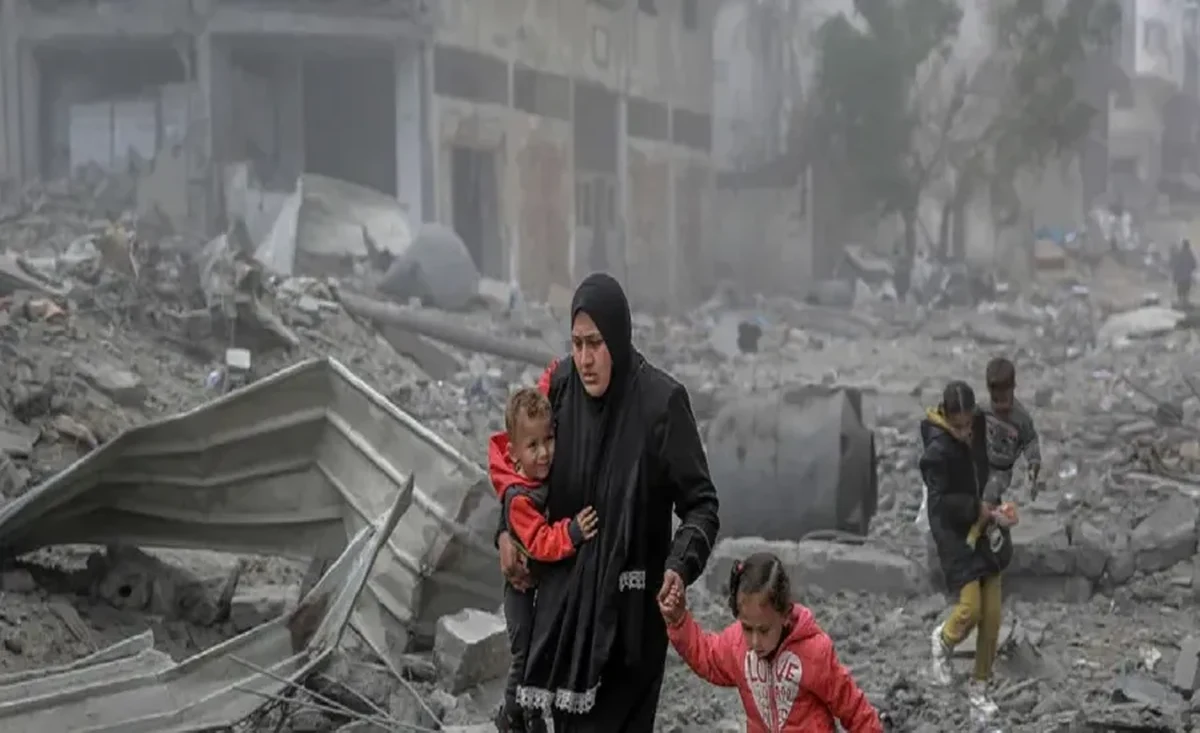
While Walaa was recovering from surgery, she received pain medication only once because the hospital was rationing its remaining stock. The hospital was subsequently raided. Walaa was trapped inside with her surviving newborn son, her four other children and other patients. Her husband was detained.
She recalled:
I cried day and night. I was in pain and psychologically destroyed, worrying about my husband, trying to keep my baby alive and taking care of my other kids.
Later, her 11-year-old son Omar helped her obtain food and water and look after his younger siblings. However, another tragedy struck Walaa. In late 2024, Omar was killed in an air strike while out buying a slushy with a friend.
Walaa later described seeing his body:
For a second I froze and denied it was him, then I threw myself on the stretcher.
“[I]f Omar was destined to leave us, I just wish he had left us before experiencing the famine and displacement,” she said.
Amnesty International also lists the measures the Israelis have undertaken to prevent births among Palestinians in the Gaza Strip.
Measures preventing births
- Destruction of fertility clinics
Israeli attacks since October 2023 have “led to the closure of all of the at least nine fertility clinics that provided IVF services in Gaza.” The attacks resulted in the destruction of several thousand embryos or other reproductive material.
- Denial of essential medical supplies to restore IVF services
Israeli restrictions on the entry of essential supplies have prevented the restoration of IVF services in Gaza.
- Near-blanket closure policy
Israel’s near-blanket prohibition of people leaving Gaza has prevented Palestinians from accessing assisted reproductive technologies such as IVF and thus interfered with conception.
Measures impairing gestation
- Denial of essential supplies critical for maternal health
The Israeli blockade and deliberate denial of adequate medicines, medical items and fuel to Palestinians in Gaza have had severe consequences on maternal and newborn health, leading to adverse pregnancy outcomes, including the heightened risk of miscarriages.
- “Evacuation” orders imposed with no exceptions for high-risk groups such as pregnant women
Women with late-stage and high-risk pregnancies were among those forced to travel — sometimes against medical advice — and live in inhumane conditions without adequate shelter, water or sanitation. These “evacuation” orders led to interruptions in maternal healthcare for some pregnant women and caused maternal healthcare facilities in displacement areas to become overwhelmed.
Measures impairing childbirth
Destruction of maternal healthcare infrastructure
The report notes that, while the Israelis attacked hospitals as a whole, “in other instances, such as, for example, in Kamal Adwan Hospital on 11 December 2023, maternity departments came under specific attack.”
Psychological measures
“Conditions imposed by Israel also contributed to a broader pattern in which some women abandoned plans for future pregnancies, including cases in which trauma led women to avoid becoming pregnant.”
Cumulative impact of measures imposed by Israel
Available data from 2025 and early 2026 indicates a marked increase in miscarriages, stillbirths, maternal mortality and other adverse pregnancy outcomes, alongside a marked decrease in birth rates among Palestinians in Gaza since 7 October 2023.
Amnesty concludes that “Israeli authorities’ measures have impaired the ability of Palestinians in Gaza to conceive, sustain pregnancies and give birth to living children, thus preventing births within the group.”
It makes clear that the prevention of births in the Palestinian enclave was not “an incidental consequence of Israel’s overall pattern of conduct” but a “foreseeable outcome of policies and practices maintained and repeated by Israel over a three-year period.”
It adds: “This conduct must therefore be investigated as genocide by imposing measures intended to prevent births within the group, prohibited under Article II(d) of the Genocide Convention.” — Palestine Will Be Free
