

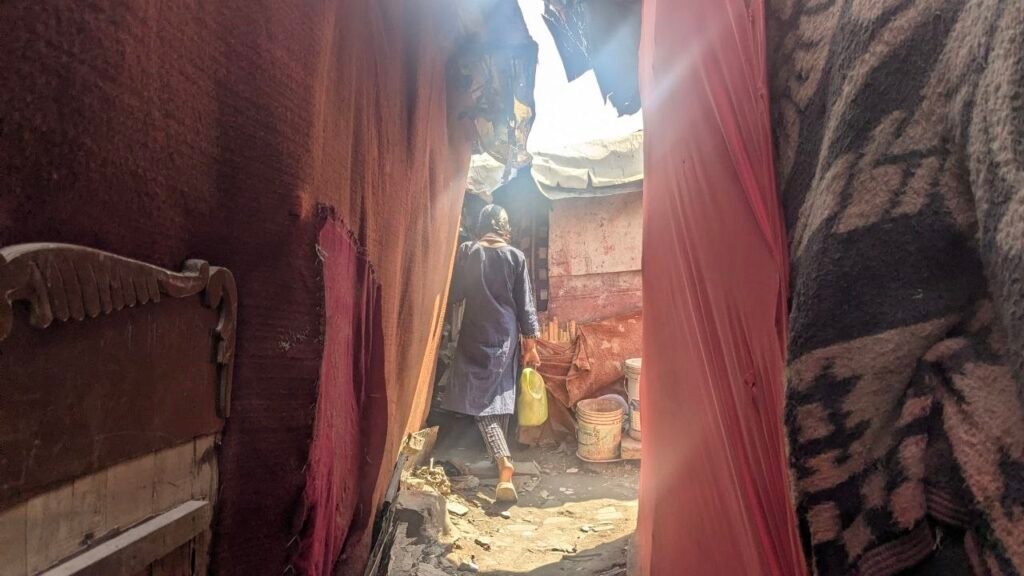
NEW DELHI — Ruksaar Azad, a Class IV student, sitting cross-legged on the earthen floor, in an 8-by-6-foot poorly ventilated shanty in Delhi’s Dhobi Ghat area in Okhla, is carefully reading a school book. A locally made water cooler is installed in the left corner of her home. “We put the cooler on occasionally to save money,” a circumspect Ruksaar said.
Outside, the city is bustling, traffic flows, and people shop in air-conditioned malls. Inside her shanty, however, the heat is suffocating.
The 10-year-old moved to Delhi six months ago from Bihar’s Purnia district, brought by her parents in search of better educational opportunities. However, instead of a classroom, Ruksaar finds herself navigating a life shaped by uncertainty, of admission, of documentation, and of survival in the scorching Delhi heat.
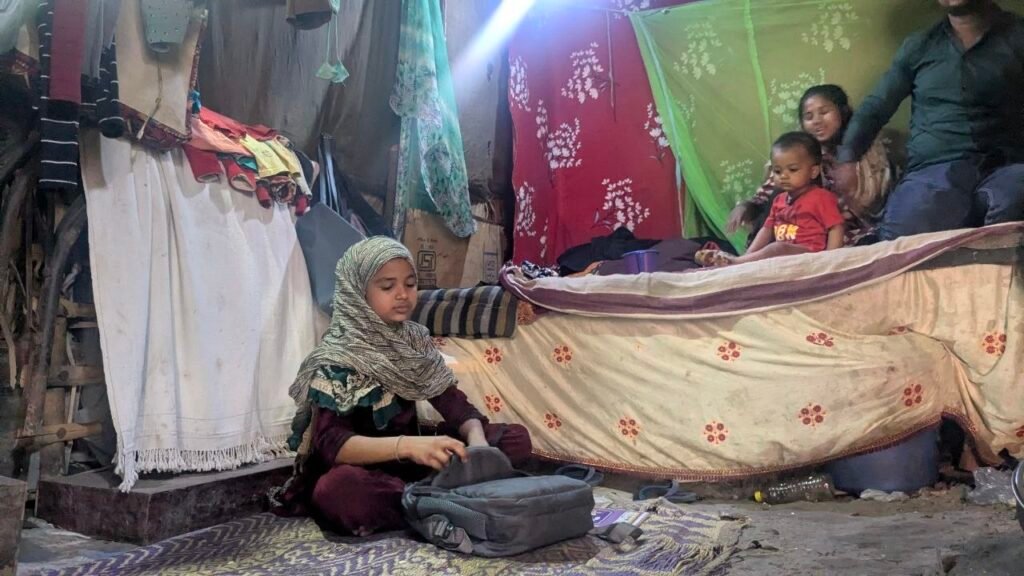
“It has been six months since I moved here. I am yet to get admitted to a government school because some of my documents are missing,” she says.
As she awaits her admission in a school, Ruksaar attends the Seekh Foundation, a tuition centre run by students from Jamia Millia Islamia’s Department of Social Work. The centre offers a modest refuge from the heat, with a water cooler and a fan providing some relief to over 30 migrant children who gather there daily to study. But for many like Ruksaar, relief is temporary.
A Cycle of Loss and Exclusion
According to Ramaz Ali, a coordinator at the centre, the biggest barrier to education for these children is not willingness, but paperwork.
“Most of these children do not have documents like Aadhaar cards or ration cards,” Ali said. “This settlement lies along the flood-prone Yamuna channel. Every year, floods wash away their belongings, including important documents. Without them, school admission becomes almost impossible,” he added.
The families living here are caught in a cycle; displacement leads to loss of documents, which in turn blocks access to basic services like education.
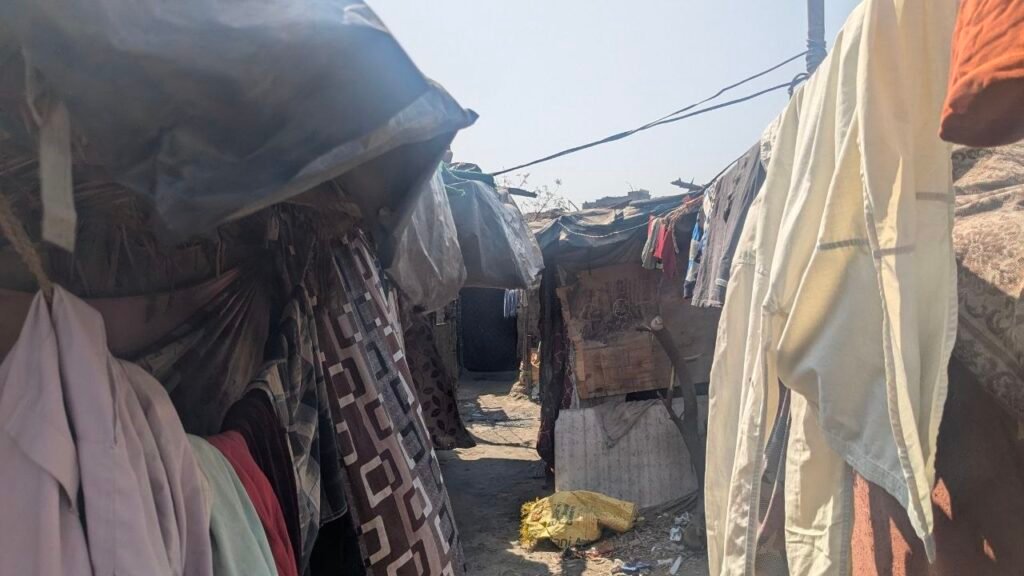
Even daily survival is uncertain. The colony remains unregulated, with erratic electricity supply. While some families have fans, they use them sparingly to save on costs.
“These children have adapted to Delhi’s extreme heat,” Ali says. “They have no other option but to live with it.”
A City Getting Hotter
What Ruksaar experiences inside her shanty reflects a broader pattern across the national capital.
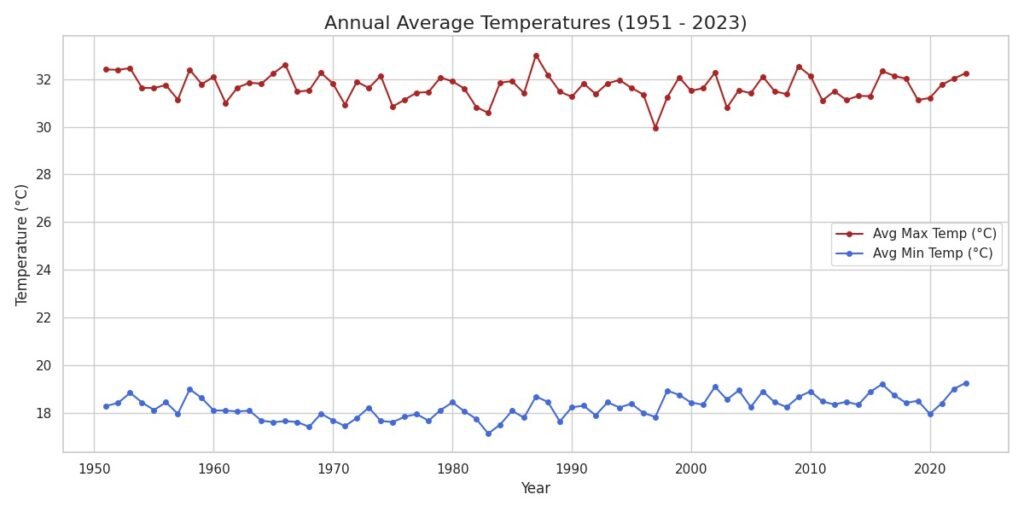
In March this year, the city recorded a maximum temperature of 36.8°C, 2.7°C above the climatological average. The mean minimum temperature stood at 17.6°C, also 2.0°C above normal.
As per the data on daily temperature variation in Delhi from 1951 to 2024, provided by Open City, India’s leading civic-tech and urban data commons, reveals a consistent pattern of extreme heat events primarily concentrated in May and June, with temperatures frequently exceeding 45°C.
In the early part of the recorded period, significant peaks were noted in June 1951 (45.1°C), June 1955 (45.6°C), and June 1958 (46.5°C). The data from the early 2020s suggests a continuation of severe heat events with high frequency. In 2020, the temperatures in late May reached 45.9°C. In 2022, a prolonged heat event in mid-May saw temperatures hit 45.6°C.
The year 2024 recorded one of the most intense heatwaves with temperatures reaching 46.8°C on May 30. Furthermore, in mid-June 2024, a prolonged extreme heat was witnessed, with temperatures remaining between 44.0°C and 45.2°C for several consecutive days.
This trend is not unique to Delhi. A study by the Council on Energy, Environment and Water revealed that around 57 per cent of Indian districts, catering to over 76 per cent of the country’s total population, are currently at high to very high heat risk. The study also found that the ten states and UTs, including Delhi, Maharashtra, Goa, Kerala, Gujarat, Rajasthan, Tamil Nadu, Andhra Pradesh, Madhya Pradesh, and Uttar Pradesh, are at the highest heat risk zones.
Policies That Don’t Reach Everyone
India is ranked 7.4 on the Children’s Climate Risk Index (CCRI) by UNICEF, which is extremely high. The study highlights the children’s exposure and vulnerability to the impacts of climate change. Globally, nearly 1 billion children live in extremely high-risk countries. A 2023 UNICEF report revealed that every year, 24.3 million children in India are impacted by floods, cyclones, heatwaves and other calamities.
To address the impact of rising temperatures on children, the Delhi government has introduced measures under the Delhi Heat Action Plan. Schools are being positioned as both vulnerable spaces and resilience hubs, with steps such as rescheduled timings, hydration measures, and restrictions on outdoor activities.
Even though schools have changed working hours to early mornings to avoid peak heat hours, the homes these children return to offer little protection. Tin-roofed shanties with poor ventilation trap heat, making indoor conditions unbearable.
The policies aimed at saving children from extreme weather fail to account for children living in informal settlements. These children remain vulnerable to heat at peak hours, usually from noon to 6 pm.
Daytime extreme heat events are not the only concern. Delhi is experiencing hot nights too, with a significant increase in nighttime temperature in the city.
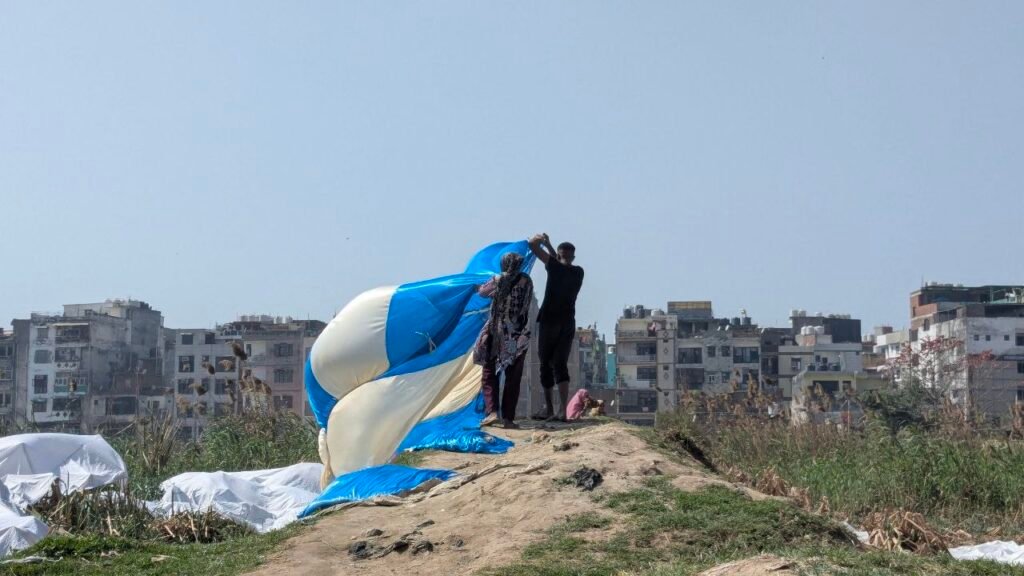
Summer vacations, which usually begin from May to June, also bring unintended consequences. Delhi has been experiencing high, prolonged heat events during these months, and closing the schools during this period puts the underprivileged students at risk.
For children from more privileged backgrounds, vacations mean rest. For others, they mean prolonged exposure to heat without access to cooler school environments.
Sunil Kumar Adela, Director at Centre for Holistic Development, a non-profit organisation based in New Delhi, said, “The policies written on paper look quite realistic and fair, but on the ground, there are huge gaps. Most of the government schools don’t even have fans in classrooms.”
The official pointed to the gaps in implementation of the recommendations in Delhi’s Heat Action Plan. “While framing policies to mitigate the impact of heat waves, the policymakers have to sit with the people who are impacted; that’s the only way to make fruitful policies. Changing school timing is proven ineffective; if anything, it exposes the students to the risk of heat strokes and other related issues.”
“There is a high need to improve the infrastructure and make schools heat-resilient hubs where the underprivileged children can take refuge during the extreme heat.”
‘I Hate Summer Vacations’
For Simran, a Class VIII student living in the same settlement, the summer break is a time of distress.
“I hate summer vacations,” she says. “It becomes very hot inside the shanties, and we can’t even afford a fan at home.”
Her father, Pankaj Kumar, migrated to Delhi 12 years ago from Bihar’s Samastipur district. Employed as a sandal maker, he struggles to provide better living conditions for his family.
“No one wants to live in a cramped place like this,” he says. “If I get employment back home, I would go back.”
Simran tries to cope by making the most of her school hours.
“In the summer, our school runs from 6 am to 12:30 pm. I try to finish as much homework as possible there. It is very difficult to study at home,” she says. “I want to become a teacher, and I know there is tough competition.”
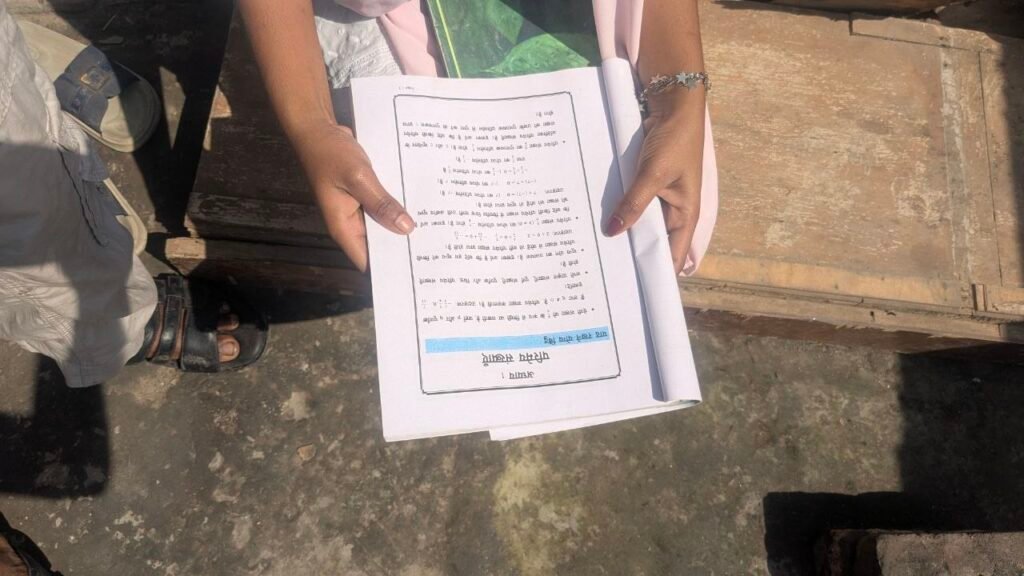
Teachers on the ground are witnessing these gaps firsthand. Marina, a Special Education teacher at Sarvodaya Vidyalaya, Madanpur, said, “During the high temperature events, we take precautionary measures as per the guidelines provided by the government, which include restricting outdoor activities to protect students from heat.
“Marina pointed out the limitations of these precautionary measures. “No matter what measures we take in schools, we have seen that students from poor families and who live in unorganised settlements are getting impacted during the summers. These students are mostly first-generation learners and have little to no resources at their disposal. They fail to complete their homework and are often sick.”
Caught Between Heat and Hope
Back in Dhobi Ghat, Ruksaar continues to wait for admission, for stability, for a chance to sit in a classroom like other children.
Her father, Mohammad Azad, a rickshaw driver, moved to Delhi a decade ago in search of a livelihood, while his family stayed behind in the village. It was only recently that he brought them to the city, hoping for a better future.
Instead, they now find themselves navigating a system that demands documents they no longer have, and living conditions that grow harsher with every passing summer.
As Delhi’s temperatures rise year after year, children like Ruksaar and Simran remain on the frontlines of a crisis they did little to create.
For them, education is not just about books and classrooms; it is about enduring the heat, holding on to hope, and waiting for a system that finally makes space for them.
—————
Umer Ahmad is a mentee of the Climate Change Media Hub at the Asian College of Journalism. The programme is supported by Interlink Academy, Germany. He can be reached at umer1558@gmail.com
