

Muslim women are not oppressed—unequal systems constrain them, and both community and policy must respond
I WAS recently invited to a panel discussion titled “Muslim Women in India: Rights, Realities, and Roadblocks.” This topic often sparks debate, is frequently misunderstood, and rarely draws from real-life experiences. For me, it is not just an academic exercise; it is a deeply personal moment of reflection shaped by more than three decades of work in women’s education across various regions and social contexts.
Over the years, I have seen remarkable changes alongside persistent challenges of exclusion. I have had the privilege of watching first-generation learners from economically disadvantaged backgrounds rise to become lecturers, judges, civil servants, and esteemed professionals. These stories are far from symbolic; they are genuine and powerful examples of what can happen when opportunity meets perseverance. They illustrate not just personal triumphs, but also the broader potential for change when we invest in access and support for those who are often overlooked.
Contrasting Narrative
However, in parallel with these achievements lies a contrasting narrative, one that is less conspicuous and often overlooked. This narrative encompasses individuals who embark on their journeys but are unable to see them through, not because of a lack of ambition or motivation, but because the systemic structures in place fail to provide the necessary support and resources for their success.
One such case remains deeply etched in my memory. I recall a young woman from a remote area of Odisha who aspired to pursue a PhD. She had the academic capability, the discipline, and the vision to move forward. But her journey was halted not by lack of merit, but by lack of support. There was no scholarship available to her. Her circumstances made it impossible to continue.
She stood at the threshold of higher education, yet the system offered no pathway forward.
Her story is a stark reminder that talent alone is not enough when systems are absent or inaccessible.
Beyond individual instances, there’s a larger, more systemic issue that I have noticed time and again. Many families, especially those from rural areas and economically disadvantaged backgrounds, move to urban centres in search of better opportunities. While this migration is often essential for their survival, it frequently disrupts their children’s education, particularly girls.
Unforeseen Barriers
In urban areas, families often encounter various barriers that prevent their children from accessing education. These challenges include a lack of required documents for school admission, difficulties transferring school records, a lack of proof of local address, limited knowledge of enrolment procedures, and overcrowded or inaccessible public schools. Therefore, children who have previously studied may find themselves unable to reintegrate into the education system. Thousands of such cases exist in which education is not intentionally denied, but is hindered by procedural barriers and administrative rigidity. This reality creates a silent yet meaningful group of students who, despite being technically eligible, find themselves practically excluded. It is important to recognise their struggles and the barriers they face in accessing opportunities.
For girls, the repercussions are significantly more daunting. When their education is disrupted, the path to re-entering the academic environment grows increasingly challenging. As time passes and the gap in their learning widens, the chances of them returning to school decline alarmingly. This trend affects not only their immediate opportunities but also their long-term future.
The structural pattern observed in the education of young women in India, especially within marginalised communities, warrants attention. This phenomenon is particularly prevalent in states such as Uttar Pradesh, Bihar, West Bengal, Madhya Pradesh, and Rajasthan, where the trends are notably similar. Initially, girls demonstrate high enrolment rates in schools, often supported by familial backing, challenging prevalent stereotypes about parental attitudes toward female education. In addition, there is a discernible aspirational drive among these young women.
Logistical Concerns
However, a critical discontinuity arises during the transition from primary to secondary education. This disruption can be attributed to several interrelated factors, including financial constraints that necessitate prioritisation of immediate economic contributions over educational pursuits. Additionally, logistical concerns such as distance to educational institutions and safety issues further exacerbate the situation. Economic migration further destabilises the continuity of education.
Of paramount importance is the absence of a clear and accessible transition pathway from education to livelihood opportunities. This lack of linkage effectively diminishes the potential benefits of educational attainment, eventually perpetuating cycles of marginalisation and limiting socioeconomic mobility for these young women.
In metropolitan cities such as Delhi, Mumbai, and Bengaluru, proximity to educational institutions does not necessarily lead to increased opportunities. The existence of schools does not ensure a pathway to progression, and completing education does not guarantee employment. Conversely, states like Kerala illustrate the positive outcomes of sustained public investment and consistent institutional support. The variation in results can be attributed to the effectiveness and structure of educational systems rather than differences in identity or beliefs.
This reality extends beyond Muslim women in India. Findings from the UNESCO Global Education Monitoring Report reveal a consistent global trend that marginalised girls may enrol in education. Still, they are significantly more likely to drop out before completing their studies. The intersection of poverty, gender, and social exclusion creates barriers that transcend both religion and geography. Women make up a substantial portion of the world’s illiterate population, and educational discontinuity is particularly pronounced among economically disadvantaged communities.
Global Perspective
Understanding the challenges faced by Muslim women requires a global perspective that goes beyond the misconception that these issues are primarily rooted in religion. Evidence shows that outcomes for women can differ significantly across various contexts within the Muslim World. For instance, Indonesia boasts high levels of female educational attainment. In Bangladesh, women’s workforce participation has grown, particularly over the years. In Iran, despite enduring political volatility and economic sanctions, the literacy rate among young women is nearly universal, and women are well-represented in higher education. These instances emphasise a significant truth. When systems function effectively, women can advance and thrive, regardless of their religious background.
Islam’s foundational teachings do not deny women the right to education; rather, they emphasise the importance of knowledge, dignity, and participation. The divergence lies not between the principles of Islam and women’s rights, but between normative ideals and the lived realities shaped by socio-economic conditions, cultural interpretations, and institutional constraints.
This critical distinction is essential for transforming the prevailing narrative. Muslim women are not inherently oppressed by their faith; instead, they often find themselves situated within systems that do not effectively translate rights into accessible opportunities. This phenomenon can be described as a capability gap, where rights may exist in principle but the means to exercise them remain severely limited. While education is available, it is not consistently sustainable. Opportunities may be present but are frequently inaccessible. Aspirations are robust; however, they are often unsupported by the necessary institutional pathways.
In this context, it is essential to understand the role of community-based education systems, such as madrasas, with nuance. In many areas, especially among economically disadvantaged communities, madrasas offer accessible and culturally trusted environments for girls’ education. For families who may be reluctant to send their daughters to distant or unfamiliar institutions, these madrasas serve as vital entry points. The concern lies not in their existence but in their isolation from mainstream educational and economic systems. When effectively integrated through connections with open schooling frameworks, the inclusion of modern subjects, and the incorporation of digital and vocational training madrasas can transform from endpoints into bridges, facilitating broader opportunities for girls
Diverse Social Realities
Around the world, education systems have embraced the need to adapt to diverse social realities. In the United States, homeschooling is a legitimate and respected educational pathway, supported by structured certification and transition mechanisms. Similar flexible models thrive in other regions. This shift highlights the belief that education should respond to the unique circumstances of individuals rather than rigidly enforce conformity to traditional institutions. Through this lens, the focus shifts from merely questioning the presence of alternative systems, such as madrasas, publication, to envisioning their potential integration into broader frameworks that foster continuity and mobility.
A significant challenge in advancing women is the disconnect between education and economic opportunities. For many women, completing their education does not necessarily lead to economic independence or access to professional opportunities. This disconnection can render education more symbolic than transformative. To tackle this issue, policy initiatives and community involvement need to come together.
Effective change requires a comprehensive approach. Educational institutions should go beyond merely focusing on enrolment and instead emphasise strategies that promote continuity, re-entry pathways, and education linked to employment prospects. Educational systems must be adaptable to factors such as migration, economic instability, and social constraints. Concurrently, communities must recognise and support the long-term benefits of sustained education, encouraging women’s participation beyond just basic schooling.
The crux of the matter lies not in the assertion of rights for Muslim women, which are enshrined constitutionally and ethically, but in the efficacy of our systems to facilitate the full realisation of these rights.
The trajectory of women’s empowerment in India will hinge not solely on enrolment in educational institutions but on our capacity to support sustained progress, particularly for those from marginalised communities. It is crucial to acknowledge that Muslim women do not merely embody victimhood due to their identity; rather, they frequently find themselves subjugated by systemic inequities. A paradigm shift towards inclusive, responsive, and integrated systems will render their success not an anomaly but an inevitable outcome.
To sum up, our primary objective should not be the redefinition of women’s rights, but the systematic redesign of the frameworks that realise and embrace these rights.
________________
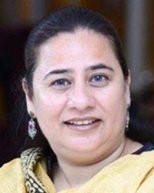
Dr Shabistan Gaffar is Chairperson of All India Confederation for Women’s Empowerment and ex-chairperson of the women’s cell of National Commission for Minority Educational Institutions (NCMEI). She can be reached at shabistangaffar@gmail.com
