

BHOPAL — A four-day historic exhibition, organised under the aegis of the Indian History Forum at the Library Ground of Taj-ul-Masajid was inaugurated here on Thursday by the Bhopal Shahar Qazi Maulana Syed Mushtaq Ali Nadvi and Maulana Athar Habib Rehan, a teacher at the Taj-ul-Masajid Madrasa.
The exhibition will be open to the general public, students, researchers, history enthusiasts, and various educational institutions till November 16.
The central theme of the exhibition is “The Woven Land”. Its objective is to present the history of medieval India from a fresh perspective, highlighting the contributions of the Muslim community to the development of Indian civilisation, as well as the mutual cooperation, cultural exchange and shared heritage among diverse communities.
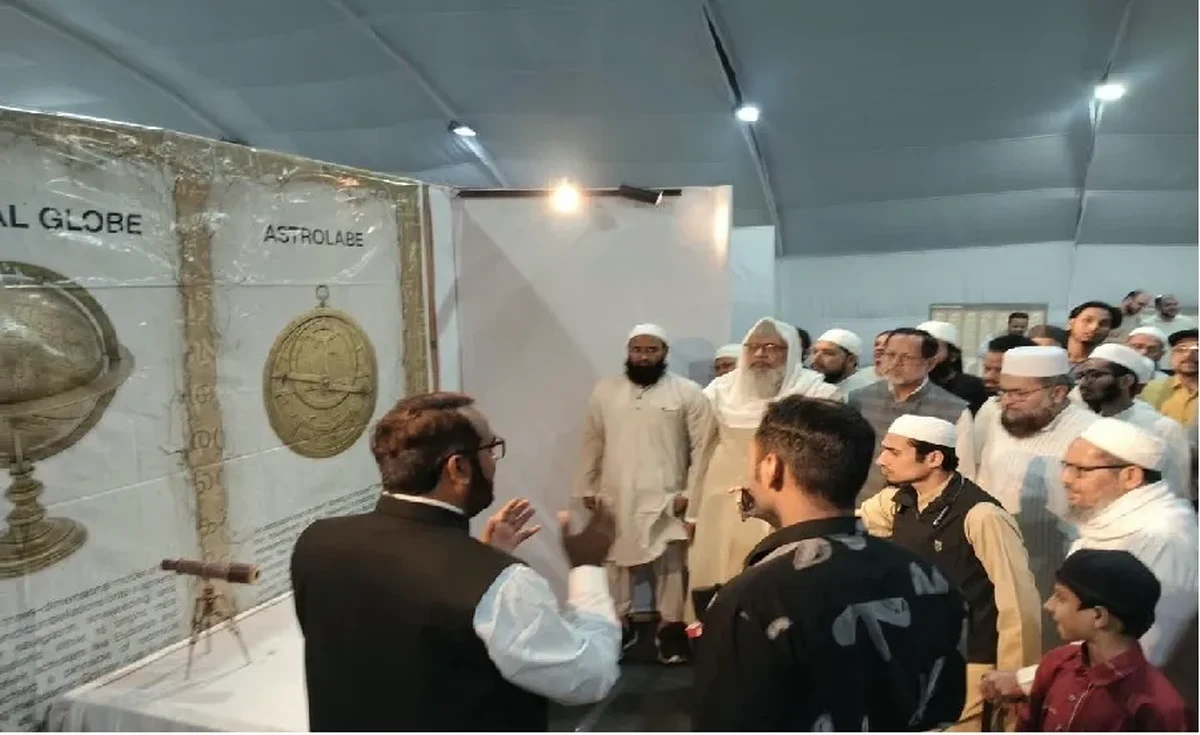
The history of medieval India is presented in an engaging and informative manner through illustrations, historical documents, models, posters, infographics, and other visual media. The exhibition is primarily divided into four thematic sections.
According to the organisers, it is essential to understand Indian history in its entirety. India’s civilisation and culture have been shaped over centuries through mutual interaction, the exchange of knowledge, hard work, artistic skill, and the collective efforts of various communities.
This exhibition is an endeavour to present this shared heritage to the new generation.
The Indian History Forum has invited all citizens of Bhopal—including intellectuals, historians, educators, students, social organisations, and anyone with an interest in history—to attend the historic exhibition.
Students and teachers are especially encouraged to visit the exhibition in groups. This is an excellent opportunity to gain insight into various facets of India’s medieval history, including its intellectual and scientific pursuits, architectural heritage, agriculture, and economic development.
This exhibition is more than just a way to learn about the past; it serves as a significant opportunity to recognise India’s shared heritage, foster mutual understanding and acquaint future generations with their own history.
