

Najmuddin A Farooqi
INDIA’s rapid progress in digital identity and welfare inclusion has often been overshadowed by fears and anxieties surrounding citizenship documentation, particularly among sections of Indian Muslims. Concerns are frequently raised that economically weaker and socially marginalised communities may one day face difficulties in proving their citizenship because of inadequate personal documentation. However, a careful examination of available demographic and welfare data presents a more nuanced and reassuring picture.
As of May 11, 2026, India’s estimated population stands at approximately 147.5 crore. Out of this, the Unique Identification Authority of India (UIDAI) has issued nearly 144.47 crore Aadhaar cards, covering around 97.94% of the country’s population. This represents one of the largest and most successful identity registration exercises ever undertaken anywhere in the world.
At first glance, it may appear that around 3.35 crore people remain outside Aadhaar registration. However, a closer analysis significantly reduces this gap. India’s population continues to grow at an estimated net rate of approximately 52,723 persons per day after accounting for deaths. Since most parents enrol their children for Aadhaar only after three to four months of birth, a substantial portion of the unregistered population consists of newborns awaiting enrolment. Based on these demographic trends, nearly 47.45 lakh children fall within this temporary category.
Once this factor is taken into account, the effective unregistered population reduces from approximately 3.35 crore to nearly 2.87 crore people. Consequently, Aadhaar coverage can realistically be viewed as exceeding 98.26% of the population.
Importantly, the remaining gap is not concentrated among any one religious community. Several states, such as Nagaland, Meghalaya and Arunachal Pradesh, have historically recorded comparatively lower Aadhaar coverage because of difficult terrain, remote habitation, limited infrastructure and administrative challenges. Likewise, many Adivasi, Scheduled Tribe and nomadic communities living in forest and tribal regions continue to face repeated enrolment difficulties owing to geographical isolation, migration patterns and lack of institutional access.
At the same time, India’s welfare infrastructure indicates that a very large section of economically weaker populations already possesses substantial documentation. As of early 2026, nearly 20.29 crore ration cards remain active across the country, covering approximately 80.48 crore beneficiaries under the National Food Security Act (NFSA), 2013. Access to ration benefits generally requires documentary linkage with identity and residence records, thereby reflecting a wide penetration of essential documentation among lower-income households.
Economic data further helps contextualise the concerns surrounding Indian Muslims. Estimates based on income distribution suggest that nearly 15% of India’s population falls under the category of “poor,” while a much larger section belongs to economically weaker or lower-income groups. Various surveys and socio-economic assessments indicate that a considerable proportion of Indian Muslims belong to these economically vulnerable categories. Of India’s estimated Muslim population of around 22 crores, approximately 7.1 crores may fall within the poorest income bracket alone, while many others qualify under the Economically Weaker Sections (EWS) criteria.
Notably, nearly 60% of Indian Muslims belong to the general category and are potentially eligible for EWS benefits, where annual household income remains below ₹8 lakh. However, awareness regarding EWS certification and its benefits continues to remain limited within sections of the community, restricting wider utilisation.
When these figures are viewed collectively, they suggest that Indian Muslims are not uniquely excluded from systems of documentation or welfare access. In fact, because a substantial proportion of the community falls within income categories covered by welfare schemes such as ration distribution, many Muslim households already possess multiple forms of essential documentation linked to identity, residence and family records. One such example is the latest news from Lucknow, where, over a year after claims of nearly two lakh illegal Bangladeshi and Rohingya immigrants residing in the state capital triggered a large-scale verification campaign, authorities have still not identified a single confirmed Bangladeshi national.
This does not mean that concerns regarding documentation should be dismissed altogether. Genuine hardships continue to exist among poor families, migrant labourers, widows, elderly citizens, homeless persons and residents of remote regions across all communities. Administrative errors, spelling mismatches, lack of awareness, mobility and poverty can create difficulties in obtaining or updating documents. These challenges deserve serious attention and compassionate administrative support.
However, the available evidence also indicates that fears of large-scale exclusion of Indian Muslims purely because of a lack of documentation are often overstated and not supported by broader national data. India’s identity and welfare architecture today reaches an overwhelming majority of the population, including economically disadvantaged Muslim households.
The real challenge before the country is therefore not one of mass exclusion, but of completing the final stretch of inclusion. This requires targeted outreach programmes, mobile enrolment facilities in remote regions, simplified correction procedures, awareness campaigns regarding EWS and welfare entitlements, and stronger local support systems to help vulnerable citizens maintain updated records.
India’s success in Aadhaar enrolment and welfare digitisation demonstrates that inclusion on a massive scale is achievable. The focus now must remain on ensuring that no citizen, irrespective of religion, caste, tribe, geography, or economic condition, is left behind in accessing documentation, welfare and constitutional rights.
___________________
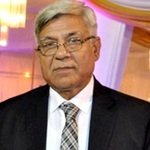
Najmuddin A Farooqi is a Lucknow-based journalist and writer. His areas of interest are social, economic, education and health. The views expressed here are the author’s own and Clarion India does not necessarily subscribe to them.
