

AFTER languishing in prison for nearly six years, Samajwadi Party stalwart Azam Khan has, at long last, secured interim bail through the intervention of the Allahabad High Court and the Supreme Court. It is hoped that when the matter comes up for the next hearing before the High Court on 10 December, this interim reprieve will be converted into regular bail. More than a hundred cases against him will, nevertheless, continue to drag on. His release, however, has already imparted a new momentum to the political ferment in Uttar Pradesh.
With the Assembly elections in the state around in February–March next year, Azam Khan’s release assumes remarkable political significance. This is especially so at a juncture when AIMIM chief Asaduddin Owaisi and Chandrashekhar Azad of
Aazad Samaj Party appear to be lending fresh impetus to their professed efforts at forging Muslim-Dalit political unity in the state. Barely had Azam Khan secured his release when the war of words between him and Owaisi began to dominate the electoral arena. The political narrative is being so contrived as to suggest that the entire electoral contest in Uttar Pradesh hinges upon these two figures alone. Yet, Muslims constitute barely 19 per cent of the state’s population, although their demographic concentration in western Uttar Pradesh, where they account for more than 35 per cent, lends them considerably greater electoral significance. The impact between these two leaders, moreover, is essentially confined to this particular region.
Azam Khan undoubtedly has his personal detractors, but no substantive political disagreement with him has emerged from any quarter. The principal criticism levelled against him by certain quarters is that his towering presence prevented the emergence of any other Muslim leader in the state. It is alleged that he never allowed a second line of leadership to take root. Yet, this contention invites an equally pertinent counter-question: in which other states of the country have a Muslim leader of Azam Khan’s stature emerged independently, on the strength of his own political standing and organisational capabilities?
Consider Assam, where Muslims constitute 35 per cent of the population. Can Maulana Badruddin Ajmal be regarded as an undisputed Muslim political leader? In Bengal, where the Muslim population approaches 30 per cent, whose name can be cited as that of a comparable Muslim leader? The same question arises in Bihar, where Muslims constitute approximately 20 per cent of the population, as they do in Uttar Pradesh. Who, among the state’s so-called secular political formations, or even outside them, can be identified as a Muslim leader of any substantial political stature? These are states with some of the largest Muslim populations in the country. Yet, even in other states, where Muslims constitute between five and 15 per cent of the population, the conspicuous absence of an independently established Muslim leadership remains a striking reality.
Kerala, with a Muslim population of approximately 24 per cent, is, of course, a notable exception. The Muslim League continues to discharge a leading political role there, ensuring substantial representation for nearly a quarter of the state’s population at both the state and national levels.
Take, for instance, Hyderabad in Telangana. Owaisi appears to have circumscribed his political ambitions and performance within the confines of his single Lok Sabha constituency and the seven Assembly constituencies of Hyderabad city. This is even though Muslims occupy a decisive electoral position in approximately 40 of Telangana’s 119 Assembly constituencies. Of these, they could independently secure victory in as many as 15. Through electoral alliances with other political parties, however, the number of successful Muslim candidates could potentially reach at least 30. Similarly, out of the state’s 17 Lok Sabha constituencies, Muslim candidates could comfortably secure victory in five, including Nizamabad, Zaheerabad, Secunderabad and Chevella.
AIMIM and Telangana
The irony, however, is that the Majlis, by entering into electoral alliances sometimes with the Congress and at other times with the BRS, effectively forecloses the electoral prospects of Muslim candidates across Telangana. Owaisi may certainly be acknowledged as a Muslim leader of Hyderabad. His father, Salahuddin Owaisi, through decades of local political struggle and his association with the Babri Masjid movement, established an imposing political presence in the city. That political legacy was subsequently transmitted to Owaisi and his younger brother, Akbaruddin Owaisi.
A dispassionate appraisal of this political landscape makes it abundantly clear that Azam Khan possesses an altogether different political stature. For nearly half a century, in India’s largest state, Uttar Pradesh, he has embodied an unmistakable Muslim political identity: a distinct political voice, a recognised leadership and a substantial stakeholder in the exercise of political power and the formation of governments. He transformed Rampur into his formidable electoral stronghold and, through that constituency, emerged as a representative voice of Muslims across Uttar Pradesh. He also articulated Muslim concerns with considerable force and effectiveness at the national level.
In this perspective, any attempt to place Owaisi and Azam Khan on the same plane is scarcely tenable. Yet, certain sections of the media and political circles within the BJP appear to be deliberately manufacturing such a rivalry, ostensibly to bewilder and fragment the Muslim electorate. The entire electoral contest in Uttar Pradesh is being deliberately framed around this contrived confrontation, in an apparent attempt to reduce the political discourse to a crude Hindu-Muslim binary and a division among Muslims votes.
The BJP’s traditional recourse to Hindu polarisation, it would appear, has exhausted much of its electoral efficacy. The extraordinarily violent and emotionally charged religious mobilisation built around the Ram Temple has reached its logical culmination. Following the emergence of the controversy surrounding the alleged misappropriation of temple offerings, “Chanda chori” the movement has even begun to produce counterproductive political consequences. Meanwhile, mounting unemployment, corruption, escalating criminality and the decade-long reliance on religious symbolism as a substitute for substantive governance have exposed the limitations of the BJP’s political strategy. Added to these are allegations of the unlawful and illegitimate exercise of the Election Commission’s powers, which have further compelled the BJP to retreat.
Conspicuous Fissures in BJP
The fissures between the BJP’s central and state leaderships have also become increasingly conspicuous. Popular disaffection at the grassroots has reached such proportions that the government appears to lack even the political courage to conduct panchayat elections. The recent panchayat election results in Rajasthan suggest that the BJP could encounter an even more adverse electoral verdict in Uttar Pradesh, with direct implications for the forthcoming Assembly elections.
In these circumstances, the BJP appears to have little political capital left in the Hindu-Muslim polarisation card. It is, therefore, seeking to exploit the purported discord between Azam Khan and Owaisi, amplifying it through media narratives to fragment the Muslim electorate itself. The intended political consequence is to undermine the Samajwadi Party, another principal claimant to power, and convert the damage inflicted upon it into an electoral dividend for the BJP.
Nevertheless, the principal political stakeholders appear to comprehend the underlying dynamics of this political manoeuvring. The contours of the electoral landscape will become clearer as the election approaches. For the present, however, the coming months will witness the familiar spectacle of rallies, public meetings, processions and relentless political recriminations by every party. Crowds will be mobilised and displayed as demonstrations of popular support, while the media will continue to circulate its own contrived narratives. The actual electoral picture, however, will emerge only after the announcement of the election schedule and the declaration of candidates.
Muslims are better off refraining from excessive political exuberance. Rather, they should discharge their democratic responsibility with sobriety, composure and quiet determination by turning out in substantial numbers on polling day. Such disciplined and resolute participation in the electoral process would render television exit polls, as well as the statistical jugglery preceding them, largely inconsequential.
The Unmistakable Contrast
Owaisi is essentially a political persona rather than a wider political movement. Behind this public persona, there is no extensive organisational network, committed cadre, coherent political programme, or well-defined ideological framework. Even in Telangana, he appears unable to transcend the narrow struggle to perpetuate his inherited political establishment. Against this backdrop, if Azam Khan continues to be subjected to relentless state persecution, the underlying reasons should not be difficult for anyone to discern.
What astonishes me is that allegations of such petty and bizarre offences as the theft of a chicken, a goat, a buffalo, a bucket, a book and even land should be brought before courts against Azam Khan, a leader who has occupied an exceptionally significant, intellectually grounded, politically serious and representative position in state politics for half a century. Why should such cases not be dismissed at the very threshold of judicial scrutiny? For any court to entertain allegations of this utterly trivial and incongruous nature is, in itself, an affront to the dignity of the judicial institution.
In a robust secular democracy, where the judiciary is genuinely independent, the levelling of such allegations against a towering political leader, rather than accusations involving political corruption or constitutional offences, constitutes compelling testimony to the decay of democratic institutions and the debasement of political standards. It reveals the absence, among those who wield power, of any principled political philosophy or even a rudimentary understanding of the standards and responsibilities of governance and statesmanship.
After all, there is an elementary but fundamental distinction between the exercise of constitutional authority through state institutions and the crude assertion of might through coercion on streets and roadsides. Personal disagreements with Azam Khan may remain, but the persecution to which he has been subjected is something the country accepts undeniably. His political breadth and representative character, too, are matters of broad recognition.
In such a political context, his prediction of an impending revolution assumes meaningful significance.
____________
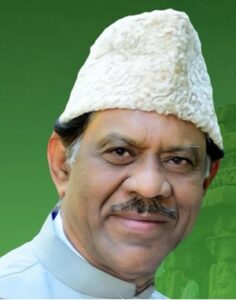
Dr Tasleem Ahmad Rehmani is president of the Muslim Political Council of India and a prominent political analyst. The views expressed here are the author’s own and Clarion India does not necessarily subscribe to them.
