Notice issued to the management; questions raised over the legal basis of closure in the backdrop of the recent high court observations
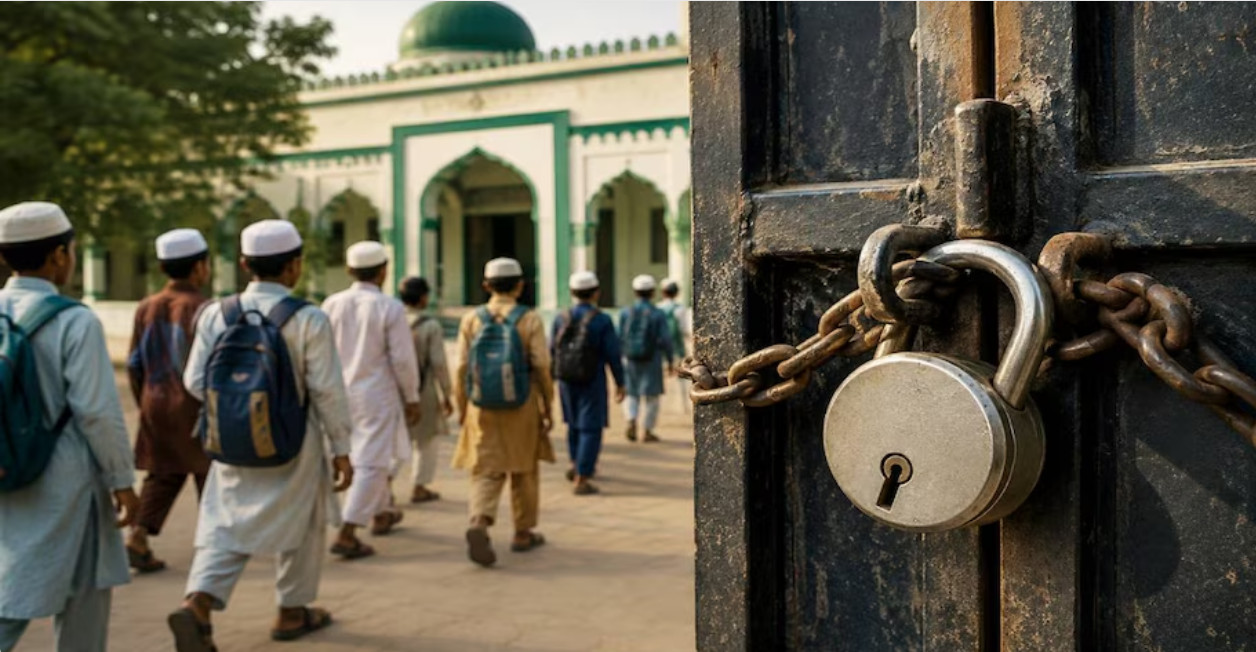
GHAZIABAD — The administration in Ghaziabad has continued its action against madrasas in the district, sealing Madrasa Jamia Khulfa-e-Rashideen in Kanawani village under the Indirapuram area. Officials again harped on the oft-repeated claim that the institution was operating without registration and had failed to meet several safety requirements, including obtaining mandatory clearances from relevant departments.
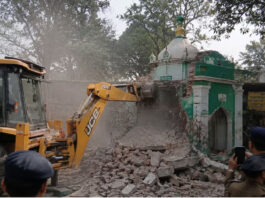
The latest action comes in the wake of an ongoing campaign against madrasas in parts of Ghaziabad following the killing of a youth named Surya in Khoda last month. In recent days, authorities have demolished one madrasa in Dasna and sealed at least two others in the Khoda area.
According to officials, the Minority Welfare Department inspected Madrasa Jamia Khulfa-e-Rashideen and found that it was not registered in departmental records. The administration subsequently sealed the premises and issued a notice to the management, directing it to submit all relevant documents within a week.
Deputy Commissioner of Police (DCP) Dhawal Jaiswal said, “Today, the Minority Department sealed Madrasa Jamia Khulfa-e-Rashideen in the Kanawani area. The madrasa was not complying with safety standards and was also not registered. Therefore, action was taken to seal it.”
Officials said children studying at the madrasa have been shifted to other educational institutions to ensure that their studies are not disrupted.
The District Minority Welfare Officer stated that during the inspection, the madrasa failed to produce proof of registration either with the department or through any recognised institution or society. The officer further said that the madrasa did not possess a valid registration certificate and was unable to provide documents required under existing regulations.
Authorities also pointed to the absence of a No Objection Certificate (NOC) from the Fire Department and a safety clearance from the Electricity Department. Officials described the lack of these documents as a serious concern, particularly because children were residing and studying on the premises.
“During the inquiry, the madrasa was not found registered in departmental records. It could not produce a valid registration certificate from any recognised institution or society. Fire safety and electrical safety clearances were also not available,” an official said.
Following the inspection, the administration sealed the main building and other rooms of the madrasa with immediate effect. The management has been asked to appear before the District Minority Welfare Office within a week and present its explanation along with any valid documents supporting its operation.
Police officials said further legal proceedings may follow. A statement issued by authorities said, “The madrasa was found to be operating illegally and did not meet the standards prescribed by the Minority Department. Fire Department NOC was also not available. Based on these findings, sealing action was carried out. Based on the report, police will register an FIR and investigate before taking further legal action.”
However, the action has also drawn attention because of previous observations made by the Allahabad High Court regarding unregistered madrasas. During the hearing of a related matter, the court reportedly observed that an unregistered madrasa cannot automatically be shut down solely because it lacks registration. At the same time, the court noted that such institutions would not be entitled to seek government grants or financial assistance.
The observation has led to questions among sections of the Muslim community and education activists regarding the grounds on which some institutions are being sealed. They argue that registration issues should be addressed through legal and administrative procedures and that educational activities should not be disrupted without due process.
Members of the madrasa management have been allowed to present their side before the authorities. Officials say a final decision regarding the institution’s future status will depend on the documents and explanations submitted during the proceedings.
The development is part of a wider debate in Uttar Pradesh over the regulation of religious educational institutions, safety standards, registration requirements and the rights of minority-run schools. While the administration maintains that the action is aimed at ensuring compliance with legal and safety norms, those associated with the affected institutions are expected to seek clarification on the legal basis of the measures and may challenge the action through available legal channels.
For now, the madrasa remains sealed, and authorities say investigations and legal proceedings are continuing.