

The future remains uncertain. What is clear, however, is that the choices made today will shape the world inherited by future generations
Najmuddin A Farooqi
TRANSPARENCY, openness, and straightforwardness in the conduct of individuals and societies are virtues of the highest order. In a person, these qualities reflect courage, confidence and strong character. To “keep the doors open” is to live without fear or concealment, to hide, on the other hand, often signals wickedness, weakness and insecurity. While concealment may offer temporary safety, it ultimately leads to undesirable and often painful consequences.
These traits are not limited to individuals; they are equally visible in the collective psyche of societies and in the functioning of states. In today’s age of rapid communication, driven by social media and artificial intelligence, the global environment is becoming increasingly complex. Information travels instantly, perceptions form quickly, and mistrust can spread just as fast. In such a scenario, transparency is no longer optional; it is essential. There is an urgent need for global dialogue, perhaps under the aegis of the United Nations, to establish a uniform framework for responsible communication and regulation before the situation becomes unmanageable.
It is important to distinguish between secrecy and diplomacy. The latter is not about hiding truth but about managing it with wisdom and tact. In fact, sustained dialogue and engagement between nations are the need of the hour. However, policies themselves must remain clear, transparent, and accountable. This responsibility rests heavily on leaders and those occupying positions of authority.
The contrast between openness and concealment is evident even in everyday life. When a student excels in an examination, the achievement is celebrated openly, and pride is shared without hesitation. Yet, when wrongdoing occurs, the same openness disappears, replaced by fear and concealment. This instinctive human behaviour highlights an important truth: transparency is associated with integrity, while secrecy often raises suspicion.
Religious teachings across the world emphasise ethics, morality and spirituality. However, when practices are hidden or selectively performed, they may create doubt or mistrust. Openness in values and actions strengthens credibility, while unnecessary secrecy invites speculation and misunderstanding.
For decades, the world has been described as a “global village,” especially in the era of open markets and interconnected economies. In such a world, isolation or excessive secrecy by any nation inevitably draws attention. The functioning of states such as North Korea and even major powers like China and Russia often invites scrutiny when transparency appears limited. Despite their remarkable progress in various fields, particularly in strategic and military domains, a perception of opacity can lead to global scepticism.
History offers instructive examples. The rise of the British Empire was not solely a result of strategy and planning, but also of confidence and the willingness to confront challenges openly and decisively. Even today, the enduring presence of institutions symbolised by places like Buckingham Palace reflects a legacy of visibility, resilience and continuity that continues to command love, respect and admiration.
War, however, stands in direct opposition to the ideals of openness and transparency. Even when fought for seemingly just reasons, it brings immense human suffering. Since the end of World War II, the global situation has rarely been as fluid and uncertain as it is today. Conflicts involving multiple nations directly or indirectly carry consequences that extend far beyond borders.
The future remains uncertain. What is clear, however, is that the choices made today will shape the world inherited by future generations. In an interconnected and rapidly evolving global landscape, openness, dialogue and transparency are not merely ideals; they are necessities. To “keep the doors open” is not just a moral choice, it is a practical imperative for peace, trust and sustainable coexistence.
________________
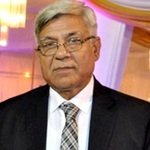
Najmuddin A Farooqi is a Lucknow-based journalist and writer. His areas of interest are social, economic, education and health. The views expressed here are the author’s own and Clarion India does not necessarily subscribe to them.
