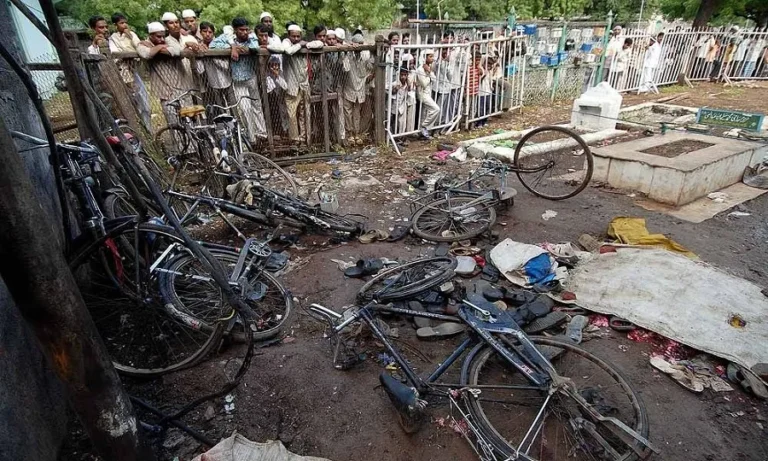
Thirteen Muslims were killed in the October 2001 violence in Maharashtra’s industrial town. The K N Patil Commission report is believed to have been lost in a fire
MALEGAON — Twenty-five years after communal violence broke out in Maharashtra’s Malegaon on 26 October 2001, the victims and their families are still awaiting justice, while the report of the judicial inquiry headed by retired High Court judge K N Patil remains untraceable.
Thirteen Muslims were killed and hundreds of people were seriously injured in the violence. Muslim youths were also jailed over allegations of involvement in the riots and activities linked to the outbreak of violence, according to an account of the events.
The inquiry report was submitted to the Maharashtra government, but no copy or draft is known to be available. The report is believed to have been destroyed in a fire at Mantralaya, the state government headquarters in Mumbai. The circumstances surrounding the report’s loss and the lack of subsequent action have left victims without a clear account of the inquiry’s findings.
Advocate Shahid Nadeem, who has followed the matter, said Justice Patil supervised the judicial inquiry and that the report was submitted to the state government, but the government did not take adequate steps.
Nadeem said the fire at the Mantralaya occurred during this period and that the commission’s report was subsequently understood to have been destroyed in the blaze.
Inquiry Covered Over 300 Witnesses
Senior journalist Abdul Haleem Siddiqui, who appeared as a witness before the Patil Commission, said the inquiry recorded statements from more than 300 witnesses.
Those who deposed before the commission included victims of the violence, survivors, relatives of those killed, political leaders, social workers, police informers and police personnel and officers who were on duty during the riots and the period surrounding them.
Siddiqui said the testimonies of several prominent figures were also part of the inquiry. They included socialist leader Nihal Ahmed, who has since died; Mufti Mohammad Ismail Qasmi, then imam and khatib of Jama Masjid and a member of the Maharashtra Legislative Assembly; and social activist Medha Patkar.
Recalling his own appearance before the commission, Siddiqui said he was questioned about his reporting and photography during the riots. He also submitted photographs documenting the communal nature of the violence at the commission’s request.
The evidence gathered from hundreds of witnesses was expected to form part of the inquiry into the events. The unavailability of the report has left the contents and conclusions of that investigation inaccessible to the victims and the wider public.
Efforts to Trace the Report
According to the account given by Nadeem, office-bearers of Jamiat Ulama-e-Malegaon, including the late Abdul Malik Seth, Mukki Seth and Maulana Abdul Qayyum Qasmi, took up the matter with those in power.
They also met Justice Patil in person to ask about the report. Patil reportedly told them that he had submitted the completed report to Mantralaya and no longer had a copy of it.
The disappearance of the report has also left questions about the findings of an inquiry that heard testimony from hundreds of people, including those directly affected by the violence and officials who were on duty at the time.
The Unresolved Questions
The anniversary on 26 October has become a reminder of the lives lost and the unresolved questions surrounding the 2001 violence. Thirteen Muslims died, hundreds suffered serious injuries, and Muslim youths faced imprisonment over allegations linked to the riots.
Although the physical wounds of the violence have healed with time, the victims and their families have yet to receive the justice they sought. The whereabouts of the commission report, the circumstances in which it became unavailable and the action taken by the state government following its submission remain unresolved.