

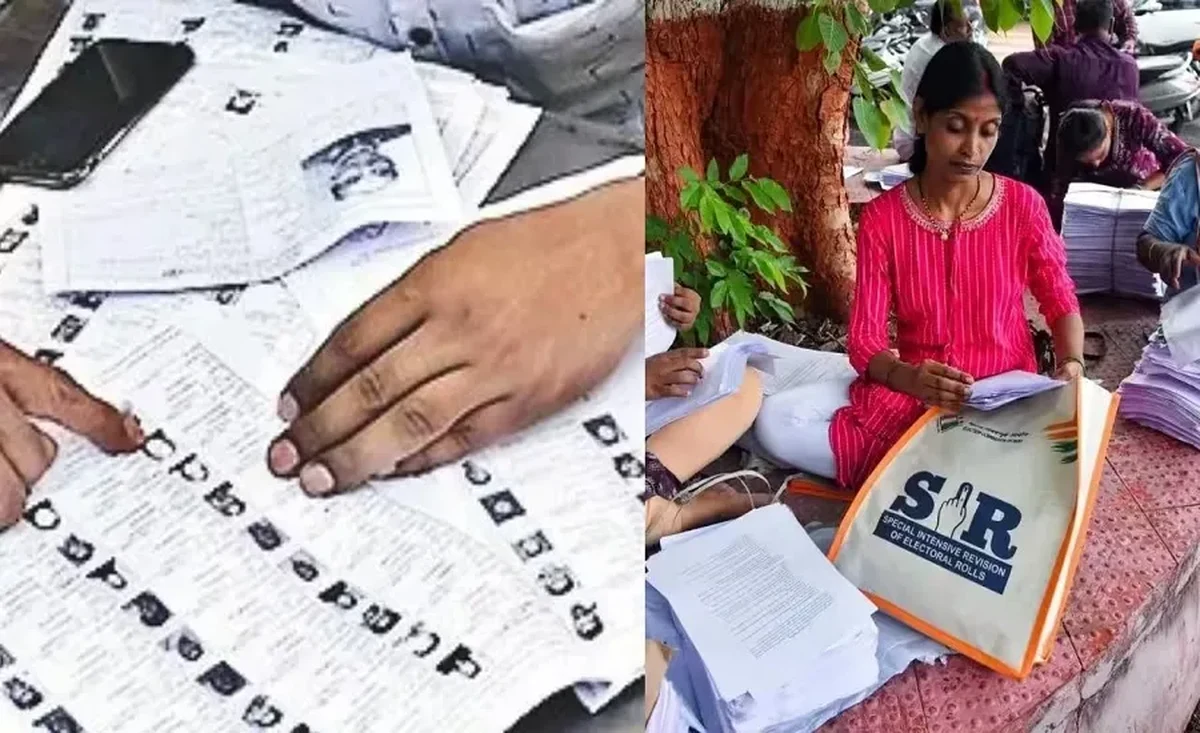
The November draft electoral roll lists 5.26 crore voters, against 5.15 crore in February’s SIR list and 5.45 crore in the State Election Commission’s October roll
JAIPUR — Rajasthan has recorded three different voter counts in official electoral rolls issued over the past year, with nearly 30 lakh names separating the lowest and highest figures, raising questions about the revision process and the absence of a detailed explanation from the election authorities.
The draft electoral roll released by the Election Commission of India (ECI) on 12 November under the Special Summary Revision (SSR) 2027 contains 5,26,67,416 voters. This is around 11.67 lakh more than the 5.15 crore recorded in the final list published after the Special Intensive Revision (SIR) in February 2026.
However, the latest draft still contains around 18.33 lakh fewer voters than the 5.45 crore listed in the State Election Commission’s (SEC) electoral roll published in October 2026 for local body elections.
The three figures have renewed questions about the differences in voter coverage, the methods used to prepare the lists and the changes made during successive revisions.
The ECI prepares electoral rolls for parliamentary and Assembly elections, while the State Election Commission is responsible for elections to local bodies, including panchayats and urban municipal institutions. The lists therefore serve different electoral purposes. But the difference between the October SEC roll and the November ECI draft has not been explained through a detailed comparative breakdown.
According to Chief Electoral Officer (CEO) Rajasthan Naveen Mahajan, the latest draft contains 2,75,24,780 male voters, 2,51,42,052 female voters and 584 transgenders.
The figures raise questions about how many names were added after the February SIR exercise, how many were removed during the latest revision and how many people excluded during the intensive exercise have since been included again.
The February 2026 final electoral roll was published after the ECI conducted an intensive revision in which existing voters were asked to submit enumeration forms for verification.
The exercise attracted criticism over the deletion of large numbers of names and the procedures used to determine voter eligibility.
The October list prepared by the Rajasthan State Election Commission recorded approximately 5.45 crore voters, nearly 30 lakh more than the February ECI figure.
The November draft has placed the count between the two, at 5.26 crore.
Although the three lists were prepared by different authorities for different elections, the difference cannot be fully understood without examining their respective qualifying dates, geographical coverage, data sources and procedures for adding or removing names.
A district-wise and Assembly constituency-wise comparison would help establish where the differences originate. It would also show whether they are linked to variations in geographical coverage, eligibility dates, additions, deletions or other changes in electoral records.
The latest draft does not provide a detailed account of how the additional 11.67 lakh voters, compared with the February SIR list, have been included.
It is therefore unclear how many are first-time voters, how many were left out during the SIR exercise and subsequently enrolled, and how many entered the list through other routine updates.
ECI’s September Instructions and the Question of Excluded Voters
The latest revision follows an ECI directive issued on 29 September 2026 asking states where the SIR exercise had been completed to identify eligible voters who might have been left out.
The commission directed officials to conduct a special enrolment campaign through Form 6, allowing eligible citizens to apply for inclusion without the additional declaration requirement introduced during the SIR process.
Officials were also asked to compare electoral rolls before and after the intensive revision and identify eligible voters who might have been wrongly excluded, including those who were neither deceased nor permanently shifted and whose names were not duplicates.
This instruction is relevant to Rajasthan because the latest draft shows an increase of around 11.67 lakh voters over the February list. But the overall increase does not establish how many previously excluded voters have returned to the rolls.
The missing information includes the number of applications received from people excluded during the SIR, how many were accepted, how many new names were added and how many existing entries were deleted during the latest revision.
Without these figures, it is difficult to assess whether the latest exercise has addressed the concerns raised during the earlier revision.
Why the SSR Process Matters
On 15 October 2026, the ECI announced the Special Summary Revision for 17 states and Union Territories, including Rajasthan, where the SIR exercise had already been completed.
The announcement followed criticism over large-scale deletions during the intensive revision and concerns about the methods used to verify existing voters.
An investigation published by The Indian Express reported that more than 13 crore names had been removed from draft electoral rolls across 30 states and Union Territories.
The report also highlighted objections raised within the Election Commission by two election commissioners, Sukhbir Singh Sandhu and Vivek Joshi, over changes to Form 6 and centralised control of the ECINet electoral database.
On 29 September, the commission directed states where the SIR had been completed to undertake a special campaign to include eligible voters who had been left out, as well as young people and first-time voters.
The subsequent SSR exercise is intended to update the electoral rolls for the 1 January 2027 qualifying date. People who turn 18 on 1 April, 1 July or 1 October 2027 can also submit advance applications.
Unlike the SIR, which required existing voters to submit enumeration forms for verification, the summary revision does not require all registered voter to establish their eligibility again. New eligible voters can apply for inclusion, while deletions and corrections are processed under the prescribed rules.
This distinction makes the Rajasthan figures worth examining. The increase in the latest draft does not, by itself, show whether voters excluded during the earlier exercise have been restored or whether the rise is mainly due to new registrations and routine changes.
Claims and Objections Open Till 11 December
The period for filing claims and objections against the Rajasthan draft electoral roll runs from 12 November to 11 December.
Eligible citizens can use Form 6 to apply for inclusion in the electoral roll. Form 7 is used to raise objections to an entry or seek its deletion, while Form 8 allows voters to request corrections or other changes to their existing details.
The ECI has also permitted advance applications from young people who will turn 18 on the qualifying dates in 2027.
Applications can be submitted through the ECINet app, the Voters’ Portal or the concerned Booth Level Officer (BLO).
The CEO’s office has said that copies of the draft electoral rolls have been provided to recognised political parties. Voters can also access the lists through the websites of the Chief Electoral Officer, Rajasthan, and the respective District Election Officers.
The final electoral roll is scheduled to be published on 4 January 2027.
The opportunity to file claims and objections does not, by itself, explain the differences between the three official voter counts. A constituency-wise account of additions and deletions, along with a comparison of the February, October and November figures, would allow voters and political parties to examine the changes.
The latest draft has put Rajasthan’s voter count at 5.26 crore, between the 5.15 crore recorded after February’s SIR and the 5.45 crore listed by the State Election Commission in October.
These differences alone do not establish that voters were wrongly included or excluded. But the Election Commission needs to explain how the November figure was arrived at, how many previously excluded eligible voters have been enrolled and what accounts for the gap between the two electoral authorities’ records. The final list due on 4 January will provide another count; the changes leading to it need to be made transparent.


