

Dr Aslam Abdullah
Why Is There Something Rather Than Nothing?
Sometimes a quiet question sneaks into a thoughtful mind. Not how things work—like how birds fly, or how phones send messages—but something more profound: Why is there anything here at all? Why is there a universe instead of empty nothing? Why do stars shine? Why do people think, wonder, and ask questions? This question does not begin with religion. It starts with wonder—the feeling you get when you realise that the world did not have to exist, yet somehow it does. Long before microscopes and space rockets, people noticed how strange existence is. There could have been no mountains, no oceans, no life. And yet here we are, standing on solid ground, looking up at the sky, asking questions. Every answer seems to lead to another “why,” until we reach a place where explanations seem to run out. That is where this story begins.
Everything Could Have Been Otherwise
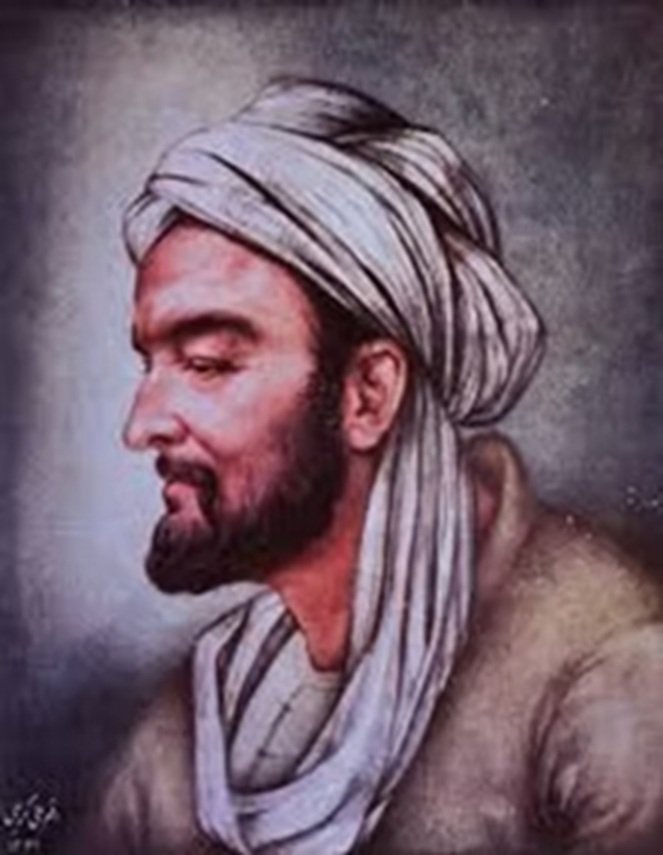
Look around you. Almost everything you see could have been different—or not existed at all. You exist, but you might never have been born. Your school exists, but it could have been built somewhere else—or not built at all. Earth exists, but scientists tell us that many planets never appropriately formed. Things like these are called dependent. They depend on many causes: parents, materials, time, and chance. More than a thousand years ago, a Muslim philosopher named Avicenna noticed something important. He said there are two kinds of things: things that might exist and things that might not exist, and one thing that must exist. Everything in the world belongs to the first group. Trees, animals, stars, and people all depend on something else. Avicenna said dependent things are like borrowed books. If you borrowed a book, you did not create it—and you cannot explain where it came from just by pointing to yourself. So, the big question becomes: Who owns the book of existence?
When Explanations Reach a Wall
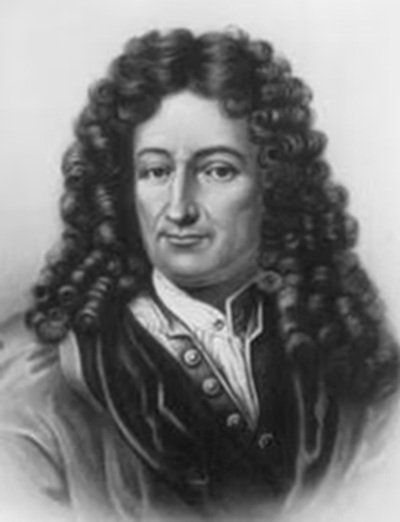
Science is very good at explaining how things happen. It can tell us how rain forms, how planets move, and how cells divide. But science eventually reaches a wall. For example, why do laws of nature exist at all? Why do numbers and logic work everywhere in the universe? Why is there something instead of nothing? A German thinker, Gottfried Wilhelm Leibniz, said something important here. He believed that everything that exists must have a reason. He called this idea the Principle of Sufficient Reason. Imagine if someone told you, “Your homework just appeared for no reason.” You would not accept that answer. Leibniz said the universe deserves a better explanation than “it just happened.” If everything depended on something else, there would eventually be nothing at all. And from nothing, nothing can come. Yet the universe exists. So, something must be different.
The One Thing That Does Not Borrow Existence
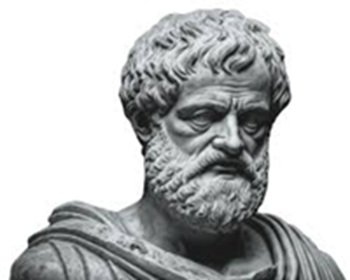
If everything depends on something else, then there must be one reality that depends on nothing. Something that does not borrow existence but gives existence. This idea appears repeatedly in human thought. Aristotle called it the Unmoved Mover—not a god in a story, but a necessary starting point. Thomas Aquinas called this reasoning the “Third Way,” showing how dependent things lead to a necessary one. Avicenna called it the Necessary Existent—a being that must exist and cannot fail to exist. These thinkers lived in different places, spoke different languages, and followed other religions. Yet they reached the same idea by using reason. That is not a coincidence. That is convergence.
What Must This Necessary Reality Be Like?
Once we understand that a Necessary Being must exist, logic tells us more about it. It must be eternal, because anything with a beginning depends on causes. It must be independent, because dependence means fragility. It cannot be material, because matter changes and breaks down. It must be one, because two necessary beings would limit each other. And because the universe follows order and logic, this reality must be intelligent, not random. Without opening any holy book, reason alone leads us to something that sounds very familiar: The core idea of God—not a tribal god or a magical being, but the ground of all existence.
A Question Asked in the Qur’an
The Qur’an presents the same argument in one short question: “Did nothing create them? Or were they themselves the creators?” (52:35). This verse does not lecture. It asks the reader to think. It eliminates two impossible ideas: that something came from absolute nothing and that those dependent things created themselves. What remains is the Necessary Reality, the source of everything else.
Why This Question Still Matters
Many arguments change as science advances. This one does not. It does not depend on gaps in knowledge. It does not compete with science. It begins with a simple fact: something exists. That is why even nonreligious thinkers acknowledge this as the strongest philosophical argument for God. It does not shout. It does not threaten. It simply asks whether we are satisfied with no explanation—or whether reason itself points deeper.
Where the Question Leads
This argument does not tell us everything about God. It does something more basic. It shows that reality is not self-explanatory. That existence is not accidental. That being itself points beyond itself. What comes next—faith, ethics, worship, or study—comes later. But the door opens with one quiet question: Why is there something rather than nothing?
End Notes & Biographic Notes
- Avicenna (Ibn Sīnā) (980–1037): A Persian Muslim philosopher and physician. His works shaped Islamic and European philosophy for centuries. He introduced the idea of the “Necessary Existent.”
- Gottfried Wilhelm Leibniz (1646–1716): A German philosopher and mathematician who helped invent calculus and argued that everything must have a sufficient reason.
- Aristotle (384–322 BCE): A Greek philosopher whose ideas influenced science, logic, and philosophy for over 2,000 years. He proposed the concept of an Unmoved Mover.
- Thomas Aquinas (1225–1274): A Christian theologian who combined Aristotle’s philosophy with religious thought and developed logical arguments for God’s existence.
- The Qur’an: The central religious text of Islam, revealed in the 7th century, often invites readers to reflect and reason about existence and creation.


