

Since clashes began in May 2023, Manipur’s small Muslim community has faced fear, damaged homes and growing mistrust from both Meitei and Kuki groups
IMPHAL – For nearly three years, the north-eastern Indian state of Manipur has remained troubled by violent clashes between the Meitei community in the valley and the Kuki-Zo tribes living in the surrounding hills.
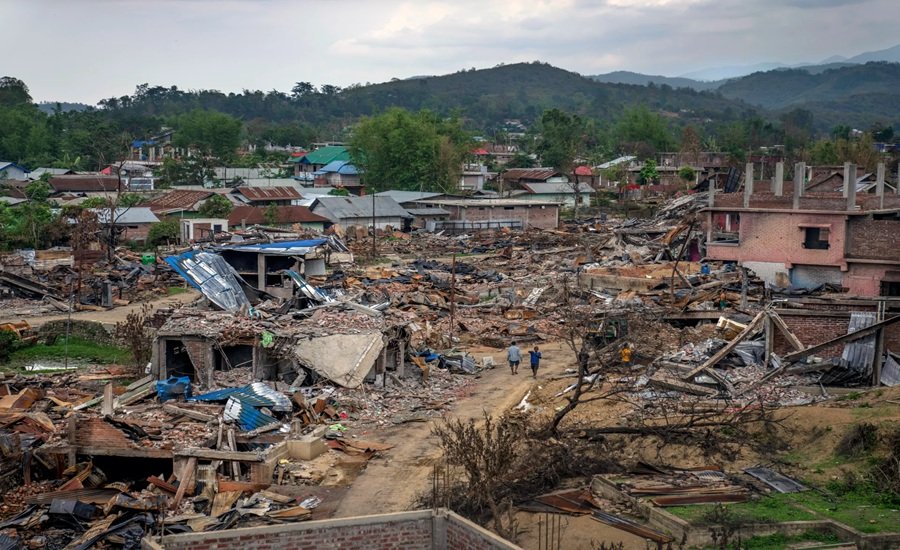
The conflict, which began on May 3, 2023, has claimed more than 260 lives and forced over 60,000 people to leave their homes. Entire neighbourhoods that once had mixed communities now stand largely empty, while security forces maintain tense buffer zones between rival groups.
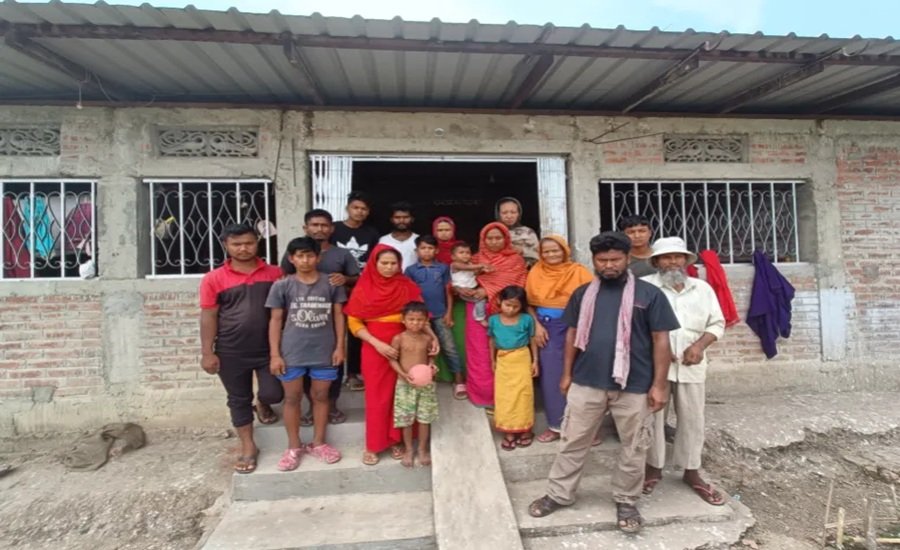
In the middle of this violence stands a smaller and often ignored community — the Meitei Pangals, the indigenous Muslims of Manipur. Though they make up around eight to nine per cent of the state’s population, many in the community say they have been deeply affected by the conflict even though they are not part of the main dispute.
Community members say they are facing fear, suspicion and loss while trying to keep peace between the two warring sides.
The present conflict was triggered after sections of the Meitei community demanded Scheduled Tribe status, which would give them access to government reservation benefits.
The proposal was strongly opposed by Kuki-Zo tribal groups, who feared it would threaten their land rights and political protections.
Violence soon spread across the state, dividing valley and hill communities.
For the Meitei Pangals, who have long lived among both communities, the crisis has been especially painful.
Many Pangals share language and culture with the Meiteis, but have also maintained strong social and economic links with Kuki communities. As a result, some say they are now viewed with suspicion by both sides.
Mohammad Anwar Hussain, former chairman of Manipur’s Minority Commission, described the difficulty of living between two hostile communities.
“We can go to Kuki areas, but there is no trust,” he said. “If a Meitei friend learns we went there, they wonder whom we met. It feels like walking on a tight rope. One small mistake and everything collapses.”
The impact of the violence can be seen clearly in Kwakta, a Muslim-majority town in Bishnupur district, around 50 kilometres from the state capital Imphal.
The town lies close to Churachandpur, a district where many Kukis live. Because of this location, Kwakta became one of the areas where crossfire broke out during the clashes.
Mohammad Ziauddin, a resident of the area, recalled the events of August 2023 when violence reached the town.
“On August 5, some Kuki people from outside attacked and killed three Meitei individuals in Ward No. 8,” he said. “The next day, members of Meitei civil society organisations came to our mosque and began firing towards the hill areas. Kukis fired back from their side.”
Today, the mosque still carries the marks of that violence.
Small bullet holes remain visible on the walls and across the tin roof. “These holes came from bullets fired from the hills by Kukis and also from here by Meiteis,” Ziauddin explained. “The firing continued for five or six days.”
Residents say the mosque became a firing point without the consent of the local Muslim community.
Many homes nearby now stand empty.
People from Meitei and Kuki communities have moved away to safer locations, leaving mostly Muslim families behind.
In other Muslim-dominated areas such as Lilong, near Imphal, many Pangals say the emotional impact of the violence has been deep, even when their own neighbourhoods were not directly attacked.
Dr Razia, a physics professor at Nongjail Haorebi College, said the conflict caused anxiety because both communities involved were part of her social circle.
“I became very emotional,” she said. “Those fighting were not from my community, but they were all my friends — both Kukis and Meiteis. I kept wondering what had happened to them.”
“Our community was not directly under attack,” she added, “but the fear was still there.”
Some Muslims who travel between valley and hill areas say they now face constant uncertainty.
Mohammad Ayaz Khan, a driver who transports passengers and goods between the two regions, said he often worries about how both sides might react.
“We feel fear too,” he said. “We don’t know what is in anyone’s heart. We worry as to what Meiteis will say and what Kukis will say. We feel pressure from both sides.”
Aid workers and journalists often depend on Muslim drivers like Khan to cross tense buffer zones because they are among the few people who can still move between the two communities.
This role has continued since the conflict began in 2023.
Historians say the Pangals have been part of Manipur for more than four centuries.
According to Prof Syed Ahmed, a historian in Imphal who has studied the community’s origins, the first Muslims arrived in 1606 from Sylhet in eastern Bengal.
They had joined the forces of a local prince, Sanongba, who was fighting against the Manipur ruler King Khagemba.
After the battle, the Muslim soldiers were captured. But instead of treating them as prisoners, the king allowed them to settle in Manipur.
“Khagemba saw that these people had skills in farming, craft work and warfare,” Prof Ahmed said. “He gave them land and allowed them to marry Meitei women.”
About one thousand Muslims settled in the region, gradually forming the Pangal community.
Over time, they adopted many local customs while keeping their Islamic faith.
Many Pangals say their identity reflects both their religion and the local culture of Manipur.
They speak Manipuri, follow clan traditions similar to Meiteis and wear traditional clothing.
Women often wear the phanek, a traditional garment, while also observing Islamic modesty.
Dr Zini Rahman, a professor in Imphal, said this cultural mixture has shaped the community’s identity.
“We never felt that we were separate from others,” she said. “Everyone lived together for generations. Meitei culture influenced us deeply, but we also kept our religious values.”
For decades, many families celebrated festivals together despite religious differences.
During Ramadan, some Muslim families invited Meitei and Kuki neighbours to share the evening meal at the end of the fast.
Ziauddin said those traditions stopped after the violence began.
“Earlier, friends from both communities came to our house during iftar,” he said. “That ended in 2023.”
Yet he remains hopeful that peace can return.
“I believe people cannot be happy living separately,” he said. “When communities live together with love, life becomes easier. We experienced that before.”
Despite the hardship, many leaders within the Pangal community say they want to continue acting as neutral voices calling for dialogue.
They believe their historical ties with both Meiteis and Kukis give them a chance to encourage communication between the two sides.
Community leaders say restoring trust will not be easy after years of violence and displacement.
But they also argue that reconciliation is the only way forward for the state.
For the Meitei Pangals, the conflict has brought pain, fear and uncertainty. Yet many still hold on to the belief that Manipur’s communities can live together again.
“Our role is to maintain relations with both sides,” Ziauddin said. “We want peace for everyone.”
As Manipur struggles with fragile calm and continuing mistrust, the story of the Meitei Pangal Muslims shows how a small community caught in the middle of conflict is still trying to keep the hope of unity alive.


