

In the 2019 judgement, the Supreme Court highlighted that Article 142 allows it to craft remedies tailored to the specifics of a case when rigid application of laws is inadequate
Prof Ishrat Husain
THE Patiala House District Court in New Delhi recently dismissed a plea by prominent advocate Mehmood Pracha seeking to declare the Supreme Court’s 2019 Ayodhya judgment as null and void. Pracha claimed that former Chief Justice of India DY Chandrachud in a speech in October last year had admitted that the Ayodhya judgment was delivered in accordance with a “solution provided to him by Bhagwan Shri Ram Lala Virajmaan”, the deity who himself was one of the plaintiffs in the Ram Janmabhoomi-Babri Masjid title dispute.
The District Judge rightly held that the case was frivolous, misconceived, and an abuse of the judicial process but the fact cannot be ignored that the secret debate is still open.
Mahatma Gandhi once said that “there is a higher court than courts of justice and that is the court of conscience, it supersedes all other courts”. Ideally judges leave their biases and prejudices outside the courts, but practically, it seems near to impossible.
The former Chief Justice of India also recently referred to the construction of Babri Masjid as the “fundamental act of desecration”. It is not harmful as far as it was revealed in an interview but could have been potentially bad had it been said in the judgement. Thankfully, he could control his feelings in the judgement. It was his greatness.
The greatest qualities of a judge are to have patience, calmness, fearlessness and honesty to pronounce good judgement in times of aroused feelings and excited passion. Gradually, with time, those biases and prejudices are coming out as noticed through the recent interviews of the former CJI who is honestly accepting the same. None is infallible including judges. Generally, judges do not discuss their verdicts outside the courts. It is former CJI’s courage allowing him to honestly reveal the truth but it is difficult to presume the reasons: inner conscious or remorse. Contradicting one’s own judicial pronouncement is a serious concern and mootable.
The initiative is taken by the CJI himself, therefore, there is nothing wrong to discuss Ayodhya judgement by legal luminaries. Healthy criticism of any judgement is always welcome. Also, it is essential for the healthy democracy, confidence in judiciary and rule of law.
Recently, Prof Mohan G Gopal, who continues to work actively on reforms of legal and judicial institutions, while responding to a query at a seminar in University of Calicut said that Chandrachud calling the Babri Masjid a ‘fundamental act of desecration’ could lead to filing of a curative petition before the Supreme Court challenging the Ayodhya verdict. The concept of curative petition originated from the 2002 case of Rupa Ashok Hurra Vs. Ashok Hurra. A curative petition can be entertained when the judge concerned failed to disclose facts that reveal a bias. Curative petition serves to accredit grave miscarriage of injustice. ‘Actus Curiae Neminem Gravabit’ means an act of court will prejudice no one. The court should pass an order ensuring that interest of none of the parties is harmed. The maxim becomes applicable when the court is under an obligation to undo a wrong done to a party by the act of court itself.
In the Ayodhya judgement, the court highlighted that Article 142 allows it to craft remedies tailored to the specifics of a case when rigid application of laws is inadequate. This power ensures that justice is not confined to rule-based adjudication but incorporates equitable principles to achieve outcomes that are fair, reasonable, and consistent with the Constitution’s vision. Supreme Court has the power to review its own decisions to correct mistakes, ensuring justice and fairness. The court recognised its inherent power to reconsider its judgments in extraordinary circumstances. This power may be invoked only to prevent abuse of the judicial process or to rectify grave injustice. Such reconsideration is permitted in rare cases, where injustice is evident.
Was Ayodhya dispute a question of faith, possession or title is difficult to say? The nature of Ayodhya dispute case is entirely different as dynamics of the case kept changing from its inception. Earlier, it was a dispute of possession of some part of the site which ultimately turned into the issue of ownership in 1950 and finally after 1992 it became purely an issue of faith to a section of the country’s population. Be that as it may, the controversy must not be reopened. Ayodhya judgment was accepted and welcomed by all the parties. Nobody wants to discuss it anymore except the judges who delivered the verdict.
In this backdrop, critical examination of the former CJI’s pronouncement would not be unfair and unreasonable. Moreover, it may be useful with respect to many other medieval India pending disputes as Varanasi’s Gyanvapi and Mathura’s Shahi Eidgah are under legal and political scrutiny.
The Places of Worship (Special Provisions) Act, 1991 was enacted to fulfil two purposes. First, it prohibits the conversion of any place of worship. In doing so, it speaks to the future by mandating that the character of a place of public worship shall not be altered. Second, the law seeks to impose a positive obligation to maintain the religious character of every place of worship as it existed on 15 August 1947 when India achieved independence from the colonial rule.
In Para 85 of the Ayodhya judgment, the Supreme Court ruled that “Section 4(1) clearly stipulates that the religious character of a place of worship as it existed on 15 August 1947 shall be maintained as it existed on that day. Section 4(2) specifically contemplates that all suits, appeals and legal proceedings existing on the day of the commencement of the Places of Worship Act, with respect to the conversion of the religious character of a place of worship, existing on 15 August 1947, pending before any court, tribunal or authority shall abate, and no suit, appeal or proceeding with respect to such matter shall lie after the commencement of the Act”. On the contrary, former the CJI allowed the survey of Gyanvapi mosque.
Revelation of his emotions is not only confined to interviews but can also be felt with his actions. The former CJI will be remembered the most for a petition in the Gyanvapi Mosque matter, where he observed that the 1991 Act prohibits ‘altering’ the character of a religious place but did not prevent courts from ‘ascertaining’ the religious character of any place of worship. What is the purpose of ‘ascertaining’ the religious character if ‘character’ cannot be changed. It defies logic and reasoning.
The bench led by the former CJI upheld the Allahabad High Court’s decision to allow the scientific survey of the Gyanvapi Mosque by the Archaeology Survey of India. Did he really honour the letter and spirit of the Constitution by delivering justice based not on law but on his prayers to God, who he believes showed him the right path?
______________
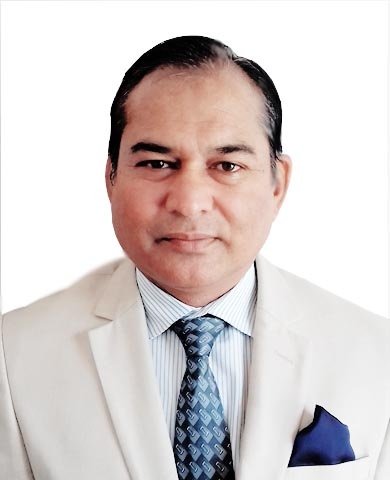
Prof Ishrat Husain is from Aligarh Muslim University’s Department of Law. The views expressed here are the author’s own and Clarion India does not necessarily subscribe to them. He can be contacted at ishrat364@gmail.com


