

A counter to Shashi Tharoor’s defence of India’s inaction on West Asia
Syed Akmal Razvi
CONGRESS leader Shashi Tharoor’s recent article in The Indian Express is erudite, and at its core a rationalisation of moral abdication dressed in the language of realism. He concedes the very ground on which his argument should stand: that the US-Israeli war on Iran cannot be justified under international law, that India’s response to the assassination of Iran’s Supreme Leader Ali Khamenei was inadequate to the gravity of the moment, and that the war violates the principles India has historically championed. Having conceded all of this, he nonetheless counsels silence and calls it statecraft!
This is not statecraft. It is the abandonment of statecraft. Statecraft, properly understood, is not the short-term management of trade flows and remittance corridors. It is the long-game cultivation of a nation’s credibility, its moral authority, and its reliability as a partner. India’s studied inaction on a military campaign, which has been condemned across the globe, has not preserved India’s interests. It has quietly corroded them in ways that will take generations to repair.
The False Premise: Silence is Neutral
Tharoor’s central claim is that India’s restraint is not endorsement but prudence, a sober recognition of the interconnectedness of our national interests. This rests on a foundational error: the assumption that silence in the face of aggression is a neutral act in the vocabulary of diplomacy.
It is not. International relations operate on the logic of perceived alignment. When the United States and Israel carried out military strikes against Iran, every nation was asked implicitly but unmistakably to register its position. Nations that remained silent were read by Tehran, by the Arab street, and by the Muslim World not as neutral but as complicit by omission. India’s silence was a statement it did not consciously choose to make; it was thrust upon the countrymen by a government that confused inaction with strategy. Israel is the most hated nation in the Muslim World, and in most parts of the world, after what it did in Gaza.
It is also worth noting precisely what India did and did not do. When Iran’s President Ebrahim Raisi died in a helicopter crash in May 2024, India’s Foreign Minister personally conveyed condolences. When the Supreme Leader, the highest constitutional authority of the Islamic Republic, was assassinated in a targeted military strike, India’s response was reduced to a perfunctory note from the Foreign Secretary. The contrast in diplomatic register was noticed in Tehran. Protocol communicates policy, and this downgrade communicated something India may not have intended to say quite so loudly.
The Nehru Misreading
Tharoor invokes Jawaharlal Nehru repeatedly, drawing on the Soviet precedent, Hungary, Czechoslovakia and Afghanistan, to justify India’s posture on Israeli-American aggression. Two wrongs never make a right.
The present government’s posture on Iran has been accompanied by no visible compensatory engagement, no senior envoy dispatched to Tehran, no quiet diplomatic assurance, no working-level effort to protect Chabahar or signal continued strategic partnership.
The Strategic Cost to India-Iran Relations
Tharoor weighs, at some length, the risks of antagonising Washington and the Gulf Arab states. He does not weigh the strategic cost of antagonising Tehran. This omission is not a minor oversight; it is the central flaw in his argument.
Chabahar and the North-South Corridor
India’s investment in the Chabahar port is among its most consequential strategic infrastructure commitments, a direct overland route to Central Asia and Afghanistan that bypasses Pakistan entirely. A relationship strained by perceived Indian indifference to Iran’s territorial integrity and the killing of its Supreme Leader is one that Tehran will not easily forget.
Energy Security
Iran holds the world’s second-largest natural gas reserves and fourth-largest oil reserves. Before US sanctions forced India to curtail Iranian oil imports, the Islamic Republic ranked among India’s top three crude suppliers. Any future restoration of that energy relationship is vital, as global energy markets become increasingly volatile, and it would no longer be a given with Iran. Iran has institutional memory.
The Assassination: A Diplomatic Failure India Cannot Afford to Repeat
Tharoor acknowledges in a single, almost embarrassed sentence that India’s response to the Supreme Leader’s death was inadequate. He then moves on.
The Supreme Leader of Iran is the highest constitutional authority of the Islamic Republic and a figure whose religious standing extends well beyond the country’s borders. His targeted killing by a foreign military power is not an event that could be managed with diplomatic minimalism. India eventually conveyed its condolences through the Foreign Secretary. Diplomatic protocol is precise language. When India speaks in hushed tones, the message is heard loud and clear.
The True Legacy of Principled Statecraft
National interest is best served by a foreign policy rooted in principles, because principles are the only durable currency of international credibility. A nation that speaks only when convenient is a nation whose words, when it finally does speak, carry no weight.
This is not abstract idealism. It is the realism of a longer time horizon than Tharoor appears to be suggesting.
When Silence Becomes Ideology
There is a dimension to India’s current posture that Tharoor does not engage, and that must be named plainly: the possibility that this silence is not merely pragmatic but ideologically shaped.
The ruling dispensation’s domestic constituency has expressed open support for Israel’s conduct, not as a strategic calculation, but as an ideological affinity. The Hindutva worldview and Israeli ethnonationalism share structural premises. When those affinities migrate from electoral rhetoric into foreign policy conduct, the result is not statecraft. It is the subordination of India’s genuine strategic interests to a domestic political imagination.
Foreign policy silence that arises from ideological sympathy is not prudence. It is partisanship dressed as neutrality, and it carries consequences India’s long-term interests cannot absorb.
The Long-Term Diplomatic Ledger
Tharoor is right that India cannot afford a gratuitous confrontation with the United States. No serious analyst would counsel otherwise. But his argument slides from that reasonable premise to an unreasonable conclusion: that India therefore cannot afford to say anything at all.
If India must remain silent whenever Washington acts in ways that violate norms India has historically upheld, then India’s claim to strategic autonomy is a form of theatre. The architecture of India’s global positioning, the voice of the Global South, the civilisational democracy that charts its own course, requires a track record of principled independence, not merely rhetorical assertion. India has chosen to spend rather than accumulate its moral capital.
Tehran has noted it. Moscow, whose partnership India values, has noted it. The Arab Street has noted it.
The Price of Abandoned Principles
Tharoor, who has spent a distinguished career arguing for India’s moral voice in international affairs, now constructs an elaborate defence of that voice’s silence.
The true test of a nation’s foreign policy is not how it behaves when principles are costless. It is how it behaves when principles carry a price. National interest is not served by an amoral foreign policy calibrated entirely to the preferences of the powerful. It is served by a principled foreign policy, one whose principles are consistently applied, regardless of who the aggressor is. The moment those principles are available for suspension whenever a powerful patron demands it, they cease to be principles. They become decorations.
Iran will rebuild. The Muslim World will consolidate its view of which nations sided with whom. An India that has purchased short-term quiet at the cost of long-term credibility may discover, albeit too late, that it has traded something it cannot buy back.
That is not statecraft. That is the slow bankruptcy of a nation’s moral capital.
____________
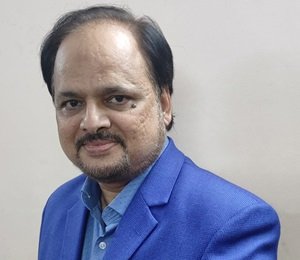
Syed Akmal Razvi is a lawyer practising in the Karnataka High Court. The views expressed here are the author’s own, and Clarion India does not necessarily subscribe to them. He can be contacted at akmalrazvi@yahoo.com


