

The future of India rests not in psychological captivity but in mutual trust. True secularism demands that every citizen stand secure in identity, equal in rights and united in commitment to the republic
Najmuddin A Farooqi
IS it possible that a section of Indian Muslims, over time, may be internalising circumstances in a way that resembles what psychologists describe as “Stockholm Syndrome”? The question is delicate and must be approached with care, balance and a sincere commitment to secular and democratic values. It is not an accusation, but rather an invitation to introspection.
The trauma of Partition left deep scars across communities. Over decades, however, efforts were made to restore balance and rebuild trust. On one side, organisations emerged that sought to unsettle the Hindu sentiments in a turbulent environment. On the other, the Indian National Congress, as the dominant political force in the early decades, attempted to nurture a secular framework aimed at healing wounds and ensuring inclusivity.
History rarely moves in straight lines. Policies that were intended as corrective or protective measures were, over time, perceived by the Hindu majority as minority appeasement. Simultaneously, ideological undercurrents continued to shape political discourse beneath the surface, gradually influencing the national conversation.
The demolition of Babri Masjid marked another profound turning point. It was not merely the loss of a structure but a deeply concerning moment that affected the moral, emotional and social fabric of the nation. The event intensified polarisation and reshaped political alignments in ways that continue to influence public life.
In the years that followed, the rise of Narendra Modi as a national leader marked a significant political transformation. Projected as decisive and development-oriented, his leadership resonated with large sections of the electorate across regions. At the same time, memories of the 2002 Gujarat riots remained painful for many, especially among Muslims, raising enduring questions about justice, accountability and reconciliation. Nevertheless, the democratic mandate elevated him to the highest office, reflecting the will of a substantial majority who viewed him as a strong and courageous leader, one who, in their perception, had delivered a firm response to what they regarded as a violent and aggressive Muslim community, and who possessed the resolve to ensure that they remained within defined boundaries.
This brings us to a contemporary development that prompts reflection: why are sections of the Muslim middle class increasingly seeking engagement with organisations historically viewed with suspicion? Is this outreach a pragmatic adaptation to political realities or does it represent a deeper psychological accommodation? When meetings occur, one sometimes wonders whether those seeking dialogue are genuinely being heard or whether they are becoming symbolic participants in a larger narrative.
However, it is essential to affirm a foundational principle: no authority, however powerful, can or should diminish the intellectual autonomy and spiritual dignity of Indian Muslims. Faith is deeply personal. No government or institution has the right to define, audit or reinterpret a community’s religious beliefs or practices.
Indian Muslims, like any other citizens, are neither immune to change nor frozen in history. They evolve with time, shaped by social currents, moral debates and generational shifts. Just as there have always been diverse interpretations within every faith tradition, so too within Islam, both historically and today.
Equally, questions of tradition and authenticity are not unique to one community. Every religious society must reconcile its ancient heritage with modern realities. It may be asked, in fairness, whether adherents of all faiths are living exactly as their scriptures prescribed centuries ago. Societies adapt; values are reinterpreted in changing contexts.
A broader question also arises regarding national identity. Minorities in neighbouring countries often face similar dilemmas: should their primary emotional allegiance be to their country of residence or to a larger civilisational idea? Most would agree that love and loyalty to one’s homeland are fundamental to responsible citizenship.
In this respect, Indian Muslims are no exception. Criticism of a government or ruling party does not equate to disloyalty to the nation. Democratic engagement includes the right to question, debate and dissent. Indian Muslims, like citizens of every other faith, cherish peace, prosperity, security and the sovereignty of India. Their attachment is not to political power but to the land and its people.
If there is a call to be made, perhaps it is this: not fear, not surrender and not alienation but thoughtful confidence. Communities must neither withdraw into anxiety nor compromise their intellectual independence. Engagement should be based on dignity, clarity and constitutional values.
The future of India rests not in psychological captivity but in mutual trust. True secularism demands that every citizen, majority or minority, stand secure in identity, equal in rights and united in commitment to the republic.
___________________
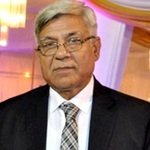
Najmuddin A Farooqi is a Lucknow-based journalist and writer. His areas of interest are social, economic, education and health. The views expressed here are the author’s own and Clarion India does not necessarily subscribe to them.


