

A constitutional, policy, and developmental analysis
Dr Shabistan Gaffar
INDIA’s Constitution establishes equality as a fundamental principle of the republic. It guarantees that women, irrespective of their religious affiliations, have the right to access education, employment, and civic participation. Educational institutions are designed to be accessible to all citizens, while employment laws are intended to foster a non-discriminatory environment. A thorough analysis of the experiences of Muslim women clearly exposes a significant divide between constitutional promises and the stark realities they face. This divide highlights systemic barriers and sociocultural obstacles that hinder the practical realisation of their rights, revealing an intricate web of structural inequities that persist in practice.
Even after 78 years after independence, Muslim women still rank among the most educationally and economically marginalised groups in the country. Their enrolment in higher education is significantly lower than the national average, and their labour force participation is among the lowest across all social groups. Despite progress in many areas, their presence in leadership roles—whether in academia, governance, or public institutions—remains surprisingly scarce.
While equality is vital, it’s clear that it alone doesn’t resolve ongoing disparities. This highlights the need to examine how equality operates in practice critically. Emphasising equity over mere formal equality is essential for shaping effective policies, institutions, and meaningful social reform.
Equality means treating everyone uniformly, ensuring that no one is discriminated against based on gender, religion, or other identity characteristics. In constitutional terms, equality guarantees that laws, institutions, and opportunities are formally accessible to all.
Equity acknowledges that individuals and communities do not start from the same place. Factors such as historical disadvantage, economic hardship, gender norms, spatial segregation, and social stigma create unequal access to opportunities. Therefore, equity requires tailored support mechanisms to ensure that outcomes are fair, rather than just focusing on uniform procedures.
Subtle Difference
A thoughtful example highlights the difference between equality and equity. While equality opens university admission portals to everyone, equity considers essential aspects such as safe travel to campus, access to financial support, caregiving responsibilities, digital navigation, and studying in inclusive spaces. By acknowledging these factors, we can transform equality from a mere symbol into a meaningful, impactful reality for all students.
A young girl, a determined first-generation learner from a modest Muslim family in a semi-urban area, has proudly gained admission to a government degree college through her hard work and merit! Although the college is over 20 kilometres away, she faces challenges due to irregular and unsafe public transport. Although hostel facilities are limited and beyond her budget, her resilience shines through. She is also navigating the wait for her scholarship, which is typically not available until after classes begin. Despite these obstacles, her invaluable contributions at home are crucial to her family’s economic stability. Within a single semester, she discontinued her studies. Her withdrawal from the programme was not indicative of a deficiency in academic ability or a lack of motivation. Instead, it stemmed from structural barriers that equality-oriented systems overlook. While such narratives are frequently dismissed as anecdotal, when considered alongside national data, they reveal systemic design failures within institutions.
Empirical evidence consistently corroborates these lived experiences. According to the 2011 Census, the literacy rate among Muslim women was approximately 51.9%, which is significantly lower than the national average for females. Recent educational surveys also indicate that Muslim women continue to be under-represented in higher education compared to their population share.
Persistent Educational Gap
The All India Survey on Higher Education (AISHE) reveals that Muslim enrolment in higher education remains disproportionately low, hovering between four to five per cent, despite Muslims constituting over 14 per cent of India’s population. Furthermore, dropout rates significantly increase after secondary schooling, particularly among girls from economically disadvantaged backgrounds and residentially segregated areas. While India has achieved near parity in overall educational enrolment, college admission rates for Muslim women aged 18 to 23 remain low, at 4.9 per cent, compared with the national average of 10.7 per cent. Additionally, literacy rate among Muslim women continues to fall short of the national female average, highlighting a persistent educational gap.
The labour force participation rate among Muslim women is approximately 12 per cent, significantly lower than the national average for females.
Many employed Muslim women work in the informal sector, often in low-wage or precarious environments. The connections between education and formal employment opportunities are frequently inadequate.
Skill development and entrepreneurship programmes often overlook the specific challenges faced by Muslim women, such as a lack of collateral, restricted mobility, safety concerns, and exclusion from professional networks. Promoting equity in employment necessitates childcare support, flexible work arrangements, culturally sensitive workplaces, targeted skill training linked to real job opportunities, and protection against discrimination, all the while upholding professional standards.
Patterns of exclusion continue to exist even in the presence of policies that are designed to be gender-neutral and religion-neutral. This observation indicates that exclusion may stem not only from individual choices or cultural preferences but also from structural constraints within policy and institutional frameworks.
The marginalisation of Muslim women in education cannot be fully grasped without delving into the rich tapestry of historical context. Throughout history, Islamic intellectual traditions have celebrated the pursuit of knowledge as a noble endeavour for both men and women. Visionary reformers such as Sir Syed Ahmad Khan and Altaf Hussain Hali passionately advocated for women’s education, drawing a compelling connection between women’s enlightenment and the advancement of their communities. They fervently argued that a society’s progress remains stunted if it continues to deny women access to the transformative power of learning. In their view, the key to a thriving society lay in the empowerment and education of its women.
Advancing Women’s Rights
Women leaders such as Sultan Jahan Begum were instrumental in championing female education, driving institutional reform, and encouraging intellectual participation. The establishment of several women’s colleges in the early 20th century stands as a powerful testament to their unwavering efforts and commitment to advancing women’s rights.
In the post-independence era, development narratives tended to describe Muslims primarily as a cultural and religious minority, which sometimes obscured their experiences as a socio-economic group facing multiple challenges. While it is commendable that constitutional protections have been established to safeguard their spiritual and cultural rights, it is equally important to acknowledge that economic and educational marginalisation have not always received the policy attention they deserve.
The disparities identified by the Sachar Committee have sharply highlighted the deprivation experienced by the Muslim community in areas such as education, employment, housing, and public services. The findings reveal that, in many instances, the living conditions of this group are inferior even to those of historically marginalised social categories.
Public policy in India is frequently premised on neutrality. Scholarships are ostensibly accessible to all eligible students. Colleges implement uniform admission criteria, and employment initiatives are designed without explicit consideration of gender-specific or minority-related constraints. However, neutrality in an unequal society does not produce fairness.
The reliance on digital-only scholarship systems disproportionately affects families that lack stable internet access. Inflexible attendance requirements may disadvantage women who bear caregiving responsibilities. Additionally, campuses that are deficient in female faculty, hostels, or mechanisms for grievance redressal subtly encourage students to disengage. Furthermore, stringent dress codes and social discrimination may erode the sense of belonging within the institution. The impact of these design features on Muslim women is not attributable to religious or cultural factors; rather, it stems from a lack of institutional awareness.
Structural reform necessitates a concomitant shift in normative frameworks. The prevailing public discourse surrounding Muslim women frequently relies on oversimplified narratives, positioning them either as passive victims or as emblematic representations of cultural divergence. These reductive framings obscure the nuances of agency and perpetuate societal stigmas.
We have a promising opportunity to transform societal attitudes. By recognising Muslim women as empowered citizens and valuable contributors to our communities, we can foster positive change. Families, educators, the media, and policymakers need to come together in open dialogue, viewing women’s education and employment as collective investments that benefit us all. Highlighting Muslim women in their roles as students, professionals, educators, entrepreneurs, and leaders, rather than solely viewing them through the lens of social challenges, is vital to driving positive transformation. This shift in perspective not only empowers these women but also enriches society by showcasing their contributions and capabilities.
Community-based organisations occupy a critical intermediary space between policy and lived reality. They help women navigate admissions, scholarships, skills training programs, and employment opportunities. They provide counselling, mentorship, and legal support. They create safe spaces for learning where institutional trust may be weak.
Empirical Reality
It is crucial to note that community organisations play a vital role in documenting instances of exclusion and providing evidence to support advocacy efforts, ensuring that policy reforms are rooted in empirical reality rather than theoretical concepts. These organisations do not seek to replace the state; instead, they complement and enhance public systems by making them more accessible to those who are most vulnerable to exclusion. Equity is not ideological; it is practical. An equity-oriented approach to education and employment comprises several critical components, including establishing higher education institutions and skill development centres in proximity to marginalised communities, providing safe and affordable transportation services and adequate accommodation for women, and implementing timely, automated scholarship disbursement processes. Additionally, it involves giving childcare support alongside flexible work arrangements, strengthening enforcement of anti-discrimination laws, and creating mentorship and leadership opportunities explicitly designed for minority women. These measures do not compromise merit or standards; instead, they facilitate an environment in which genuine merit can emerge and thrive.
The exclusion of Muslim women from education and formal employment is a significant issue with implications for national development. Educated women can enhance economic growth, public health, and democratic stability. The underutilisation of a substantial portion of the population represents a loss of human capital that may affect a nation’s development potential.
Dr B R Ambedkar stated that the advancement of women can be used to assess the progress of a community. This observation continues to hold significance in contemporary discussions on societal development.
India is rich in constitutional ideals! The challenge lies in bridging the gap between formal equality and genuine justice. Achieving equity where outcomes are unequal isn’t merely generous—it’s a necessary step for progress.
Muslim women are advocating for systems that recognise and address their realities rather than seeking special privileges. Equality expresses our shared goals, while equity measures the real effects of our efforts. A just society recognises that not everyone begins from the same starting point; instead, it strives to ensure that no one is left behind in the pursuit of opportunity and fairness.
______________
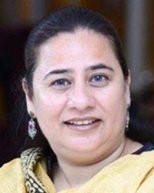
Dr Shabistan Gaffar is Chairperson of All India Confederation for Women’s Empowerment and ex chairperson of the women’s cell of National Commission for Minority Educational Institutions (NCMEI). She can be reached at shabistangaffar@gmail.com

