

Najmuddin A Farooqi
THE political discourse in contemporary India has undergone a significant transformation over the last decade. It is now increasingly evident that the ruling Bharatiya Janata Party (BJP) does not hesitate to project itself as a political force committed primarily to safeguarding what it perceives as Hindu interests. Whether one agrees with this ideological positioning or not, the party appears politically confident in pursuing such a course, believing that it continues to yield electoral dividends. Meanwhile, much of the opposition seems caught in a political dilemma: uncertain whether to confront this narrative directly or adapt to it.
An interesting aspect of this political climate is the manner in which issues concerning Muslims and other minorities are addressed in public discourse. Even when certain concerns of Muslims are acknowledged or acted upon by leaders associated with the ruling establishment, such developments often receive limited publicity. In many instances, care is taken to avoid explicitly using terms such as “Muslim” or “Islam” for any good reason and while discussing welfare measures or policy interventions, except in matters involving international diplomacy or issues extending beyond national boundaries.
My recent attempts to access official data related to minority scholarships have further reinforced these observations. Over the past few weeks, I have been trying to obtain state-wise beneficiary lists of scholarships administered by the Ministry of Minority Affairs, particularly the Pre-Matric, Post-Matric and Merit-cum-Means Scholarship schemes. The purpose was to study trends from 2014–15, when the BJP first came to power at the Centre, up to the academic year 2024–25.
Despite extensive efforts, obtaining comprehensive information has proved difficult. Consequently, I filed an application under the Right to Information Act, 2005, seeking detailed data from the ministry. The response received was incomplete and unsatisfactory, compelling me to file a first appeal, the outcome of which is still awaited.
What makes the matter more intriguing is the selective availability of records. For instance, beneficiary lists relating to the Merit-cum-Means Scholarship scheme in Uttar Pradesh for the year 2009 are still accessible on government platforms. Similarly, lists of beneficiaries under Pre-Matric and Post-Matric scholarships for Manipur for the year 2022–23 are also available online. Yet, comprehensive and updated national data appear absent from the public domain.
More importantly, official communication indicates that these scholarships were not awarded after the year 2022–23, though no convincing explanation has been publicly provided regarding their discontinuation or suspension. This silence naturally raises concerns among minority communities, particularly economically weaker students who depend upon these schemes for educational support.
Education remains one of the most effective tools for social inclusion, economic mobility and national integration. In a country as diverse as India, the sustained neglect of educational opportunities for minorities can have long-term social and economic consequences. Welfare schemes directed towards disadvantaged minorities should not be viewed merely through the prism of electoral politics; rather, they should be recognised as investments in human development and national progress.
I therefore urge the administration led by Narendra Modi, along with state governments across the country, to seriously reconsider the continuation and expansion of scholarship schemes for minorities. Political parties may continue to pursue their ideological priorities and electoral strategies, but governance ultimately demands inclusivity and balance.
The leadership of the ruling establishment is undoubtedly aware that in today’s interconnected global environment, no nation aspiring for sustained growth and international respect can afford to overlook the educational and healthcare needs of its minorities for an extended period. Strengthening access to quality education, scholarships and healthcare among disadvantaged communities would not only improve socio-economic conditions at the grassroots level but would also reinforce India’s image as a vibrant and robust democracy committed to equal opportunity.
In this regard, the government could also explore wider Public-Private Partnership models to effectively implement educational and healthcare initiatives among minority communities. Genuine outreach, transparent implementation and inclusive development would strengthen social harmony and contribute positively to the nation’s long-term stability and progress.
____________________
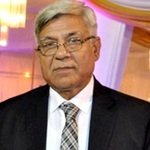
Najmuddin A Farooqi is a Lucknow-based journalist and writer. His areas of interest are social, economic, education and health. The views expressed here are the author’s own and Clarion India does not necessarily subscribe to them.
