

At the heart of the protest was the alleged shutdown of journalist Maninderjit Singh Sidhu’s social media page. Sidhu reported on contentious issues in Jeond village
BATHINDA — A large number of journalists, farmers’ representatives, and civil society activists on Tuesday staged a massive protest outside the Senior Superintendent of Police (SSP) office in this Punjab city, forming a human chain to denounce growing attempts to “muzzle the press” in the state.
The demonstration, organised by the Press Di Azaadi Bahal Karo Sangharsh Committee (the Committee for the Struggle to Restore Press Freedom), saw participants raising slogans against both the Centre and the state government, accusing authorities of systematically targeting independent journalism and curbing freedom of expression.
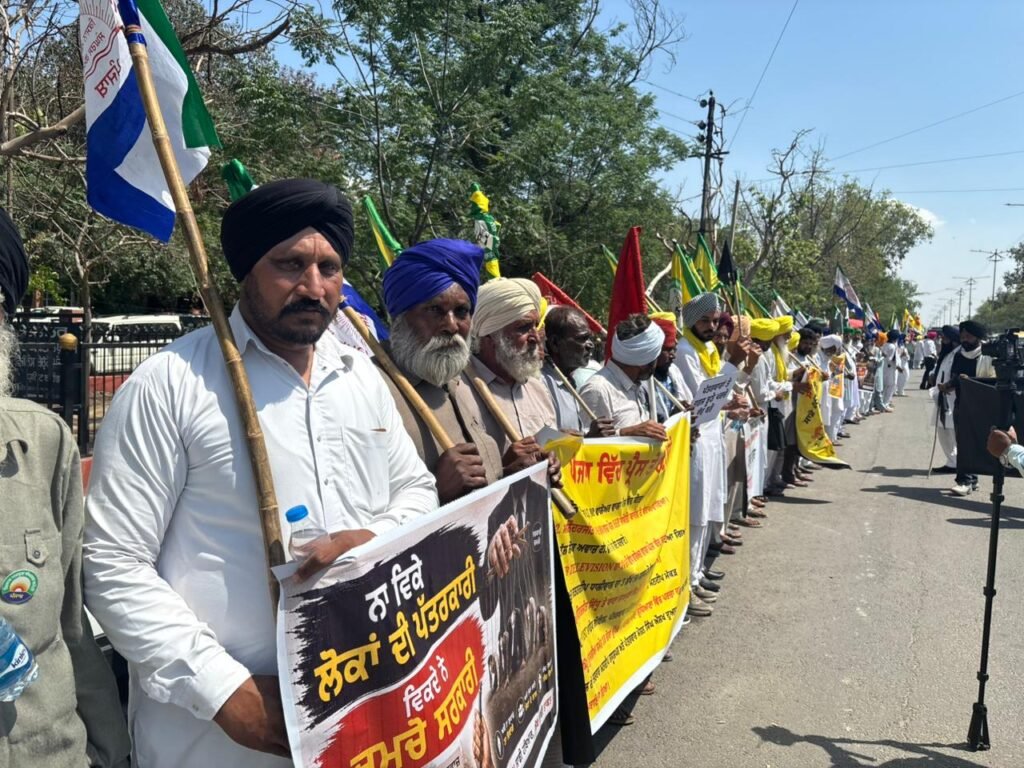
At the heart of the protest was the alleged shutdown of journalist Maninderjit Singh Sidhu’s social media page. Protesters claimed the action was taken by the police after Sidhu reported on contentious issues in Jeond village in Bathinda. The committee strongly condemned the role of SSP Jyoti Yadav, alleging misuse of authority to silence critical reporting.
The issue has drawn additional attention due to the political connections involved. Protesters pointed out that SSP Jyoti Yadav’s husband, Harjot Singh Bains, is Punjab’s Minister for Information and Public Relations, raising concerns over potential conflict of interest and political interference in policing and media regulation.
Speakers at the protest demanded immediate restoration of blocked Facebook pages run by journalists, calling them crucial platforms that “amplify the voice of the public.” They accused the government of employing a “dual strategy” to suppress dissent—issuing copyright strikes for the use of Chief Minister Bhagwant Mann’s photographs while simultaneously sending legal notices to shut down critical pages.
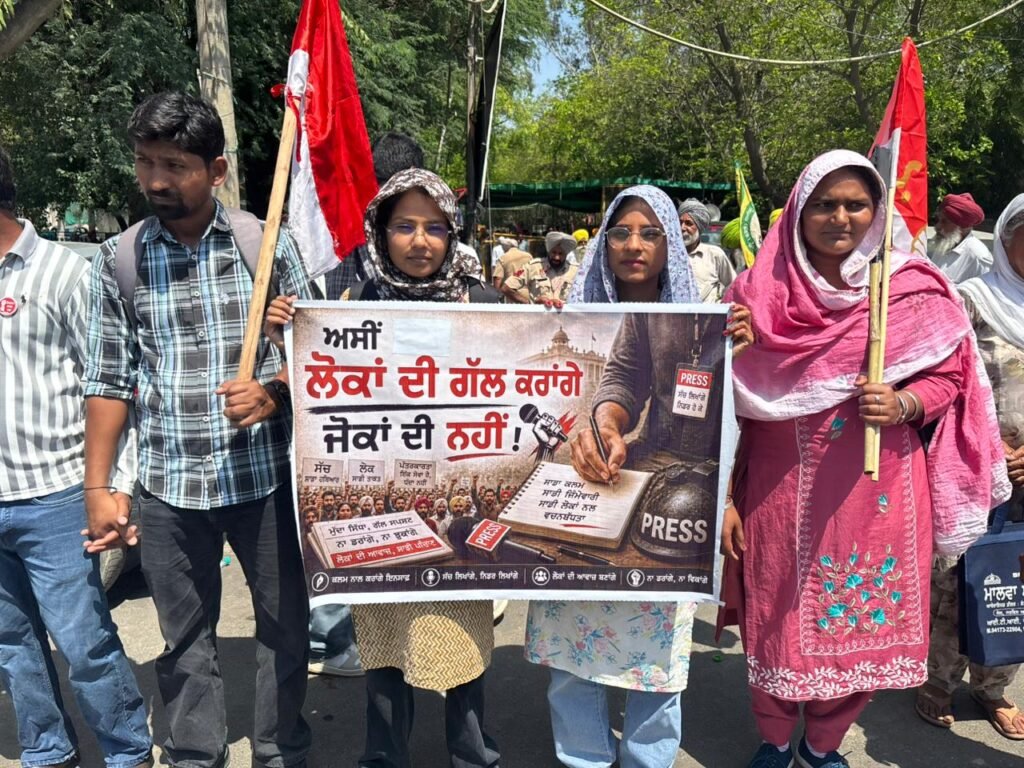
“Attempts to intimidate journalists and interfere in their work are direct violations of the constitutional guarantee of free speech,” said one of the speakers, warning that such actions would not go unchallenged.
The protest also highlighted broader concerns about the state of press freedom in India. Organisers cited the country’s slide to 157th position in the World Press Freedom Index, calling it a troubling indicator of shrinking democratic space. They argued that increasing restrictions, legal pressures, and targeted actions against journalists have created an unsafe and hostile environment for media professionals.
The demonstration was addressed by a wide spectrum of leaders from farmers’ unions, labour groups, student bodies, and civil society organisations, reflecting a rare convergence of voices on the issue of press freedom. Among those who spoke were Shingara Singh Mann of BKU Ugrahan, Rajinder Singh of Kirti Kisan Union, Gurdeep Singh of BKU Dakaunda, Mukesh Malaud of Zameen Prapati Sangharsh Committee, and representatives from student and workers’ unions.
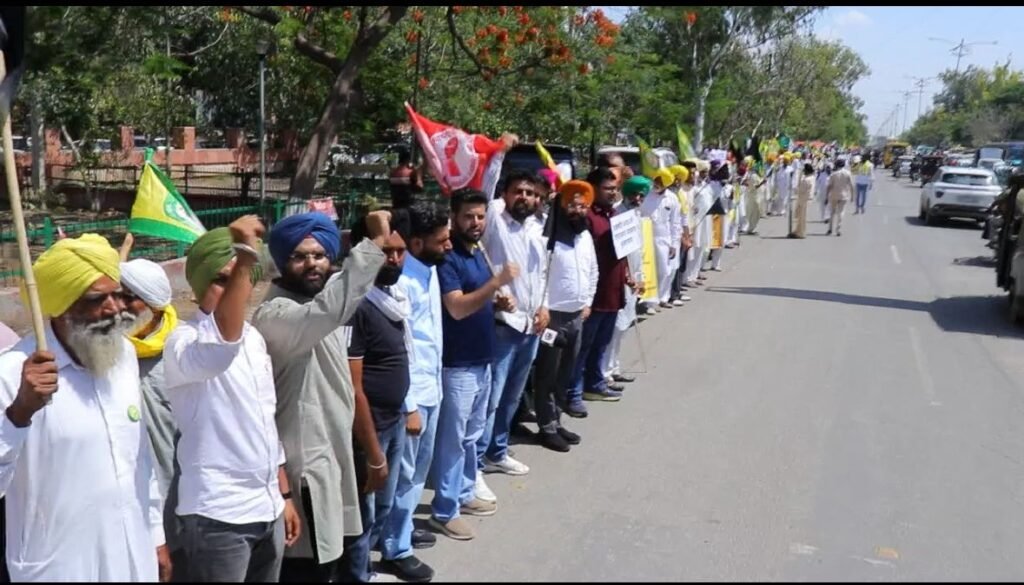
RTI activist Manik Goyal, along with leaders from Punjab Students Union, Lok Morcha Punjab, and various labour organisations, also joined the protest, underlining the wider concern over democratic rights.
The committee warned that if the blocked pages are not restored and “false cases” against journalists are not withdrawn, the agitation would be intensified across the state in the coming days.
Concluding the protest, committee representatives Maninderjit Singh Sidhu, Jass Grewal, and Bakhtaur Dhillon thanked participants for their support and reiterated their commitment to defend press freedom.
The protest marks the latest flashpoint in an escalating confrontation between journalists and authorities in Punjab, raising serious questions about the balance between governance, policing, and the fundamental right to free expression.


