

SEVENTY-TWO female Palestinian detainees are facing systematic abuse, humiliation, and violence in Israeli rape and torture dungeons, three Palestinian human rights organisations revealed in a report on the occasion of International Women’s Day on March 8.
“Among the main ways the Israeli occupation targets Palestinian society is through its women,” the report by Commission of Detainees’ Affairs, the Palestinian Prisoner’s Society, and the Addameer Prisoner Support and Human Rights Association states.
“For decades, Palestinian women of all ages have been subjected to arrest, illtreatment, torture, and the denial of their most basic rights.”
While Israelis have systematically targeted Palestinian women for decades, their persecution has escalated since the start of the genocide in the Gaza Strip, as “matters have become unprecedentedly difficult for all Palestinians, including women, one of the most vulnerable segments of society.”
Targeting the Palestinian family
The report reveals that more than 700 women have been arrested by the Israelis since October 7. This includes women and girls from all walks of life: “university students, activists, housewives, and women with no direct political involvement.” These form part of a “wider policy that targets the Palestinian family and social structure, within an approach based on collective punishment and abuse.”
As of March 2026, Israeli occupation authorities are currently imprisoning 72 Palestinian women, most of them held in Damon Prison in the country’s north. Among them are three minors and 32 mothers, who collectively have 130 children.
Additionally, 17 women are held under administrative detention without trial or charge, while five female prisoners are serving varying sentences – the longest being 16 years.
There are also 50 women awaiting trial, including 16 who are detained on charges related to what the occupation refers to as “incitement,” with estimates that the actual number may be higher.
There is one female prisoner previously wounded by Israeli occupation forces, and 18 sick female prisoners, including three women suffering from cancer, in addition to 12 female university students and three female school students.
Geographically, the majority were arrested from the occupied West Bank and occupied Jerusalem (69 female prisoners), alongside three female prisoners from the 1948-occupied territories.
Nearly two and a half years into the genocide, “to this day, there is no available data indicating that women from occupied Gaza remain in detention.”
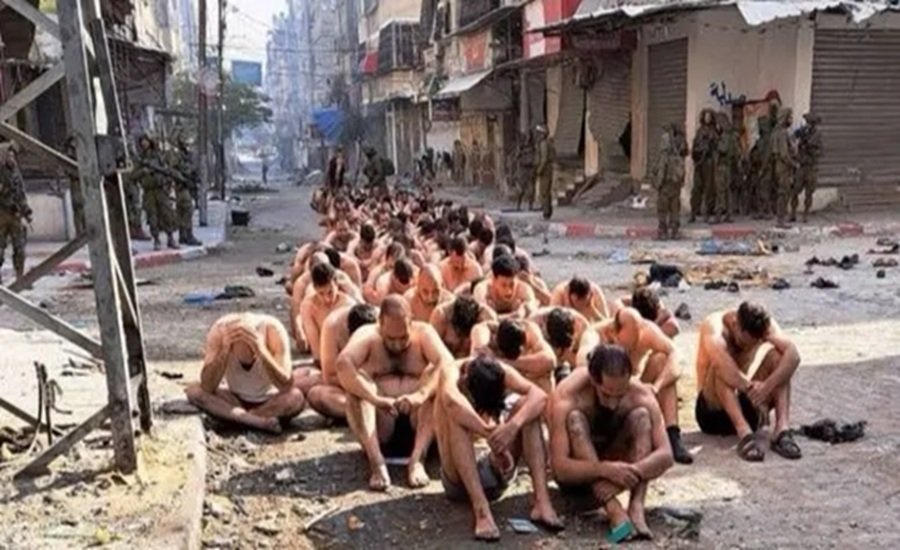
This also applies to male detainees from the Gaza Strip, as the Israelis have not revealed the number of Palestinians they have either kept in detention or killed in their dungeons after abducting them. They have occasionally released unidentified dismembered and disfigured bodies into the Gaza Strip.
Testimonies of abuse
The report includes multiple anonymised testimonies in which detainees recount horrific physical, psychological, and sexual abuse.
The raids in the prison cells are often so violent that detainees suffer fractures. Dogs are used to threaten the detainees. In one case, a daughter was abducted simply to put pressure on her father, who was also a detainee.
Strip searches and physical abuse
Prisoner (D.B.):
“The suppression forces would raid the rooms accompanied by the ‘Yamaz’ unit and dogs. In one raid, a dog was brought into my room with a soldier holding it. It was only about a meter away from me, which was terrifying—especially for the younger prisoners who began trembling.
“The raids happen like this: they storm the rooms one by one, force us to lie face down, walk over us, tie our hands behind our backs, then drag us one by one to the yard while pulling our shoulders backward as they lift us from the ground, causing severe pain. Some prisoners suffered fractures. In one raid I was tied and lying on the ground; they told me to stand but I couldn’t, so they violently pulled me up by my shoulder from behind. The pain lasted for a long time.”
She continued:
“One prisoner had her shoulder dislocated while being dragged violently while lying on the ground. Another was dragged in a brutal way that exposed her back and hair in front of the guards, and her knee was displaced; she suffered from pain for months and they refused to take her to the clinic. Another prisoner was beaten on her back and stomach.”
“After dragging the prisoners, some of us were taken for strip searches in the bathroom, while others were taken directly to the yard. We were forced to remain kneeling or lying on our stomachs for between half an hour and an hour until the searches were finished. Sometimes they would walk over us. Any prisoner who tried to change her position was beaten. I personally was beaten with kicks and hands. Once the prison director beat me when I tried to relieve the pressure on my body and said: ‘You are not in your home.’ In one raid we remained on our stomachs for nearly an hour while guards and special units walked over us and filmed videos. The pretext was ‘searching the rooms.’”
Sexual abuse of detainees
Prisoner (R.R.):
“They took me from the outdoor yard to a small room. A female soldier carried out a strip search. She lifted my arms and grabbed and examined my chest. She ordered me to stand and sit twice while I was naked. Then she gave me underwear and a prison pajama uniform to wear and handed me a head covering, while throwing my clothes in the trash. After that they handcuffed my hands behind my back and shackled my legs. They did not put a blindfold on me. Then a very tall soldier came, grabbed my left arm from behind, and walked me while repeatedly hitting my left shoulder with his elbow along the way. My arm became swollen and the blows were strong. I don’t know how many times he hit me, but the next day my arm was swollen. When they saw it during interrogation they were alarmed and said they would take me to the clinic, but they never did.”
She also described the conditions of her interrogation cell:
“The soldier placed me in a very small cell, about one meter by one meter. I couldn’t fully stretch my legs inside it. When I slept, my head was near the toilet seat. The walls were rough and gray. The cell had only a toilet seat, a sink, and a floor—no mattress, blanket, or pillow. There was toilet paper and drinking water only from the sink. They took my hijab and left me only with the head cover beneath it. The cell was full of bugs, and I developed a fungal infection inside it. I stayed there until the next morning. Around eight in the morning, a guard took me to the interrogation room.”
She added regarding the interrogation period:
“They entered my cell frequently. Two female soldiers would come in with other guards standing outside, and suddenly they would conduct a strip search. They would order me to remove all my clothes. The searches were humiliating.”
Abducting family members
Prisoner (M.M.):
Here we refer to the case of the prisoner (M.M.), who was abducted as a hostage to pressure her father, who is detained in Israeli occupation prisons. During her arrest and interrogation, she was subjected to abuse, assaults, and humiliation.
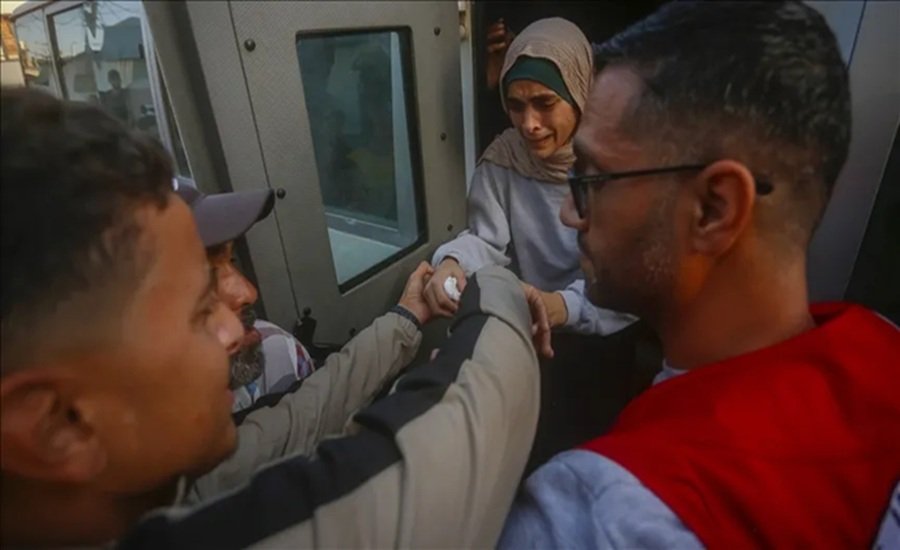
“When I was arrested, the soldiers started asking me in the military jeep, ‘Where do you want to go? Which prison?’ I told them, ‘Asqalan.’ They started laughing at me and said: ‘So you want to go where your father is.’”
“From the first day I entered the Asqalan (Ashkelon) interrogation center, they began interrogating me. I was interrogated continuously for 18 days, every day in several sessions, each session lasting three or four hours. They would take me into interrogation about three times a day. Each time there was one interrogator and one female soldier. The interrogation consisted of continuous questioning. They would leave to rest for two or three hours. I was unable to sleep throughout the interrogation, which lasted 27 days.”
She added:
“After 27 days they transferred me to Damon Prison. I was transferred by the Nahshon unit, and they pushed me a lot during the transfer. They moved me in prison transport vehicles (‘bosta’). I was taken through more than one prison whose names I don’t know before arriving at Damon, but I arrived there on the same day.”
She continued in her testimony:
“On the 18th day of interrogation, when I was about to finish interrogation, an interrogator came and said: ‘We’ll let you see your father.’ Then they took me to an interrogation room where my father was sitting on an interrogation chair like school chairs, with his hands tied behind him. When I entered, it seemed he knew I was coming and was prepared for it; he was looking toward the door. When I entered, they removed the cover from my eyes, and my hands were tied in front of me. My father started crying a lot when he saw me. I ran toward him and hugged him while I was still tied up. He kept kissing me and saying reassuring words to comfort me. Then they seated me on a regular chair while my hands were still tied in front. He looked extremely exhausted. There were about twelve interrogators in the room, including only one female interrogator.”
This testimony is one of dozens from women who were arrested as hostages to pressure members of their families.
One famous case where a relative was kidnapped to pressure a male relative into false testimonies has been that of Dr. Marwan al-Hams and his daughter, Tasneem. Tasneem was released late last year, but her father remains imprisoned and faces severe abuse at the hands of the Israeli authorities.
The abuse of Palestinians begins with house raids, which typically take place in the middle of the night or before dawn. Israeli forces typically trash the entire house, holding all family members at gunpoint before taking away their target.
“Women are frequently taken from their homes in front of their families,” the report added. “In other cases, arrests occur at military checkpoints, where women may be detained for hours under the sun or in the cold before being subjected to detailed and humiliating searches.”
The report highlights that the practice of abducting women to pressure male relatives has escalated since the start of the genocide:
In these cases, women are detained not because they are the primary targets but to force a family member to surrender, or as a form of revenge. Dozens of women—including wives of prisoners, wives of those killed, mothers, and even elderly women—have been arrested for this purpose. These arrests are often accompanied by psychological pressure and threats, including threats to kill or harm the targeted relative. Raids frequently involve the destruction of homes, theft of large amounts of money and jewelry, and the terrorizing of children, reflecting a broader pattern of collective punishment against entire families. Many of the women arrested come from families that have already endured years of repeated raids, arrests, imprisonment, and killings.
Furthermore, Israeli authorities have started abducting Palestinians for “incitement,” which includes such actions as “posts, reposts, personal expressions, or even interactions with online content.”
“As a result, the digital sphere has effectively become a space for surveillance and prosecution, where any online activity can be grounds for arrest regardless of context.”
Palestinian human rights organisations have frequently published reports detailing harrowing abuse of detainees, both male and female.
Last November, a report by the Palestinian Centre for Human Rights revealed a harrowing account of a 42-year-old woman being raped four times by Israeli soldiers, repeatedly subjected to obscene insults, stripped and filmed naked, electrocuted, and beaten all over her body.
However, these testimonies and appeals by Palestinians have failed to ease the conditions of the detainees in Israeli dungeons. As opposed to the hue and cry they raised about the Israelis in Palestinian captivity, there has largely been a conspiracy of silence when it comes to Palestinian detainees in Israeli dungeons.
Unlike the Israeli prisoners, who were treated humanely by their captors and came away in good health during the prisoner exchanges last year, even the United Nations has recorded systematic sexual, physical, and mental violence against Palestinians.
Despite overwhelming evidence, Palestinians continue to suffer in the inhumane Israeli prison system, with no hope of release or intervention from international authorities, as the Israelis continue to act as they please with their minds and bodies — Palestine Will Be Free

