

Reports highlight communal clashes with calls for better protection of minorities and peaceful coexistence
NEW DELHI – In India, the festival of Holi brought joy to many but also saw reports of tension and violence in some areas. While some people claimed large-scale attacks by Hindus on Muslims at places such as mosques, madrasas and Eidgahs, available news and human rights records as of 6 March 2026 do not support this as a national pattern.
Instead, there were about 10 to 15 reported cases of trouble, mostly in states like Uttar Pradesh, Maharashtra and Rajasthan. These included acts of intimidation, beatings and property damage, often linked to festival revellers. At the same time, there were accounts of clashes affecting people from both communities, showing how festivals can sometimes lead to fights.
The lead-up to Holi 2026 had caused concern because of past problems during major festivals. Groups like Human Rights Watch pointed out in 2025 that hate speech and violence against religious minorities, especially Muslims, had become more common. Their reports said that “normalised violence” and abusive language directed at minorities were on the rise.
In 2025 alone, the Centre for the Study of Society and Secularism recorded 28 communal clashes and 14 cases of mob killings, mostly involving Muslims, in places like Maharashtra, West Bengal and Gujarat. Nine of those clashes occurred during religious processions, such as Ram Navami or Hanuman Jayanti. This background led many to fear that Holi 2026 might see similar problems.
However, when the festival arrived, it was largely peaceful across the country. Millions played with colours, danced and shared sweets. In cities such as Delhi and Mumbai, crowds filled the streets with laughter and music. Yet in some places, situations turned tense.
Let us look at the main reported cases one by one, beginning with those in which Muslims were allegedly targeted, as these incidents drew particular concern.
In Sambhal, Uttar Pradesh, local officials covered nearly a dozen mosques with plastic sheets before Holi. Authorities said this was done to prevent colours from being thrown on the buildings during celebrations and to maintain communal harmony following peace committee discussions. However, many Muslims saw the move differently.
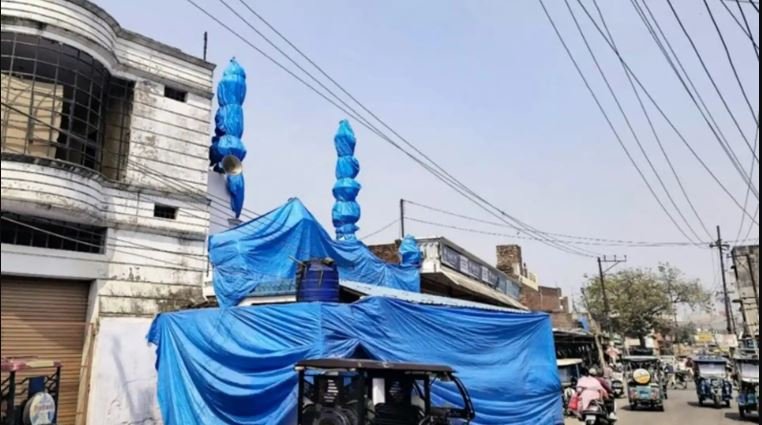
“This is not protection; it feels like telling us we do not belong here,” said a local, Ahmed Khan, in an interview with The Wire. Reports also said that more than 1,000 Muslim men were taken into police custody as a “preventive” measure.
In one incident, a group reportedly painted “Jai Shri Ram” on a mosque gate and threw colours inside. No one was injured, but the act upset many residents. Similar coverings were reported in other parts of western Uttar Pradesh, including Aligarh, where at least three mosques were shielded, creating what critics described as “an environment of fear”.
In Aligarh, also in Uttar Pradesh, a group celebrating Holi gathered outside a mosque and played loud songs with lyrics that appeared to threaten historic mosques. The lyrics reportedly said: “Ayodhya has been decorated, Kashi has been decorated; God bless us, we will decorate Mathura too.”
No physical attack was reported, but people inside the mosque felt intimidated.
“We were praying, and suddenly the air was full of these chants. It made us worry for our safety,” Imam Farid Ahmed told Al Jazeera. Police later intervened, although no immediate arrests were reported.
In Meerut, another city in Uttar Pradesh, a Muslim student at IIMT University reportedly faced harassment during Holi celebrations on the campus. While he was fasting, he was chased and beaten by a group of students.
Videos shared on social media showed the student being punched and kicked.
“They targeted me because of my faith. Festivals should bring people together, not divide them,” the student, who asked not to be named, told Hindustan Times. The university said it had started an internal inquiry, and police registered a case.
In Pilibhit, also in Uttar Pradesh, a Muslim family’s home in Dharamgadpur village was reportedly attacked by a group celebrating Holi. According to the family, the attackers broke down the door and shouted threats.
“We were just at home, avoiding the crowds, and they came at us. Why? Because we are Muslim,” said Salim Raza, the head of the family, in a statement to local media. A complaint was filed with the police, although no immediate arrests were reported.
In Solapur, Maharashtra, two young Muslim men were reportedly attacked over WhatsApp posts related to the Mughal ruler Aurangzeb. According to reports, a group shaved half of their heads and moustaches and forced them to kneel and apologise in front of pictures of Hindu deities.
“It was humiliating. They said we had no right to talk about history,” one of the victims told Clarion India.
In Rajasthan, reports were limited, but one man from a marginalised community, possibly Muslim or from another minority group, died in violence linked to Holi celebrations.
“He was caught in a clash that started over nothing, and now he is gone,” a family member told the Facebook group APCR. More details were still awaited.
In Delhi, rhetoric also added to tension. At a Holi gathering, BJP member Aahir Deepak Chaudhary spoke against “Rohingya and Bangladeshis”, which many observers say is sometimes used as coded language referring to Muslims. He urged people to report “suspected” individuals who might disrupt celebrations.
“Such talk only makes matters worse,” said activist Shabnam Hashmi from Citizens for Justice and Peace.
These incidents led some observers to say that festival celebrations sometimes create fear among minority communities. India Hate Lab reported 1,318 hate speech events in 2025, with 98% directed against Muslims.
“Holi processions sometimes pass through Muslim neighbourhoods with loud slogans,” said a report by Fair Planet.
However, there were also reports of violence affecting Hindus. In Mirzapur, Uttar Pradesh, members of a Hindu family said they were attacked by a group while cleaning a temple.
In Delhi’s Uttam Nagar area, a man named Tarun was killed after a dispute reportedly started when a water balloon hit a woman. The argument escalated into a fight between groups from different communities.
“It started small but ended in death. We need better control,” a witness told The Times of India.
In Malda, West Bengal, a 17-year-old boy died after a clash in which gunshots were reportedly fired. Several others were injured.
“Four people were hurt, including a child. It is tragic,” a villager said.
Other violence during Holi was not linked to religion. In Mumbai, a teenager died during a drunken fight involving a crowd, and around 40 people were injured. In Pune, several fights broke out over crowds and alcohol.
In Nagpur, a grandmother reportedly burned her grandson with hot water after he sprayed colours on her. In Barabanki, Uttar Pradesh, 11 people were injured during a dispute over colour play that escalated into a clash with sticks, batons and iron rods.
Security arrangements were tightened in many areas. Uttar Pradesh Chief Minister Yogi Adityanath appealed for calm, saying the state had avoided major riots in recent years. Police in Mathura monitored celebrations such as the famous Lathmar Holi.
Some institutions also took preventive measures. Panjab University, for example, restricted Holi celebrations on campus after problems in previous years.
Looking back, earlier Holi festivals had seen similar tensions. In 2025, mosques in Aligarh and Bareilly were covered to prevent colour throwing, and some people reported being beaten for refusing to join celebrations. A man in Unnao died after being slapped during an argument, and gunfire was reported in Bharatpur.
A study in 2024 reported an 84% rise in communal clashes during Holi in some areas, often linked to processions passing through neighbourhoods with mixed populations.
Preventive measures also drew criticism. In Sambhal and Vrindavan, police reportedly advised some Muslims to remain indoors during celebrations or cover religious buildings.
A group called Dharam Raksha Sangh demanded that Muslims be barred from Braj Holi celebrations, while a BJP leader reportedly joked that Muslims were using “a hijab of tarpaulin”.
Such remarks increased distrust among communities.
“Festivals are for everyone. Why single us out?” asked All India Majlis-e-Ittehadul Muslimeen leader Asaduddin Owaisi in a speech.
Overall, while Holi 2026 saw several troubling incidents, there was no clear evidence of a nationwide wave of attacks on Muslim religious sites. About 10 to 15 reported cases involved Muslims facing harassment or violence, including one death in Rajasthan and several injuries in other areas.
Police detained many people in Sambhal and registered cases in places such as Pilibhit. Incidents also included inflammatory songs, threatening slogans and calls to exclude certain communities.
For the broader picture, India’s Home Ministry says incidents of terrorism and major riots have declined in recent years, although security forces remain on alert during large festivals.
At the same time, organisations such as the Indian American Muslim Council have called for stronger action.
“We must stop using festivals as an excuse to divide people,” said a Human Rights Watch spokesperson.
In the end, Holi is meant to be a festival of colours and unity. But these incidents serve as a reminder that maintaining peace requires effort from everyone. People from all communities should be able to celebrate without fear.
As one resident of Delhi said, “We are all Indians first. Let us keep it that way.”


