

The violent rape of a Palestinian detainee at the Sde Teiman detention facility that was captured on camera in 2024 has been one of the most egregious examples of Israeli brutality against the Palestinians since the start of the ongoing genocide in the Gaza Strip. However, more than just unabashed savagery, that case highlighted a great deal about the utter moral bankruptcy of Israeli society and the sheer hollowness of its institutions.
As I have reported previously in these pages, the unnamed detainee’s rape was captured on camera, and when the rapists were taken to a police station for questioning, huge protests erupted across Israel in support of them, with protesters demanding the accused be released. Israeli police ultimately released them without filing charges. The pro-rape protesters, who stormed an Israeli army base, also went scot-free.
Following the case of the violent rape, multiple demonstrations took place in Israel advocating the Israelis’ “right to rape” Palestinians. Hanoch Milwidsky, a parliamentarian from Netanyahu’s ruling Likud party, went on to defend rape as a torture tool when dealing with Palestinians, while journalist Yehuda Schlesinger openly lamented on Israeli TV that raping Palestinians was not an official government policy.
One of the rapists, Meir Ben-Shitrit, went on to become a minor celebrity in the Israeli media, featuring in TV shows. Meir Mazuz, a leading Israeli rabbi, blessed the soldiers who gang-raped the detainee, telling the rapists: “You beat the enemy, so what? It’s all good… Don’t we have the right to do it?… In any other country, they’d get medals… Don’t fear the goyim.” Israelis’ “right to rape” demands in street protests were reflected in surveys. A staggering 65 percent of Israeli Jews supported gang-raping Palestinians.
Last year, instead of prosecuting the rapists, Israel went after a police officer for leaking the tape of the assault against the Palestinian. Netanyahu went on to say that the case “caused enormous damage to the image of the State of Israel, the Israeli army, and our soldiers.” He described the incident and its fallout as “may be the most difficult propaganda attack the State of Israel has faced since its establishment.”
In a new report titled Beyond Accountability — Legal Analysis of the Occupying Power’s Policy of Impunity, the Palestinian prisoner support and human rights organisation Addameer pieced together the violent rape of the unnamed Sde Teiman detainee and its fallout in Israel.
The 98-page report, which was released on February 23, examines how severe violations against Palestinian detainees are occurring without accountability under international law. Addameer cites multiple case studies of rape, torture, medical neglect, and other crimes that the Israelis have been committing against the Palestinians in their custody, with total impunity, to make its case.
The report on the Sde Teiman incident makes for harrowing reading. It is replete with testimonies of extreme physical and sexual abuse.
Here is the Sde Teiman rape victim’s story — of the individual who has been identified only as S. — from the Addameer report:
Lack of Justice and Violated Bodies: On Rape and Impunity
Prisoner S. as a Case Study
Since the onset of the genocide in the Gaza Strip, the Israeli occupation forces have perpetrated some of the most atrocious acts against Palestinian prisoners, involving both physical and sexual violence. One of the victims of this violent sexual and physical torture is prisoner S.
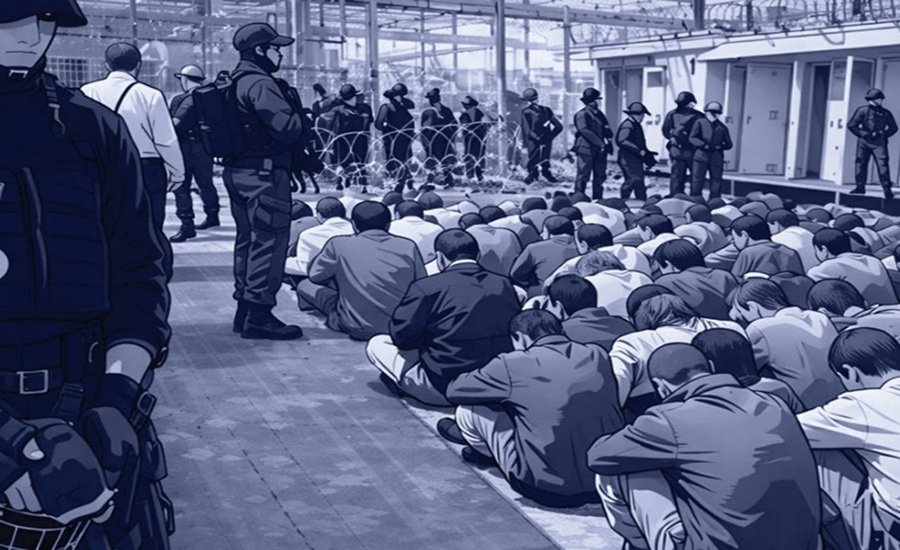
Upon his arrest on 3 March 2024, soldiers forced him to strip and donned him in a white coronavirus uniform. He was subsequently taken to Sde Teiman Detention Camp, where he endured various forms of torture. From the moment he arrived at the camp, he faced a savage assault, which included strangulation, severe beatings, and degrading insults. The soldiers also blew up medical gloves and compelled him to lick the middle finger as a sexual gesture or suggestion.
The abuses that S. endured were not confined to brutal beatings and sexual insinuations; they escalated to a horrific sexual assault perpetrated by a group of soldiers within the detention camp. In terms of the assault’s specifics, the soldiers broke into the detention area where they were assigned to search the prisoner. Upon noticing the number on the bracelet he wore, they took him behind the detention cage. Their numbers were estimated to be between 7 and 10 soldiers. After binding his hands and feet and blindfolding him, they stripped S. of his clothing and performed a strip search. They assaulted him by kicking and hitting him with their hands, and they used electric batons to shock his chest and head from behind. This brutal beating lasted for approximately half an hour.
Once the beating and electric torture concluded, S. found himself utterly exhausted, collapsing to the ground. He voiced his pain and struggle to breathe to the soldiers, yet they persisted in their electrocution. During the assault, they removed his blindfold. When he turned around, he witnessed one of the soldiers inserting a stick into his anus. The agony was so intense that he nearly lost consciousness. Nevertheless, the soldier withdrew the stick and attempted to force it into his mouth. They compelled him to sexually lick it for about a minute. After the assault ended, they pulled up his pants and placed him back on his mattress. They then issued a threat, warning him against seeking medical assistance, or they would return to “cut off his genitals”. Throughout the assault, they made it clear that these actions were carried out under orders from their superiors.
One of the prisoners witnessed the brutal torture that S. suffered, recounting:
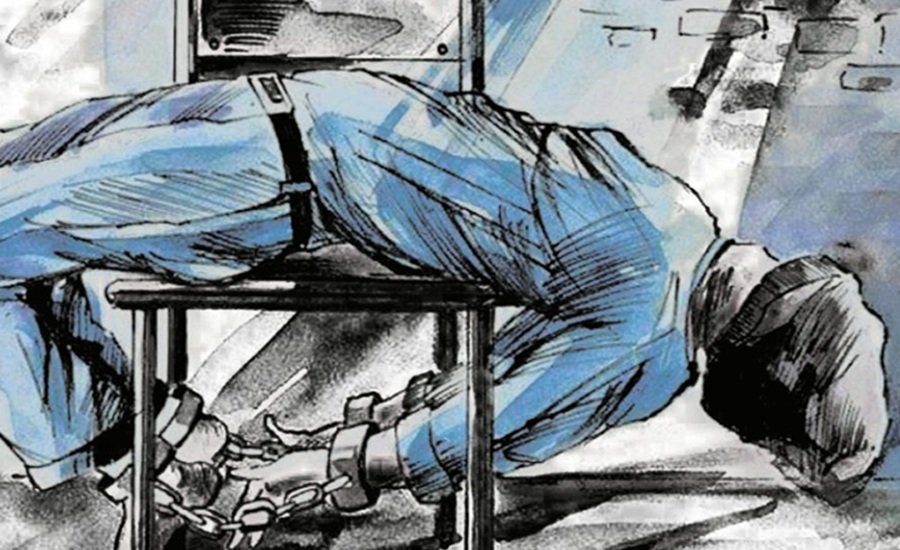
“The first name they called was S. The squad of soldiers spoke fluent Arabic. They said to him, ‘S., come here, you have been specifically named by the intelligence service’s high-ups.’ The initial act was to take him to a blind spot near the showers, an area not covered by cameras. Initially, the dogs were unleashed on him, barking aggressively. Following that, they assaulted him with punches and then suspended him by handcuffing his hands to the mesh. I was approximately two meters away, blindfolded, yet I could see a bit from beneath the blindfold. At that moment, they were mercilessly beating him. They struck him with fists, hit him with batons and clubs on his back, and kicked him in the stomach, all while hurling vile insults. I distinctly heard them taunt him during the assault in clear Arabic, ‘You are Hamas. You belong to the Hamas police. You participated in the October 7 attacks.’
“One of the soldiers compelled him to kiss his boots, clearly instructing him in Arabic, which I could hear distinctly, ‘Lick the boots.’ They also struck him on the back with a stick. Simultaneously, one of the soldiers urged him to count along, and S. complied, counting with each blow from the stick. The impact of the beating resonated on his body. The count reached nearly 20 strikes. Meanwhile, some soldiers were assaulting his legs, while others targeted his arms. The sound of the electric shocks was unmistakable. There were around 8 to 10 masked and armored soldiers present. They continued to beat him for approximately 15 to 20 minutes before dragging him back and returning him to his position beside us. At that moment, they warned him explicitly, ‘If you ever consider informing the doctors, we will return for you.’
“During the night hours of the same day, after approximately three hours of sleep, prisoner M. woke me up and requested my assistance in translating for him because S. was in distress. I promptly went to S. and inquired about his condition. I gathered information from him to diagnose his ailments, acting as a doctor to identify his medical issues and relay them to the Israeli officer. S. was expressing concerns about bleeding from the anus, intense pain, swelling, and bloating in his abdomen and chest. While seated, his pants were soaked with blood from below. We escorted him to the bathroom, where I observed that his anal area was bloodied, and his abdomen was swollen and bruised from the beating, along with noticeable swelling in his face. He was struggling to breathe. Each time he sneezed, coughed, or moved, he experienced excruciating pain.
“I inquired about the cause of his injuries, and he revealed that batons had been inserted into his rear end. Given this information, I suspected he was suffering from a laceration in the anus and abdominal bloating due to fluid and blood accumulation, or possibly internal bleeding, along with the potential for a vertebral fracture in the chest area. I conveyed all of this to the officer and the female doctor who accompanied him. The officer asked if I had witnessed what S. had endured. I informed him that I had heard the beating and had seen part of it, but I did not witness the entire incident as we were blindfolded and lying on our stomachs. As a witness to the event, I explained the threats made to S. to discourage him from reporting the incident to the medical staff.”
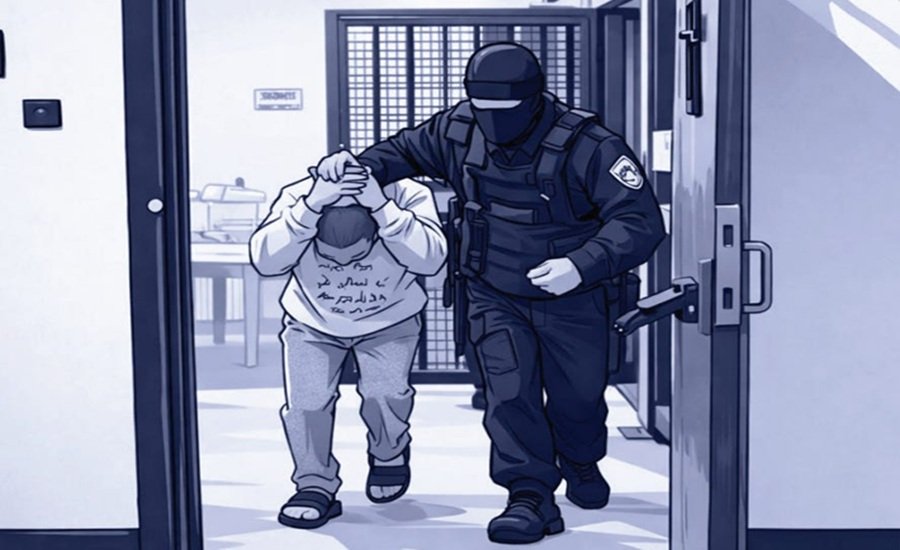
A video leaked from internal surveillance at Sde Teiman Detention Camp revealed the sexual assault of the prisoner. In response, the United Nations demanded accountability for the Israeli soldiers implicated in this crime. Following this, Israeli military police initiated an investigation, resulting in the arrest of nine soldiers involved in the incident, with their detention extended for a designated period. On 28 July 2024, military investigators arrived at the camp to question the detained soldiers. However, the soldiers chose not to cooperate with the military police. Meanwhile, Israeli protesters stormed the camp, opposing the investigation into the soldiers.
Prominent political leaders in the occupying power voiced their support for the soldiers, including National Security Minister Itamar Ben-Gvir, who stated: “The sight of military police officers coming to arrest our best heroes in Sde Teiman is nothing short of shameful.” Members of the Knesset, particularly from the Religious Zionism party, also stormed the camp to back the arrested soldiers. Heritage Minister Amichai Eliyahu was also present during the protest, seen chanting, “Death to terrorists.”
Despite the arrest and detention of nine soldiers, the Israeli military spokesman later announced that the soldiers would be moved to house arrest, just about two weeks after the military police investigation commenced. Later, an indictment was brought against five reserve soldiers, including two officers. Investigations uncovered that the soldiers had brutally assaulted the prisoner, stabbing him with a sharp object in a sensitive area. This resulted in severe injuries, including broken ribs, a punctured lung, and an internal tear in the rectum.
In spite of the leaked video footage that captured the assault, Israeli medical reports were released, asserting that the prisoner had inflicted injuries upon himself, clearly aiming to misrepresent the truth and influence the investigation’s direction. During the military court proceedings, a document labeled “medical opinion” surfaced, asserting that there was no proof of the prisoner being raped. Meanwhile, the lawyers representing the soldiers accused of the assault called for a comprehensive review of the case, citing supposed challenges in criminal investigations that hindered the ability to substantiate the charges against their clients. They also attempted to rationalize the actions of the implicated soldiers by emphasizing that “they were reservists with families”, arguing that “they should not be perceived as threats to society.
Despite the grave nature of the sexual offenses against prisoner S. and the significant harm he endured, the indictment only accused the defendants of “causing serious injury and assault under aggravated circumstances”, neglecting to charge them with “aggravated rape.” Only a single charge was filed against them, even though the criminal act of “aggravated rape” was applicable. Rape carries a punishment of imprisonment for sixteen years. If this act results in physical or mental harm, or is carried out under the threat of a firearm or cold weapon, the penalty escalates to that of aggravated rape, which is twenty years of imprisonment. Thus, the decision to charge only for “causing serious injury and assault under aggravated circumstances,” while omitting “aggravated rape”, suggests a troubling complicity within the Public Prosecution, indicating a desire to lessen penalties or even evade full punishment. This situation raises serious concerns about the judicial system’s ability to deliver justice and safeguard the rights of victims.
In a notable development, the Israeli Military Advocate General, Yifat Tomer Yerushalmi, submitted her resignation following suspicions that she had leaked the video footage showing the assault on the aforementioned detainee. Subsequently, Israeli Defense Minister Israel Katz dismissed her and stripped her of her military ranks, despite her prior resignation.
The leak of the video sparked widespread controversy within Israeli circles. Israeli Prime Minister Benjamin Netanyahu claimed that “the incident of Israeli soldiers raping Palestinian detainees in Sde Teiman caused enormous damage to the image of the State of Israel, the Israeli army, and our soldiers. This may be the most difficult propaganda attack the State of Israel has faced since its establishment; I do not recall an incident so concentrated and powerful. This necessitates an independent investigation that is not affiliated with any authority, and I expect such an investigation to be conducted.”
For his part, Katz stated that Yifat Tomer-Yerushalmi would not return to her position due to her involvement in leaking the video footage, adding that anyone who contributed to what he described as the “blood libel” against the soldiers in the Sde Teiman case would be brought to trial. In the same context, demonstrators gathered outside her home, chanting slogans including “We will not grant forgiveness.”
Subsequently, Yifat Tomer-Yerushalmi was arrested on November 3, 2025, on charges that included obstruction of justice, fraud, and abuse of office. At the same time, many Israelis argued that all their soldiers are heroes and should be granted immunity from criminal prosecution.
The controversy that unfolded within Israeli circles centered primarily on what was termed the “video leak scandal,” rather than on the brutal sexual assault suffered by the detainee. This clearly reflects the occupation state’s policy of protecting perpetrators while pursuing those who expose crimes, rather than those who commit them.
Against the backdrop of these developments, four of the individuals implicated in the case appeared masked during a press conference. Through their lawyer, they called for the charges against them to be dropped, citing what they described as “clear flaws” in the legal procedures associated with the case.
In the wake of the intensified actions taken by the Israeli occupation authorities following October 7, the Palestinian territories have experienced an alarming surge in sexual offenses perpetrated by the Israeli occupation forces against Palestinian detainees. Beyond the incident involving S., numerous other cases have been recorded where prisoners faced systematic sexual violence, including rape, threats of rape, forced insertion of objects into the anus, and physical assaults on their genitals.
The gravity of this escalation was highlighted in a report released by the United Nations Independent International Commission of Inquiry on 13 March 2025, which confirmed that Israel has employed sexual and gender-based violence as a tactic of war against Palestinians since October 7. It emphasized that these actions are not mere isolated events, but rather a systematic policy designed to humiliate and oppress the Palestinian people.
These policies and practices are part of a deliberate retaliatory strategy implemented by the Israeli occupation authorities against Palestinian prisoners, with the intent to crush their spirit and undermine their dignity and determination, through actions that clearly contravene the rules and provisions of international humanitarian law. Such violations represent a blatant infringement of the Fourth Geneva Convention of 1949, which mandates the protection of prisoners from torture, ill-treatment, and any form of cruel, inhuman, or degrading treatment. Furthermore, these acts are also deemed criminal under the Convention against Torture and the International Covenant on Civil and Political Rights.
c. Palestine Will Be Free


