

Demonstrators demand the withdrawal of exploitative Labour Codes and anti-people VB-GRAMG Bill, universal social security, and protection of marginalised communities
LONDON — Hundreds of activists, trade unionists, and concerned citizens gathered at the Gandhi Statue in Parliament Square here on Thursday (12 February) evening to show support for India’s nationwide general strike. Organisers described the demonstration as a critical stand against what they called the “anti-worker, anti-farmer, anti-people policies” of the ruling dispensation in India.
“The people of India, especially the working class and marginalised communities, are under severe attack,” said Ahmed Khan, a London-based activist supporting South Asian labour movements. “From internal migrant workers labelled ‘Bangladeshis’ and facing state Islamophobia, to Dalit women sanitation workers battling multiple layers of oppression, we stand with them. The struggle of Indian Muslims must not be ignored in this fight.”
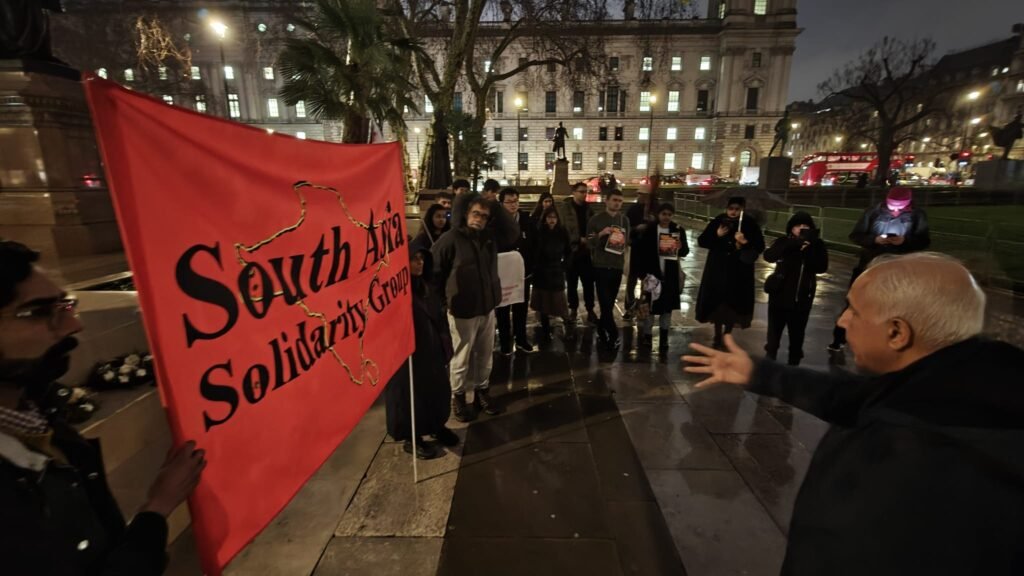
The general strike saw an unprecedented participation across India, with workers protesting against the four Labour Codes introduced by the Narendra Modi government. Demonstrators described these laws as “exploitative” and designed to dismantle decades of workers’ rights, threatening fundamental protections, including the right to form trade unions, minimum wages, and social security coverage.
“The Labour Codes are a direct attack on workers’ dignity,” said Ramesh Varma, a union representative from the Indian diaspora in London. “They benefit multinational corporations while stripping ordinary people of the rights they fought for over decades. We cannot remain silent while such policies destroy livelihoods.”
In addition to the Labour Codes, protesters highlighted the VB-GRAMG Bill, which they say undermines India’s rural employment programme, MGNREGA, leaving millions of rural and urban workers vulnerable. Campaigners demanded stronger employment guarantees across both rural and urban areas to combat poverty and unemployment.
“While the people demand meaningful job security and social protection, the government continues to hand control to corporate interests,” noted Fatima Siddiqui, an organiser with the South Asia Solidarity Group. “This disproportionately affects Muslims and other minority communities already facing discrimination and economic marginalisation. Our presence here is to amplify their voices internationally.”
The London demonstration also addressed privatisation of public sector institutions, exploitation in the gig economy, and caste-based discrimination in the workforce. Speakers emphasised that the strike represents a broader fight against social injustice targeting minorities and vulnerable workers.
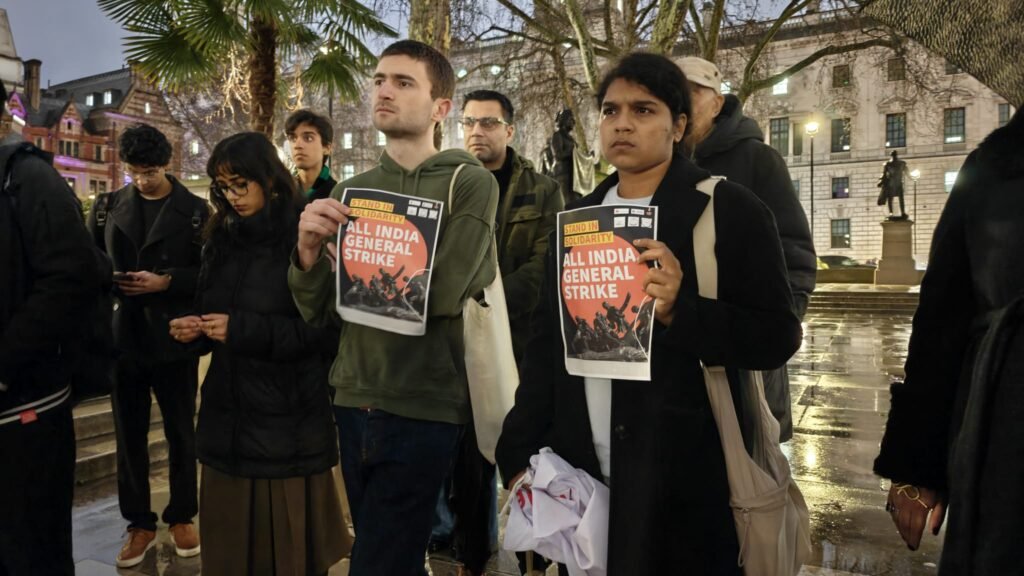
“The Modi regime’s policies represent a consolidation of Brahmanical Hindu supremacist power,” declared Nasir Ali, a community leader. “They have allied with some of the world’s most notorious corporations to roll back workers’ rights. Yet, the workers are resisting. From Dalit women sanitation workers to superexploited gig workers, resistance is rising everywhere.”
Organisers urged attendees to take part in local actions, raise awareness, and support the nationwide strike in India. The London protest ended peacefully with chants of solidarity and calls for global attention to India’s labour crisis.
“This is not just about wages or jobs,” said Ayesha Mir, a South Asian student activist in London. “It’s about justice for communities systematically pushed to the margins. Our solidarity can amplify their struggle and pressure policymakers to reconsider these harmful bills.”
The London protest symbolically reinforced that the fight for labour rights and minority protections transcends borders, calling for international solidarity.


