

Demonstrators seek urgent government intervention and enactment of a separate, enforceable and worker-centric law for gig and platform workers
NEW DELHI – Hundreds of women gig and platform service workers participated in nationwide protests on Tuesday, accusing digital companies of rampant exploitation, insecurity and denial of basic labour rights. The demonstrations, organised by the Gig & Platform Service Workers Union (GIPSWU), were held across Delhi, Rajasthan, Karnataka, Maharashtra and several other states, covering major cities including New Delhi, Jaipur, Bengaluru and Mumbai.
After the protests, workers submitted a Memorandum of Demands to the Prime Minister’s Office and Chief Ministers, seeking urgent government intervention and the enactment of a separate, enforceable and worker-centric law for gig and platform workers.
At Jantar Mantar in the national capital, workers associated with platforms such as Zomato, Swiggy, Urban Company, Zepto, Blinkit and Instamart highlighted what they called “systematic violations” of labour and human rights through unregulated algorithms, arbitrary penalties, ID blocking and denial of social security.
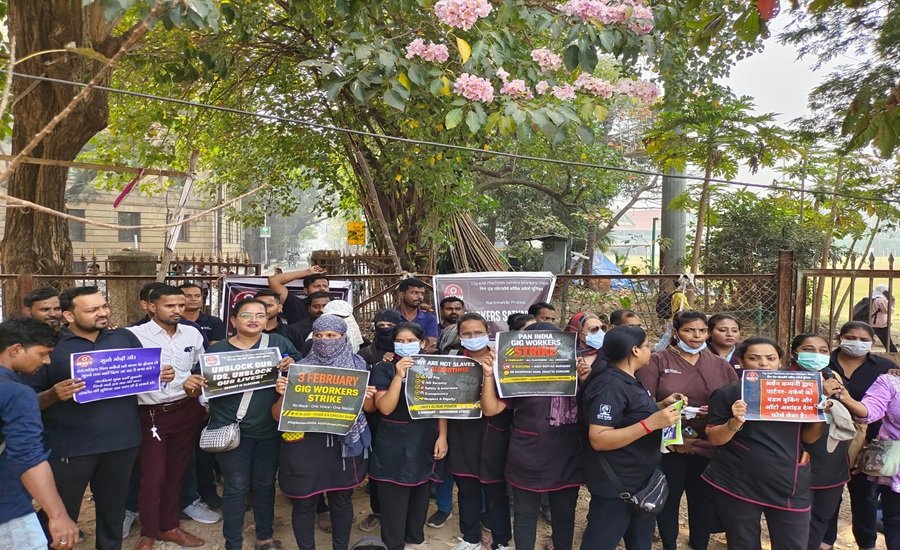
GIPSWU President Seema Singh said she personally faced exploitation while working with Urban Company and was allegedly threatened with police action and legal notices for raising complaints. “For six years, we have been demanding recognition as workers and a separate law. Without it, exploitation will continue unabated,” she said.
Several women workers narrated harrowing experiences. Anjali alleged she was assaulted by a customer and instead of action against the offender, the company blocked her ID, cutting off her livelihood. Mamta said she faced sexual harassment at work but no action was taken despite formal complaints, leaving her to work “in fear and insecurity.” Sonia pointed to forced auto-assignment and bundled bookings, while Pooja flagged “double cancellation penalties” that arbitrarily slash incomes and ratings.
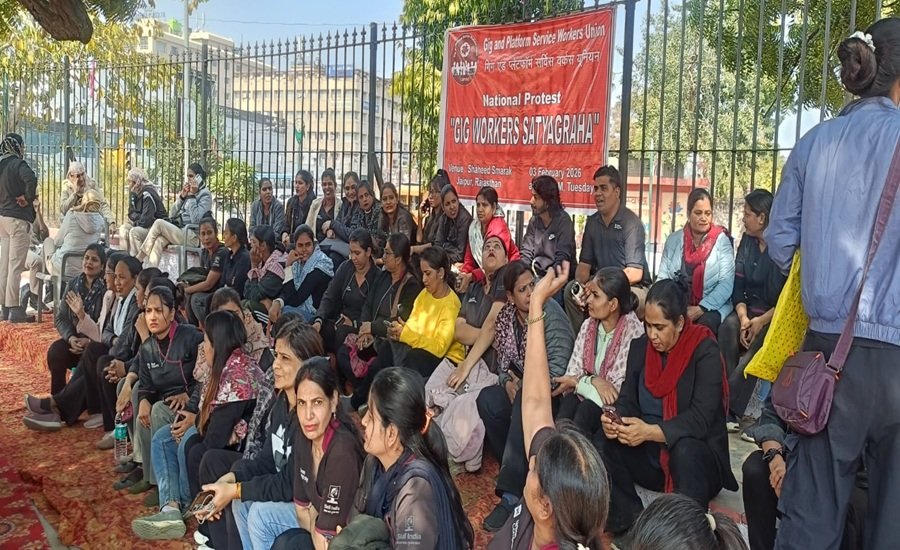
Raising alarm over wages and safety, GIPSWU National Coordinator Nirmal Gorana said nearly 48 lakh gig workers earn less than ₹15,000 a month, as per the Economic Survey. He criticised the introduction of 15-minute delivery models, calling them a threat to worker safety, and slammed the Union Budget 2026 for ignoring gig workers. “Most gig workers are migrants, and many women workers are single. Conditions today amount to forced labour,” he said.
Labour rights advocate Kawalpreet Kaur said that despite formal recognition under labour laws, minimum wages, decent working conditions and sexual harassment safeguards remain unenforced in the gig sector.
The All India Trade Union Congress (AITUC) leader, Shanaz Rafiq, added that threatening women workers and obstructing unionisation violates their constitutional rights.
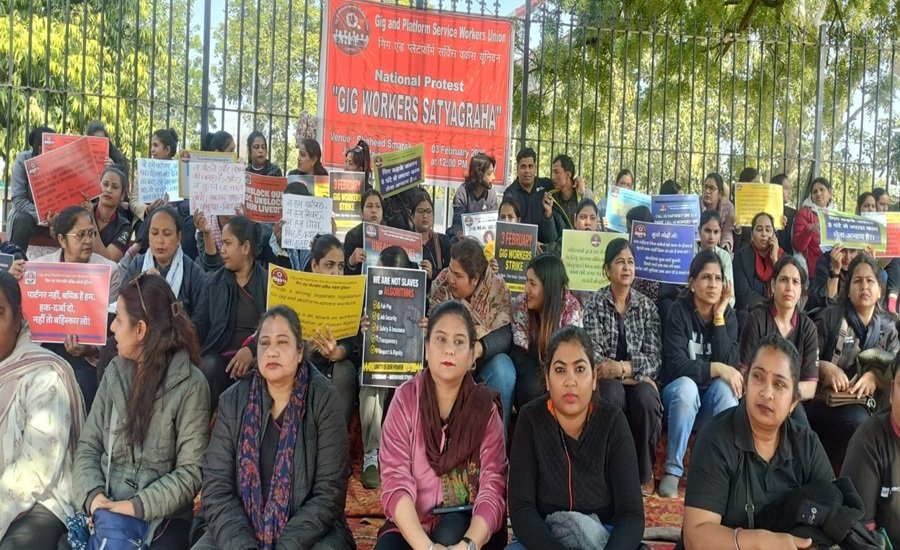
Male workers also reported arbitrary punishments. Soyab, a Zomato delivery worker, said his ID was blocked on false theft allegations despite video evidence clearing him. Arif alleged Amazon blocked his ID and denied compensation after an accident. Baby Devi, wife of a Blinkit worker who died during delivery, said neither the company nor the government provided compensation.
The GIPSWU reiterated its demands for an immediate, separate law for gig workers, minimum wages, social security, transparent grievance redressal, privacy protection and an end to exploitative algorithmic control by digital platforms.


